Lumbar Spinal Fusion Surgery Services in Los Angeles
If back pain is keeping you from the things you love, day after day, don’t let it control your life. Lumbar spinal fusion surgery can make your spine stable and ready to move the way it used to, before the pain took over. Stop working around it. Start working again.


- What It is
Understanding Lumbar Spinal Fusion Surgery
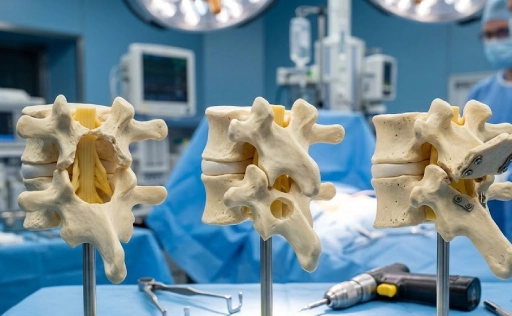
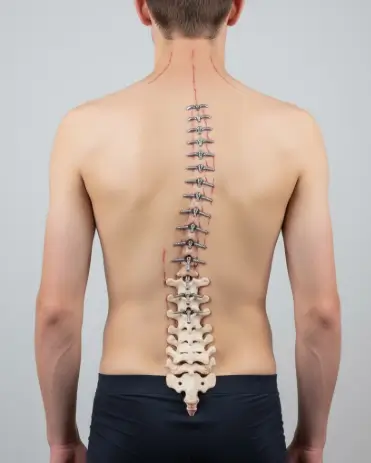
During the process of a Lumbar spinal fusion surgery, surgeons join vertebrae into one solid piece of bone. Once they fuse, that part of the spine no longer moves. The surgeon clears out damaged disc material first, then packs in bone graft and hardware to lock things down. Lower back fusion surgery and lumbar stabilization surgery are the same procedure; it is just a different name.
How Lumbar Spinal Fusion Surgery Works
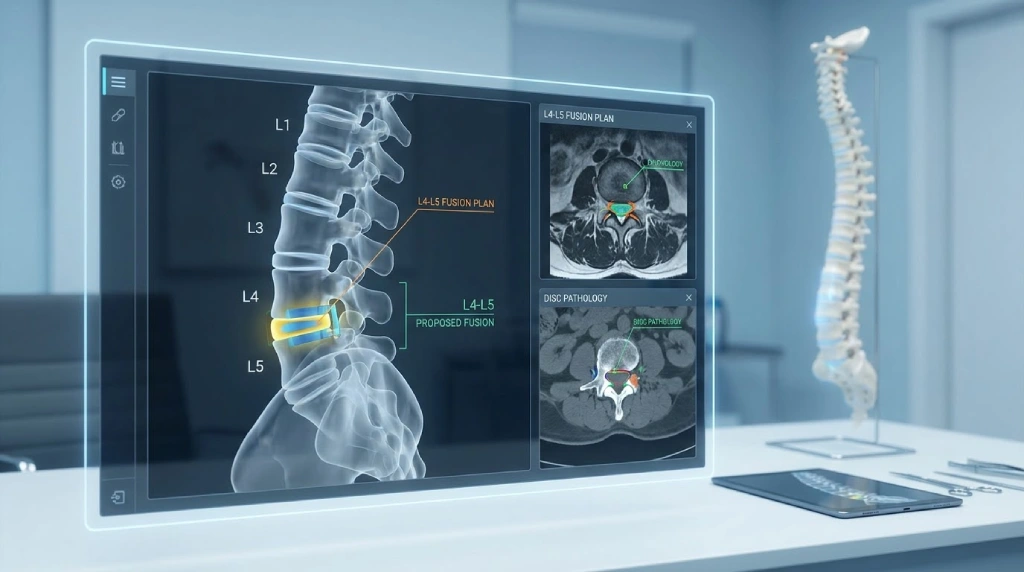
Finding the right level, surgeons confirm the exact level before they operate. They run an MRI test or other flexion-extension X-rays to get the full picture here.
- Reviews MRI and CT imaging
- Confirms the unstable vertebral level
- Assesses the nerve compression severity
- Discusses goals with the patient
- Plans the surgical approach necessary
Accessing the Affected Spine Area
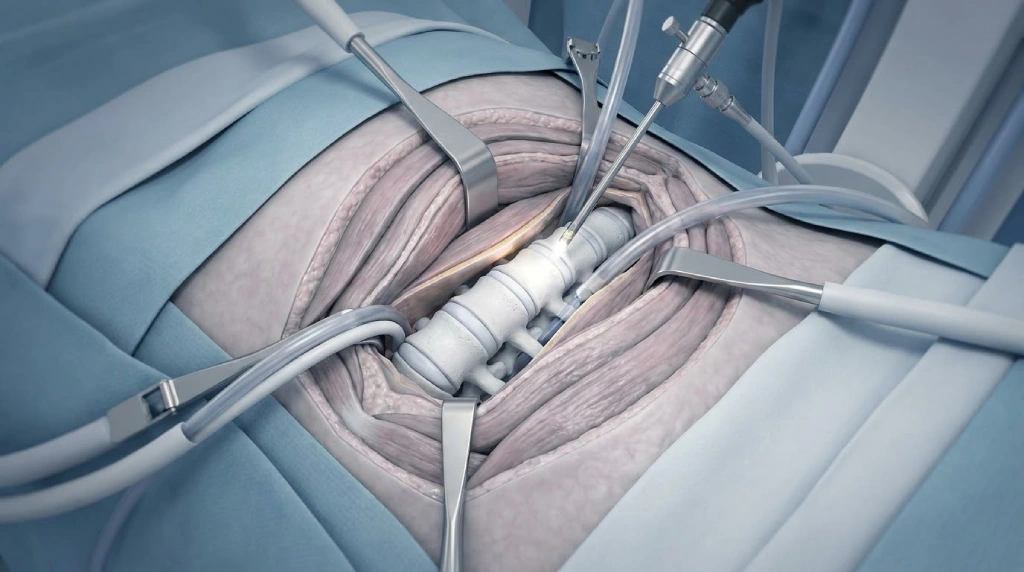
Reaching the spine from the back, side, or front, surgeons move muscles aside instead of cutting them whenever possible.
- Taking any posterior, anterior, or lateral approach
- Small incision protects surrounding muscle
- Retractors create a clear surgical path
- The approach depends on the condition and level
- Minimally invasive options reduce tissue trauma
Removing Unstable or Damaged Tissue
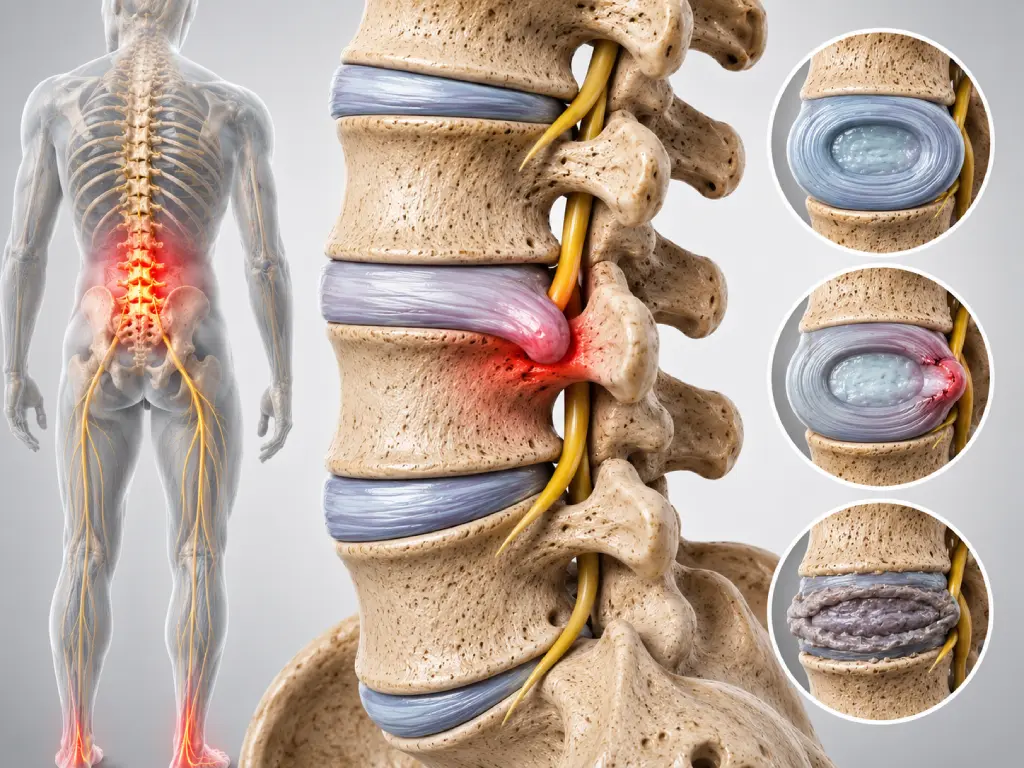
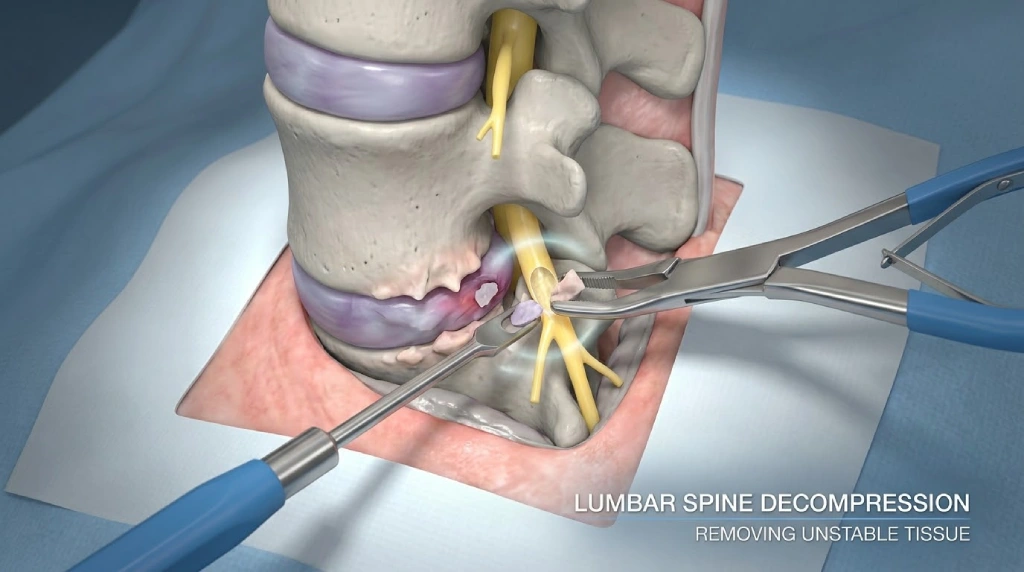
The surgeon removes the disc through a discectomy and also clears bone spurs pressing on nerves. This relieves pain before fusion starts.
- Removes the herniated or degenerated disc
- Clears bone spurs near nerve roots
- Trims thickened ligament tissue if present
- Decompressing pinched or irritated nerves
- Preparing a clean space for grafting
Preparing the Fusion Site
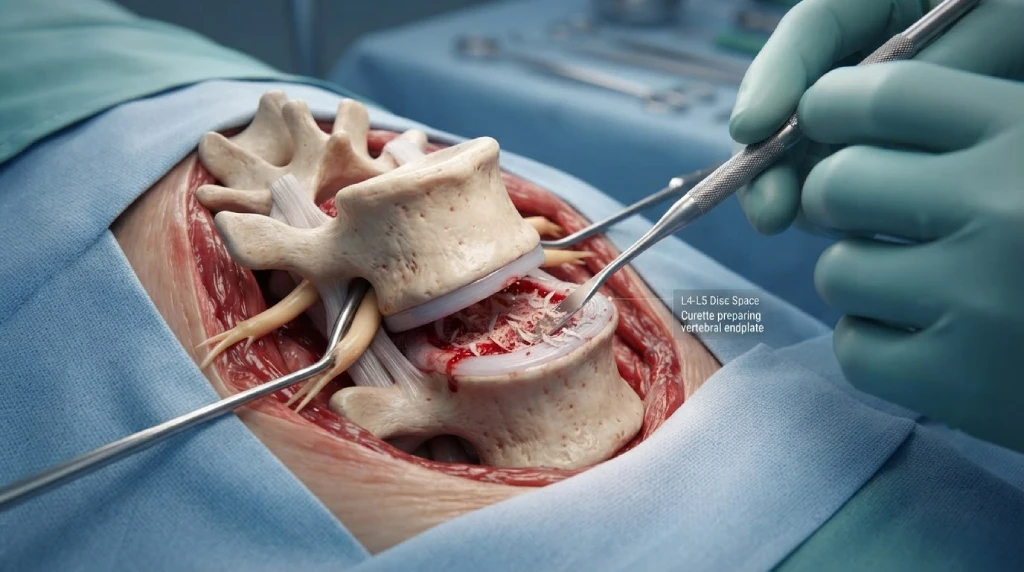
In this stage, the surgeon prepares the vertebral endplates so that bone can grow across the joint, also scraping away cartilage and roughening the surface.
- Scrapes away remaining cartilage tissue
- Roughens the vertebral endplate surfaces
- Encourages new bone to attach
- Measures the disc space height needed
- Confirms alignment before graft placement
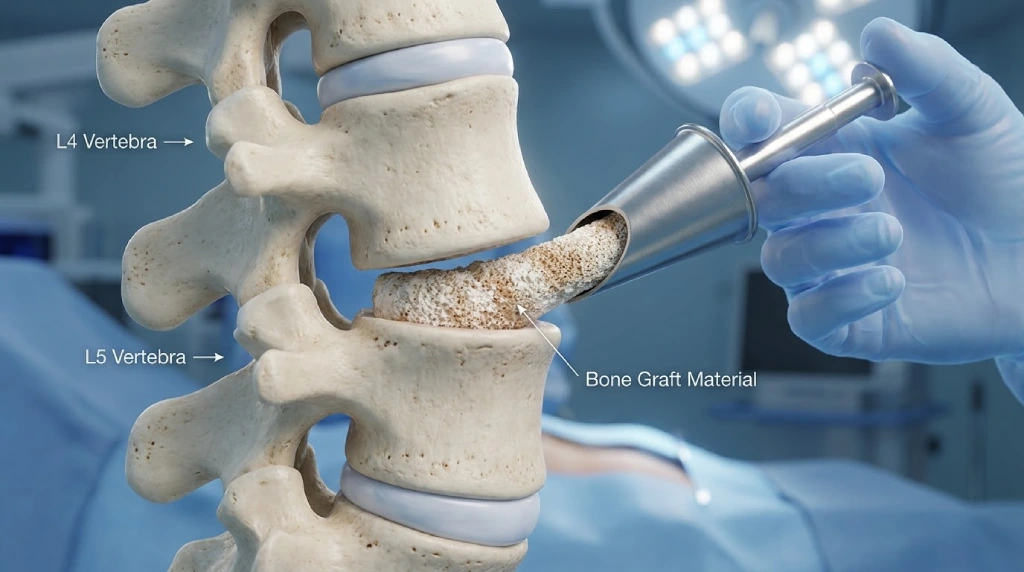
Placing Bone Graft Material
Bone graft, from the patient’s body, a donor, or synthetic material, fills the space. This graft acts as scaffolding, encouraging new bone cells to bridge the gap.
- Autograft uses the patient’s own bone
- Allograft comes from donor tissue
- Synthetic options avoid extra incisions
- Graft fills the disc space
- Supports new bone cell growth
Supporting the Spine With Instrumentation
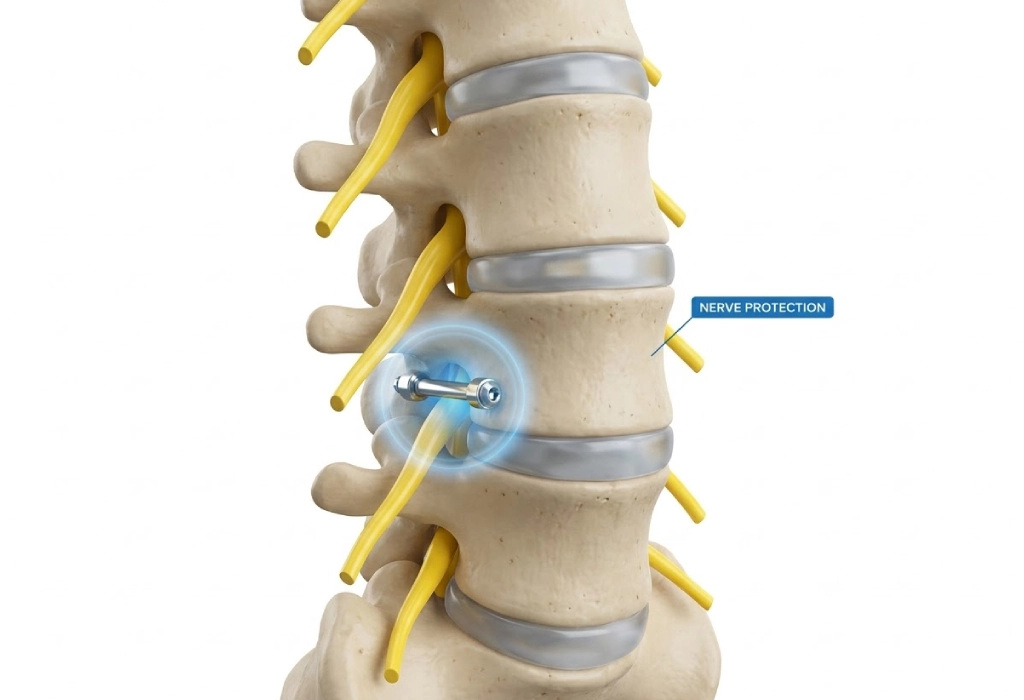
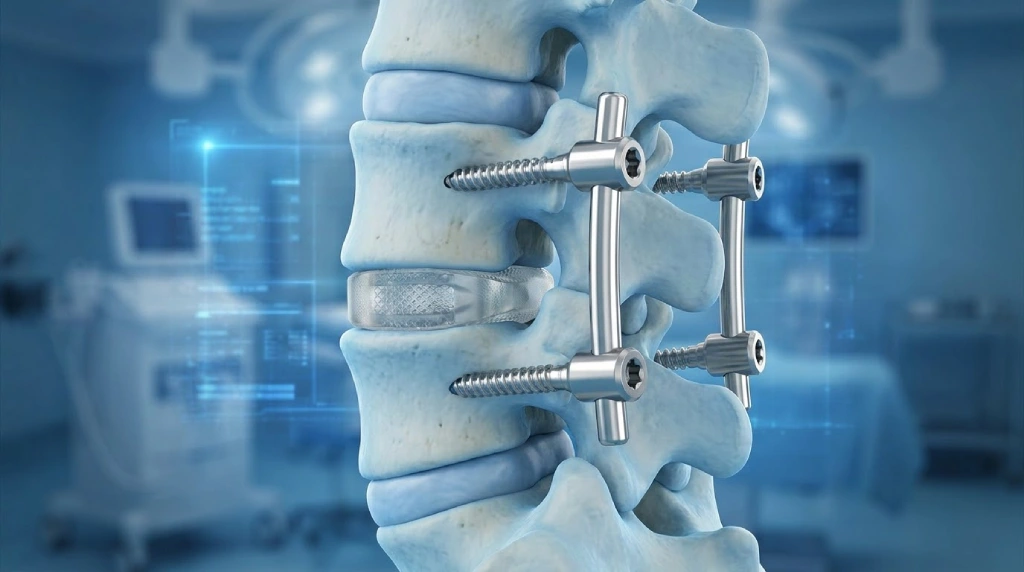
While fusion is happening, titanium screws, rods, plates, or cages hold the spine still. This hardware acts like an internal cast, preventing motion at the treated level during healing.
- Pedicle screws anchor into vertebrae
- Rods connect and stabilize screws
- Interbody cages restore disc height
- Hardware blocks unwanted spinal motion
- Implants stay in permanently afterward
Starting the Bone Fusion Process
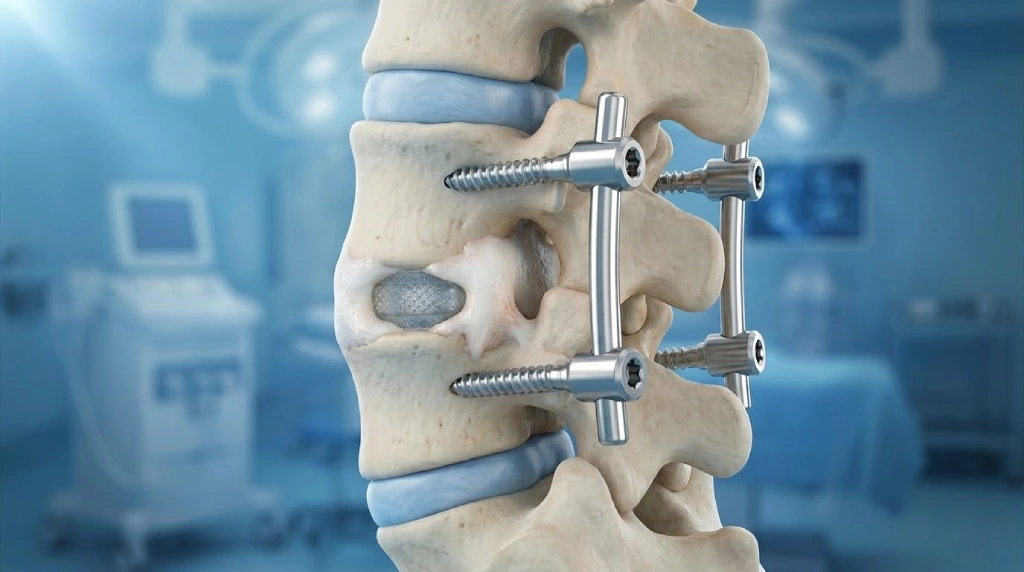
Once the surgeon places hardware and graft, the real work begins quietly. Over the next several months, new bone grows and bridges the gap, locking the segment into one solid piece.
- Healing begins in the days following
- New bone slowly bridges the gap
- Hardware holds steady during this time
- Solid fusion takes several months total
- Follow-up imaging confirms successful bone growth
- Lumbar Levels
Common Lumbar Fusion Levels
Most lumbar spinal fusions happen at the two lowest spine levels, L4-L5 and L5-S1. These segments carry the most weight and the most motion. That is why they wear out first. L4-L5 and L5-S1 absorb the bulk of daily bending, twisting, and lifting, making them the most common sites for degeneration and instability. This kind of lower spine surgery addresses the levels that do the heaviest daily work.
L4-L5 Spinal Fusion
L4-L5 fusion treats the segment under the most mechanical load in the lower back, due to disc degeneration or spondylolisthesis. L4-L5 spinal fusion recovery time typically spans six to twelve months for solid healing. L4-L5 fusion success rate runs between 65% and over 90%, depending on overall health and surgical approach.
L5-S1 Spinal Fusion
L5 S1 fusion addresses the lowest disc in the spine, where the lumbar spine meets the sacrum. This level handles enormous daily stress, making it prone to disc collapse and slippage. Spinal fusion L5 S1 commonly uses an anterior approach, since the area offers excellent access for graft and disc height restoration.
- Procedure
Types of Lumbar Fusion Procedures
Lumbar spine fusion procedure options vary among surgeons on how they reach the spine. For example, it can be from the back, front, or side. Each spinal lumbar fusion approach offers different quid pro quos in recovery time, nerve risk, and surgical complexity. Six approaches are most common today.
PLF (Posterolateral Fusion)
Surgeons pack bone graft along the gutters beside the spine, over the transverse processes, skipping the disc entirely. Pedicle screws and rods usually reinforce the graft, since transverse process bone heals slowly on its own.
PLIF (Posterior Lumbar Interbody Fusion)
Surgeons approach from the back, remove the disc, and retract the thecal sac and nerve roots to reach it. This wider exposure carries a higher chance of nerve irritation or a dural tear than newer approaches.
TLIF (Transforaminal Lumbar Interbody Fusion)
Surgeons remove one facet joint and enter through the foramen, reaching the disc from a steeper angle. Nerve roots need little to no retraction here, which lowers the risk of injury compared with PLIF.
ALIF (Anterior Lumbar Interbody Fusion)
Surgeons reach the disc through the abdomen, a retroperitoneal route that bypasses the back muscles and nerves completely. The open view allows a larger graft and better disc height correction, though major vessels sit close by.
LLIF (Lateral Lumbar Interbody Fusion)
Surgeons come in from the side, splitting through the psoas to reach the spine. Back muscles stay clear. The lumbar plexus does not, so neuromonitoring tracks it. At L5-S1, the iliac crest blocks this route entirely.
OLIF (Oblique Lumbar Interbody Fusion)
Surgeons pass in front of the psoas instead of through it. That alone keeps the lumbar plexus safe. Major vessels run close to this path, so surgeons still need to work carefully. Unlike LLIF, this route can reach L5-S1.
- Benefits
Benefits of Lumbar Spinal Fusion Surgery
Lumbar spinal fusion not only stops pain, but it also joins damaged vertebrae, ending the abnormal motion that wears down discs and irritates nearby nerves. It offers real stability, not a vague promise. Ten-year studies show the pain relief and improved function mostly hold up over time. Real results, lasting function.
Lasting Pain Relief
Chronic back pain chips away at daily life over time. Sleep suffers, work becomes harder, and relationships feel the strain because pain that never lets up affects everything.
Fusion removes the source. Not the symptom. Surgery eliminates the actual unstable motion causing the pain, not just masks it with another round of medication.
- Targets the unstable spinal segment directly
- Reduces reliance on long-term pain medication
- Addresses the cause, not just symptoms


Restored Spinal Stability
An unstable spine moves where it shouldn’t. Vertebrae shift, grind, and irritate nearby nerves. Every step, every twist becomes a small risk you can’t always predict in advance.
Fusion locks that segment in place. Permanently. No more guessing whether a normal daily movement, bending down, reaching up, will trigger another flare-up.
- Locks the unstable segment permanently
- Stops abnormal vertebral shifting and grinding
- Reduces unpredictable flare-ups during movement
Protection Against Further Nerve Damage
Untreated instability doesn’t stay still. It progresses quietly for years. Nerve compression that starts as occasional tingling can become permanent numbness or genuine weakness if nothing changes.
Fusion interrupts that progression early, before permanent damage sets in. Stopping the underlying motion protects nerve roots from continued, repeated irritation.
- Interrupts nerve compression before it worsens
- Protects roots from repeated irritation
- Prevents progression toward permanent numbness
Return to Daily Activity and Function
Pain changes what people do, quietly, over time. Skipped walks, avoided stairs, declined invitations, the list grows month after month of chronic discomfort.
A successful fusion reverses that retreat. Patients get back to work, hobbies, family activities, the version of life that pain had slowly taken away from them.
- Restores the ability to walk, sit, and stand
- Supports return to work and hobbies
- Rebuilds confidence in daily movement
- Recovery
Lumbar Spinal Fusion Surgery Recovery
Lumbar spinal fusion surgery does not heal overnight. Patients typically stand and take short, supported steps within a day of surgery. Physical therapy follows over the next several weeks, rebuilding strength and movement. The bone itself continues solidifying for months afterward, well after patients have returned to most daily activities. Lumbar spinal fusion recovery time varies by patient, but each stage follows a predictable order.
01
Hospital Stay (Day 0 to 1-4 days)
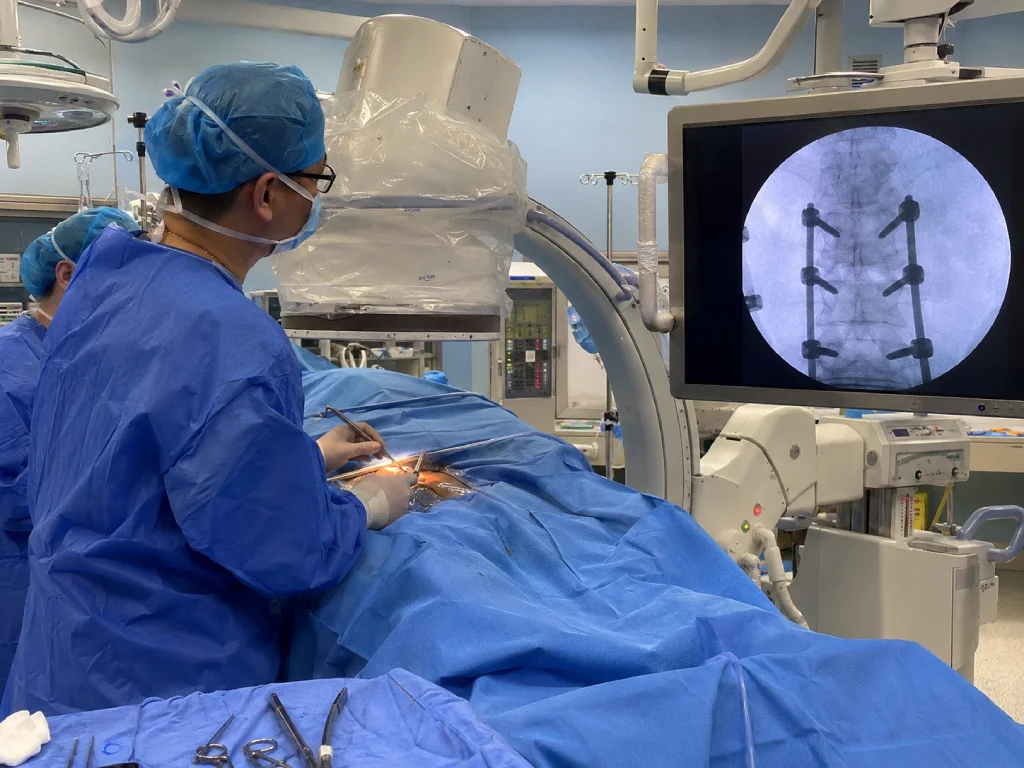
Staff monitors vitals and pain through the first night. Most patients stand and take assisted steps within 24 to 48 hours. The hospital stay itself usually runs from one to four days before discharge.
02
Early Home Recovery (Weeks 1-4)
Bending and twisting stay off limits for these four weeks. Lifting anything over ten pounds does too. Walking in short stretches, several times a day, keeps circulation moving while the incision and spine start to heal.
03
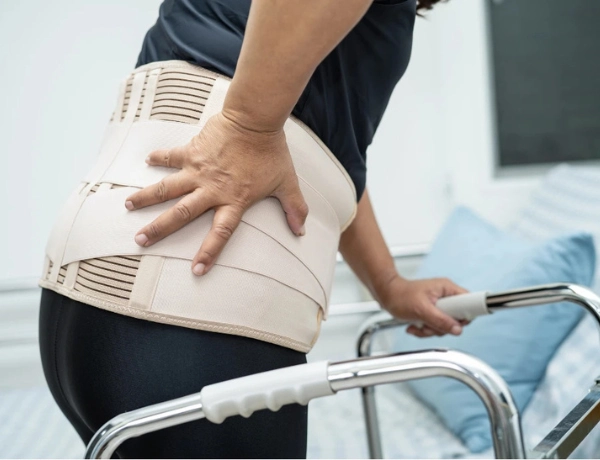
Transition & Formal Physical Therapy (Weeks 6-12)
Outpatient therapy usually starts around week six, once the surgeon confirms the bone is healing as expected. Sessions run through week twelve, built around core strengthening and a steadily increasing walking program.

04
Strengthening & Functional Phase (Months 3-6)
Between months three and six, therapy shifts toward real tasks. Lifting and bending return to the routine. So does work, eased back in rather than resumed all at once. Walking itself starts to look ordinary again, without the careful gait from earlier months.
05
Bone Fusion Consolidation (Months 6-12)
From month six through month twelve, the bone graft matures into a solid mass. Patients usually feel better long before this stage finishes. The fusion itself still needs that full window to become biologically solid, not just symptom-free.

06
Long-Term Maintenance & Final Confirmation (12+ Months)
Imaging near the one-year mark confirms whether the fusion is solid. After that, the work shifts to maintenance: good posture, careful lifting habits. Low-impact fitness matters too, since it protects the fused segment without overloading the levels next to it.
- Why Choose us
Why Patients Choose Our Care
Patients from different places travel to us because we have experience, technology, and our team gives genuine care that matters more than distance. That is why, when your back is at stake, choosing the right lumbar spine surgeon is necessary.
Experienced, Board-Certified Expertise
A board-certified spine surgeon with decades of experience brings judgment that training alone can't replicate. Complex cases, multiple fused levels, and revision surgeries call for that depth of hands-on skill.
- Decades of dedicated spine surgery
- Fellowship-trained in advanced techniques
- Experience with complex, multilevel cases
Minimally Invasive and Robotic Technology
Smaller incisions and robotic-assisted precision mean less blood loss, shorter hospital stays, and a faster return to daily life compared to traditional open surgery techniques used in the past.
- Robotic-assisted surgical precision available
- Smaller incisions, less tissue trauma
- Shorter hospital stays overall
Personalized, Patient-First Care
No two spines or patients are identical, and no two recovery paths look the same. Your surgical team builds treatment plans around your specific condition, goals, and lifestyle, not a generic checklist.
- Individualized treatment plans, not templates
- Direct communication throughout your care
- Support from diagnosis through recovery
- Area We Serve
Lumbar Spinal Fusion Surgery Serving Los Angeles & Nearby Areas
Patients travel to Wong Spine from throughout Los Angeles and neighboring communities for spinal fusion surgery and advanced lower back care. Dr. Albert Wong performs lumbar spinal fusion using robotic-assisted, minimally invasive techniques focused on stability, function, and long-term recovery outcomes.
- Patient Testimonial
What our patients says
Patients consistently mention two things: how thoroughly their concerns were addressed, and how supported they felt throughout recovery.
EXCELLENTTrustindex verifies that the original source of the review is Google. When I went to see Dr. Wong, my spinal cord was 85% compressed at the T12 level and I had multiple issues in my lumbar spine, my back from T11 to S1 was failing me. I needed the assistance of a walker to walk and balance. I had a previous surgery with another surgeon and it was deemed as failed, my situation was not good. Dr. Wong literally rebuilt my spine from T11 to S1, if it weren’t for Dr. Wong and his incredible team, I would probably be in a wheelchair right now. Dr. Wong is a gifted surgeon who sincerely cares about his patients and the work he does. I am forever grateful and consider myself very fortunate and blessed to be his patient. Thank you Dr. Wong and team for giving me hope again.Posted on GoogleTrustindex verifies that the original source of the review is Google. Dr. Albert Wong is one of the BEST neurospine doctors in California! He really cares about patient care, he takes his time to listen and explain everything clearly. He builds trust with his patients. He has help so many patients get their life back, just one of the best doctors. Dr. Wong will make the time for his patients. Definitely recommend him!Posted on GoogleTrustindex verifies that the original source of the review is Google. Dr Wong is an amazing doctor! Dr Wong’s expertise and bedside manners are top notched. He is a tremendous surgeon as well. I would highly recommend Dr Wong as your ortho.Posted on GoogleTrustindex verifies that the original source of the review is Google. Dr. Albert Wong quite literally saved my life. I suffered from a quarter sized brain bleed and was rushed into emergency surgery. He not only allowed me to keep my hair and only shaved right where the surgery was performed, but he did such an amazing job. The area where I had surgery was numb for the first couple of months and I'm happy to report I have all feeling back in the designated area. Truly could not recommend him enough. He's also one of the kindest people I've ever had the pleasure of knowing. Would recommend him TENFOLD to anyone needing surgery.Posted on GoogleTrustindex verifies that the original source of the review is Google. I had back surgery, it was a successful procedure. Great bedside manner, great follow-up.Posted on GoogleTrustindex verifies that the original source of the review is Google. I’ve had surgery With Dr. Wong twice Once on the cervical and other was my spine. I had nothing but a great experience with him and his staff considering it was major surgery I’ve never felt better and I’m back to doing all the things I love but was unable to do before. Thank you Dr Wong 🙏🏻Posted on GoogleTrustindex verifies that the original source of the review is Google. Dr Wong is an exceptional, talented surgeon who cares deeply for his patients. Highly recommend!Posted on GoogleTrustindex verifies that the original source of the review is Google. Dr. Wong is an exceptional physician… thorough, knowledgeable, and compassionate. He listens and explains everything clearly. His attention to detail is unmatched. I trust him completely as he has greatly improved my life.Posted on GoogleTrustindex verifies that the original source of the review is Google. Dr Wong is an amazing Surgeon who was very thorough and explained in detail what my condition was and what to expect from surgeryPosted on GoogleTrustindex verifies that the original source of the review is Google. Dr. Wong has been helping me with sciatica issues for a long time. He’s very thoughtful with his care and I appreciate his thoroughness. My pain is much more manageable and he’s a big reason. Thank you Dr. Wong!
- Faqs
Frequently Asked Questions
Lumbar spinal fusion raises a lot of questions before surgery. Here are direct answers to the questions patients ask most about cost, procedure, recovery, and long-term results.
Lumbar spinal fusion joins two or more vertebrae into one solid bone using a graft and hardware. Billing differs by diagnosis, so the icd 10 spinal fusion lumbar code varies.
The surgeon removes damaged tissue, places a bone graft between the vertebrae, then secures it with screws and rods. New bone grows across the gap over several months.
Anterior lumbar interbody fusion, or ALIF, reaches the spine through the abdomen, not the back. Spinal muscles and nerve roots stay untouched, leaving room for a larger bone graft.
Transforaminal lumbar interbody fusion, or TLIF, angles in through the foramen instead of straight from behind. Only one nerve root moves aside, which lowers the risk of nerve injury.
Initial healing takes six to twelve weeks. Solid bone fusion takes six to twelve months. Most patients feel much better within the first few months, even as deeper healing continues.
Once the bone fully fuses, the vertebrae become one solid piece, permanently. Hardware rarely needs removal. Stress can shift to nearby segments, which your surgeon monitors at follow-up visits.
Reported success rates run from about 65% to 95%, depending on technique and how studies define success: imaging-confirmed fusion or simply less pain. Ask your surgeon.
Costs range from $50,000 to $150,000, based on complexity and insurance. Workplace injuries may involve a settlement or workers' comp claim alongside care. Ask your insurance team or attorney.
Expect pain and stiffness at first, with movement feeling limited for a while. Your care team helps you walk safely and manages pain along the way. Recovery improves gradually.
- Visit Our Beverly Hills Office
Schedule a Consultation for Lumbar Spinal Fusion Surgery
Ready to move without lower back pain? Dr. Albert Wong evaluates each patient individually for lumbar spinal fusion or cervical spinal fusion as part of our spinal fusion surgery services. Book your Beverly Hills consultation today.