- Board-Certified Neurosurgeon
Spine Surgery Services in Los Angeles
At Wong Spine, Dr. Wong treats patients dealing with disc problems, nerve compression, instability, and long-term spinal pain that has started affecting normal day-to-day life. Some people improve with conservative care. Others eventually need surgery after symptoms keep progressing or weakness starts showing up. Every case is different. That matters in spine care because the wrong procedure can create just as many problems as the condition itself. Patients looking for spine surgery services Los Angeles often come in after months, sometimes years, of trying to manage symptoms on their own first.
- We Provide
Advanced Spine Surgery Treatments We Provide
Not every spine condition needs a major operation. And not every patient is a candidate for minimally invasive treatment either. A small disc problem in the neck behaves differently from severe narrowing in the lower spine. Some surgeries are fairly targeted. Others are much more involved and require stabilization across multiple spinal levels. Imaging, nerve symptoms, strength loss, walking difficulty, all of it plays into the decision. At Wong Spine, procedures range from minimally invasive surgery to more complex spine surgery for advanced structural conditions. The planning process is built around what the spine actually looks like and how the symptoms are progressing in real life, not just what shows up on a report.
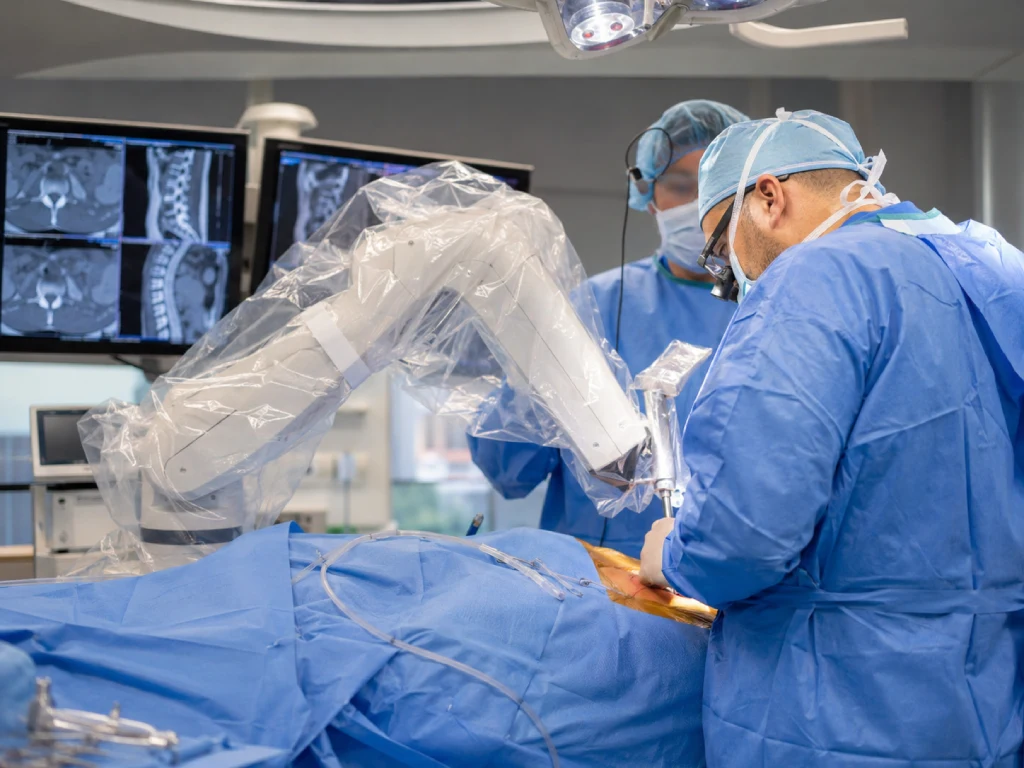
Robotic Spine Surgery
Spine robotic surgery helps improve surgical accuracy during certain procedures involving spinal hardware and alignment. It gives the surgeon more detailed guidance during surgery, especially in cases where precision matters down to very small measurements. That becomes important in more difficult surgeries involving instability, deformity, or complicated anatomy around the nerves.
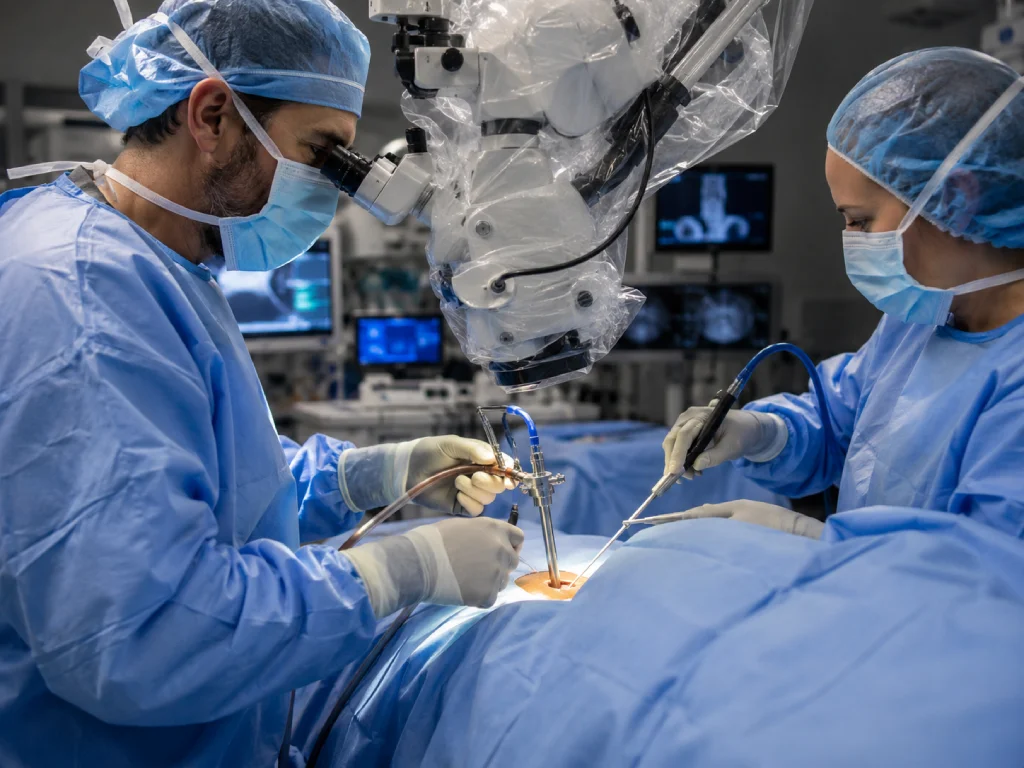
Minimally Invasive Spine Surgery
Smaller openings. Less muscle disruption. Usually, an easier recovery compared to traditional surgery. That is the reason minimally invasive spine surgery became more common over the years. For the right patient, it can reduce soreness after surgery and shorten recovery time. Especially in certain lumbar spine surgery cases. But not every condition can be treated this way.
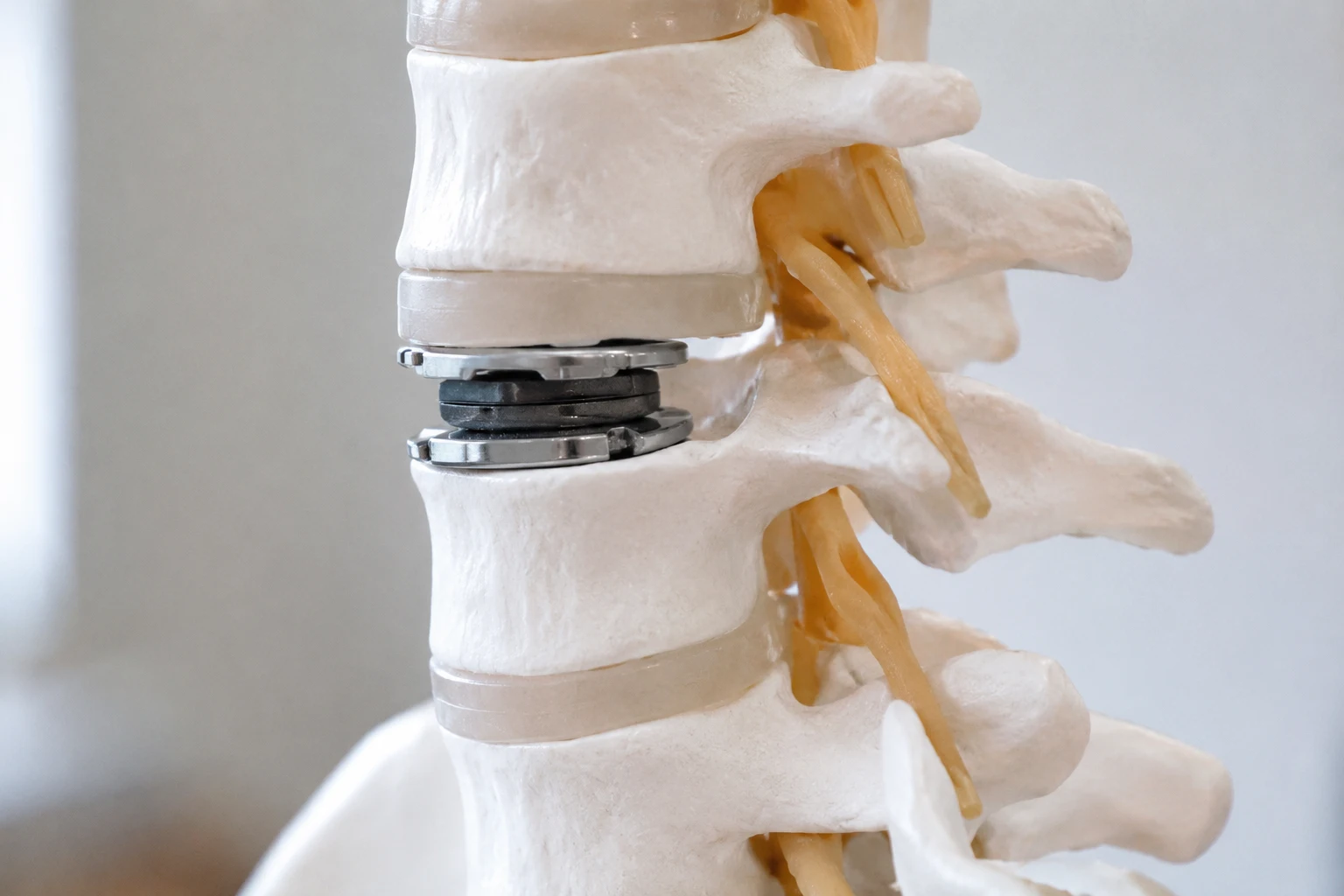
Artificial Disc Replacement
Artificial disc replacement may be considered when a damaged disc is creating pain or nerve symptoms, but movement in that area of the spine can still be preserved. Instead of fusing the bones together permanently, the damaged disc is replaced with an artificial implant that allows continued motion. This is commonly discussed during certain cervical spine surgery and lower back disc cases.
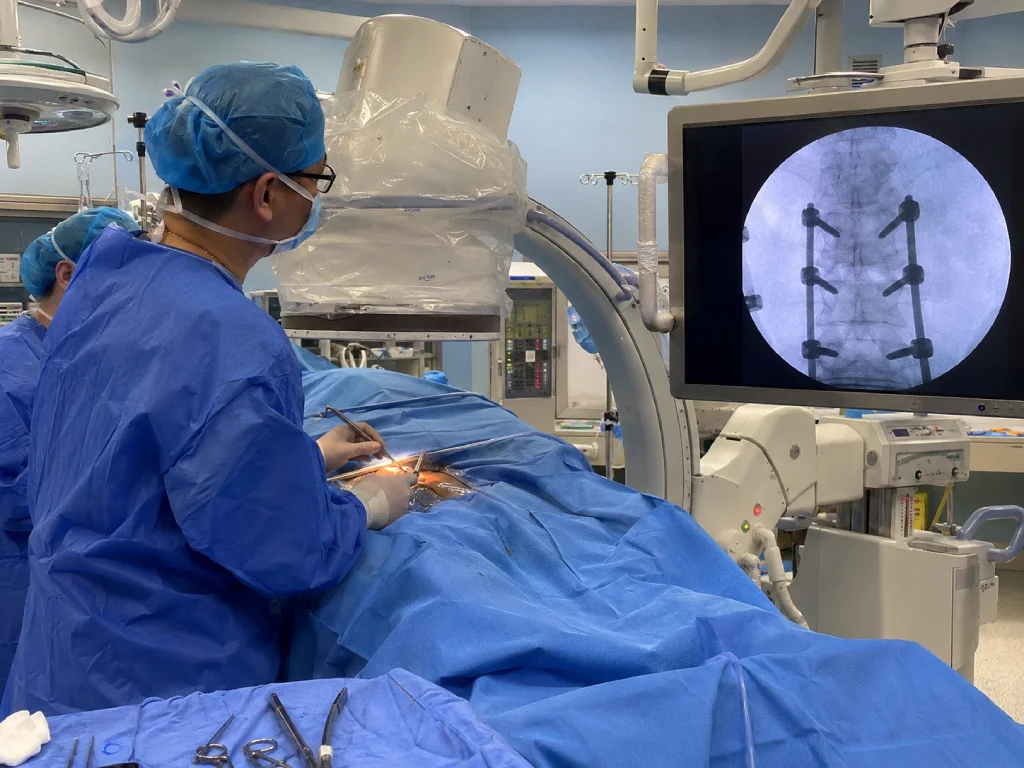
Spinal Fusion Surgery
Spinal fusion surgery is usually recommended when parts of the spine become unstable or severely degenerated. The procedure stabilizes the affected section to reduce painful movement and improve support. Some patients require cervical spine surgeries involving the neck. Others need lower spine surgery because of instability or degeneration affecting the lumbar area.
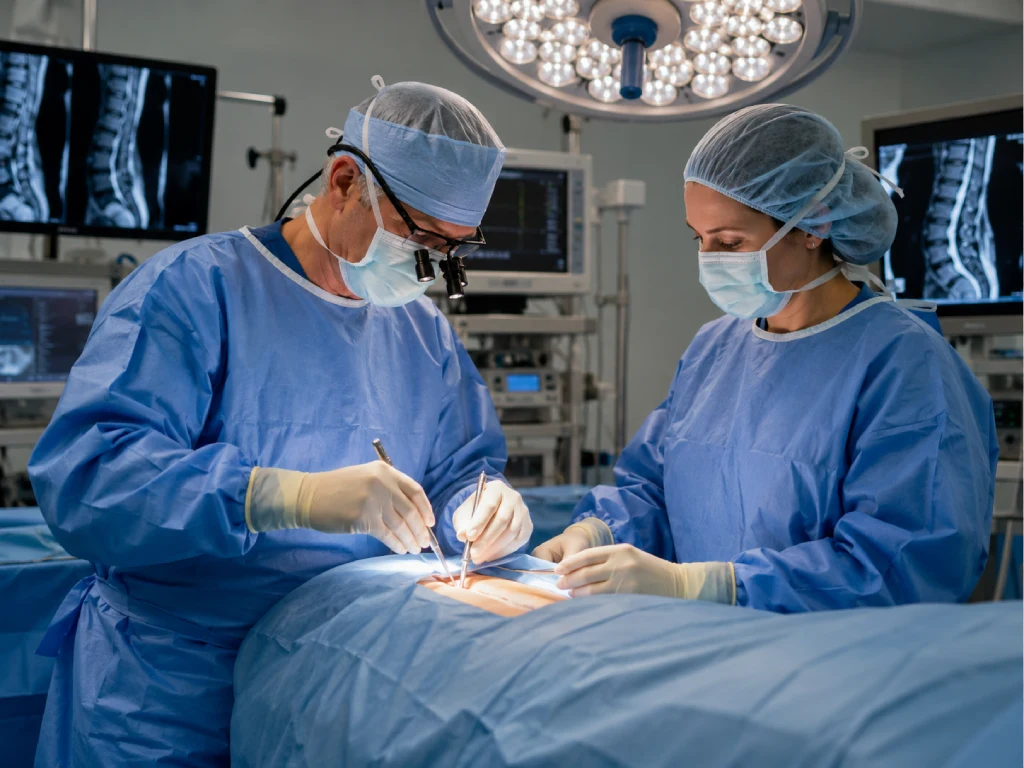
Spinal Decompression Surgery
Decompression surgery focuses on relieving pressure around spinal nerves. Herniated discs, spinal stenosis, arthritis changes, and thickened ligaments can narrow space around the nerves over time. Once that happens, patients may deal with numbness, tingling, weakness, burning pain, or sciatica symptoms down the leg. The surgery itself focuses on creating more room around the nerve.
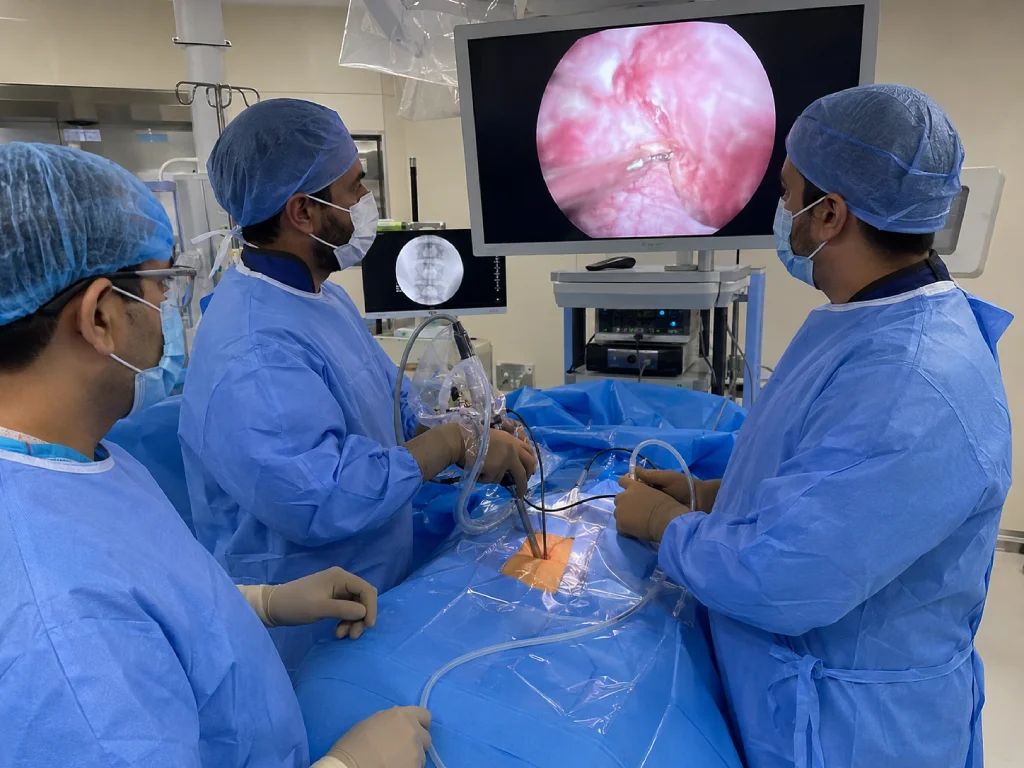
Endoscopic Spine Surgery
Endoscopic spine surgery uses a small camera and specialized instruments to access the spine through very small openings instead of larger incisions. In some cases, patients recover faster afterward because there is less disruption to surrounding tissue during surgery. Scarring is usually smaller too, compared to traditional back spine surgery techniques.
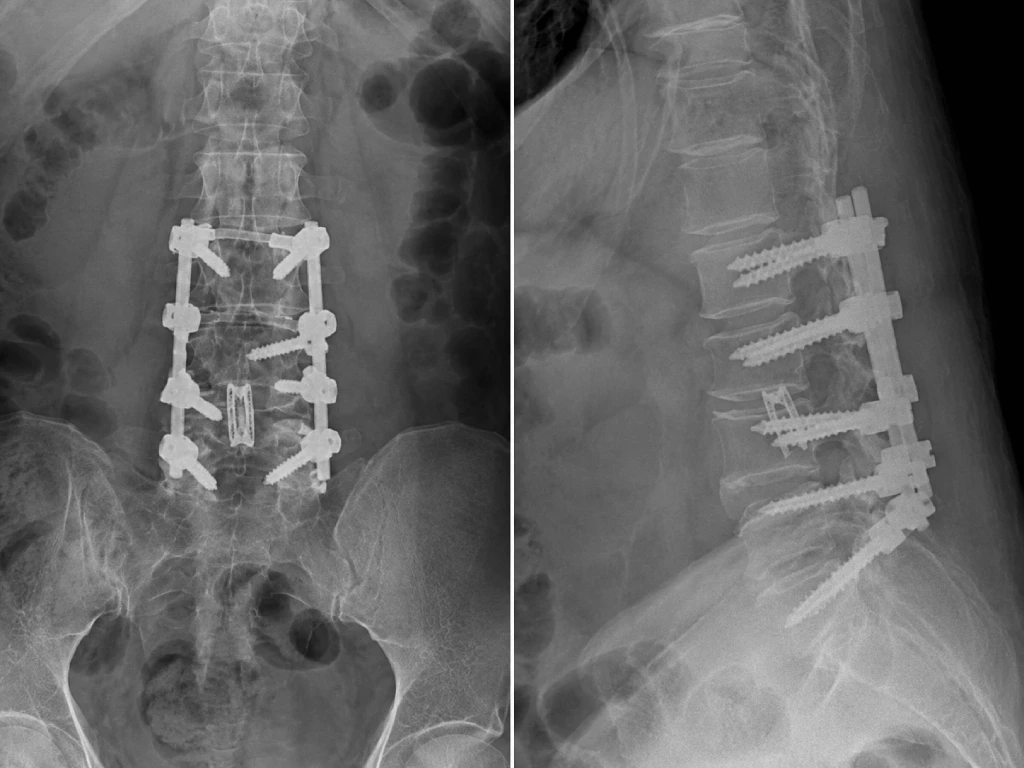
Revision Spine Surgery
Revision spine surgery is performed when a previous spine operation failed to fully solve the problem or new symptoms developed later. These surgeries are usually more difficult. Scar tissue, existing hardware, and altered anatomy from the original operation can all make treatment more complicated the second time around. Careful evaluation matters before moving into another procedure.
- Conditions
Conditions Treated with Our Spine Surgery Services
A lot of spine conditions create similar symptoms even when the underlying problem is completely different. One patient may have a herniated disc pressing on a nerve. Another may have spinal stenosis, slowly narrowing the canal over time. Somebody else may be dealing with degeneration across multiple spinal levels after years of wear and tear. That is why diagnosis comes first at Wong Spine. Imaging, physical examination findings, nerve symptoms, walking difficulty, and muscle weakness all help determine whether surgery makes sense and what type of procedure may actually help.
A herniated disc happens when part of the spinal disc pushes outward and irritates nearby nerves. Depending on the location, pain may travel into the arm, leg, neck, or lower back. It is one of the more common reasons patients eventually end up seeing a spine surgeon after conservative treatment stops helping.
Sciatica usually begins in the lower back before traveling through the buttocks and down the leg. Some people describe sharp pain. Others mainly notice numbness, burning, tingling, or weakness that gets worse after standing or walking too long. In many cases, nerve compression inside the spine is the actual source of the problem.
Spinal stenosis develops when the spinal canal gradually narrows and places pressure on nearby nerves. A lot of patients with stenosis complain about leg heaviness, trouble walking distances, balance problems, or weakness that slowly worsens over time. Usually it builds gradually, not overnight.
Degenerative disc disease happens over time as spinal discs slowly lose hydration and structural support. Some patients mainly feel stiffness in the morning. Others deal with recurring flare-ups, chronic pain, or reduced mobility that keeps getting worse year after year. Early evaluation can help determine what treatment options still make sense before degeneration progresses too far.
Chronic back pain is not always tied to one single condition. Disc problems, instability, nerve compression, joint degeneration, muscle imbalance, sometimes several things are happening together at the same time. That is part of what makes proper diagnosis important before speaking with a spine surgery surgeon about treatment options.
- Why Choose us
Why Choose Advanced Spine Surgery in Los Angeles?
Spine surgery has changed a lot over the years.
Large incisions and long recovery periods are not always necessary the way they once were. Modern imaging systems, robotic guidance, and minimally invasive techniques now allow many procedures to be performed with much less disruption to surrounding tissue.
Still, technology alone is not enough. Experience matters. Judgment matters too. Especially when deciding which patients actually need surgery and which ones may still improve without it.
Benefits of Minimally Invasive Techniques
Smaller incisions generally mean less disruption to the surrounding muscle and tissue during surgery. For some patients, that can lead to less soreness afterward and a smoother recovery process. Especially during certain cervical spine surgery and lumbar spine surgery procedures.
- Smaller surgical openings compared to traditional procedures
- Less muscle and soft tissue disruption during surgery
- Faster movement and recovery for many patients
Improved Surgical Precision
Modern surgery relies heavily on imaging and precision-guided technology. Robotic systems can help improve alignment and hardware placement during certain spinal procedures. That becomes important when surgery is happening close to delicate nerves and spinal structures.
- Advanced imaging used during surgical planning
- Improved hardware placement accuracy in complex cases
- Better visibility around nerves and spinal anatomy
Personalized Treatment Approach
Not every patient needs surgery right away. Some patients improve with therapy, medication, or injections first. Others eventually reach a point where weakness, instability, or worsening nerve symptoms make surgery the more realistic option. Dr. Wong builds treatment plans around the condition itself instead of forcing every patient into the same process.
- Treatment plans based on imaging and physical findings
- Surgical recommendations adjusted to condition severity
- Conservative treatment is considered before surgery when possible
- Patient Testimonial
What our patients says
EXCELLENTTrustindex verifies that the original source of the review is Google. When I went to see Dr. Wong, my spinal cord was 85% compressed at the T12 level and I had multiple issues in my lumbar spine, my back from T11 to S1 was failing me. I needed the assistance of a walker to walk and balance. I had a previous surgery with another surgeon and it was deemed as failed, my situation was not good. Dr. Wong literally rebuilt my spine from T11 to S1, if it weren’t for Dr. Wong and his incredible team, I would probably be in a wheelchair right now. Dr. Wong is a gifted surgeon who sincerely cares about his patients and the work he does. I am forever grateful and consider myself very fortunate and blessed to be his patient. Thank you Dr. Wong and team for giving me hope again.Posted on GoogleTrustindex verifies that the original source of the review is Google. Dr. Albert Wong is one of the BEST neurospine doctors in California! He really cares about patient care, he takes his time to listen and explain everything clearly. He builds trust with his patients. He has help so many patients get their life back, just one of the best doctors. Dr. Wong will make the time for his patients. Definitely recommend him!Posted on GoogleTrustindex verifies that the original source of the review is Google. Dr Wong is an amazing doctor! Dr Wong’s expertise and bedside manners are top notched. He is a tremendous surgeon as well. I would highly recommend Dr Wong as your ortho.Posted on GoogleTrustindex verifies that the original source of the review is Google. Dr. Albert Wong quite literally saved my life. I suffered from a quarter sized brain bleed and was rushed into emergency surgery. He not only allowed me to keep my hair and only shaved right where the surgery was performed, but he did such an amazing job. The area where I had surgery was numb for the first couple of months and I'm happy to report I have all feeling back in the designated area. Truly could not recommend him enough. He's also one of the kindest people I've ever had the pleasure of knowing. Would recommend him TENFOLD to anyone needing surgery.Posted on GoogleTrustindex verifies that the original source of the review is Google. I had back surgery, it was a successful procedure. Great bedside manner, great follow-up.Posted on GoogleTrustindex verifies that the original source of the review is Google. I’ve had surgery With Dr. Wong twice Once on the cervical and other was my spine. I had nothing but a great experience with him and his staff considering it was major surgery I’ve never felt better and I’m back to doing all the things I love but was unable to do before. Thank you Dr Wong 🙏🏻Posted on GoogleTrustindex verifies that the original source of the review is Google. Dr Wong is an exceptional, talented surgeon who cares deeply for his patients. Highly recommend!Posted on GoogleTrustindex verifies that the original source of the review is Google. Dr. Wong is an exceptional physician… thorough, knowledgeable, and compassionate. He listens and explains everything clearly. His attention to detail is unmatched. I trust him completely as he has greatly improved my life.Posted on GoogleTrustindex verifies that the original source of the review is Google. Dr Wong is an amazing Surgeon who was very thorough and explained in detail what my condition was and what to expect from surgeryPosted on GoogleTrustindex verifies that the original source of the review is Google. Dr. Wong has been helping me with sciatica issues for a long time. He’s very thoughtful with his care and I appreciate his thoroughness. My pain is much more manageable and he’s a big reason. Thank you Dr. Wong!
- Faqs
Frequently Asked Questions
Patients often arrive with similar concerns before spine surgery, including recovery time, available treatment options, and whether surgery is truly necessary. At Wong Spine, common questions come up during consultations about advanced procedures such as robotic spine surgery, endoscopic spine surgery, spinal fusion surgery, spinal decompression surgery, artificial disc replacement surgery, and revision spine surgery. These options are carefully considered based on each patient’s condition and treatment needs.
Not everybody with back or neck pain needs surgery. In many cases, symptoms improve with physical therapy, medication, injections, or other conservative treatment options. Surgery is usually considered when pain keeps getting worse, nerve compression starts causing weakness or numbness, or daily activities become difficult because of the condition.
Recovery time depends on the type of surgery, the condition being treated, and the patient’s overall health. Some minimally invasive procedures may allow patients to return to light activity within a few weeks, while more complex surgeries can require a longer recovery period.
Not always. Minimally invasive spine surgery can reduce muscle damage, blood loss, and recovery time in the right cases, but some spinal conditions still require traditional surgery for proper treatment. The best approach depends on the condition itself, not just the procedure style.
A spine surgeon can treat conditions such as herniated discs, sciatica, spinal stenosis, degenerative disc disease, chronic back pain, nerve compression, and spinal instability. Treatment recommendations vary depending on imaging findings and symptom severity.
Spine robotic surgery is designed to improve surgical accuracy during certain procedures, especially those involving spinal hardware placement and alignment. The technology helps support precision during surgery, but patient outcomes still depend heavily on proper surgical planning and experience.