Artificial Disc Replacement Surgery in Los Angeles
Dr. Albert Wong performs artificial disc replacement surgery for certain cervical and lumbar spine conditions where preserving movement may be possible while addressing the damaged disc itself.

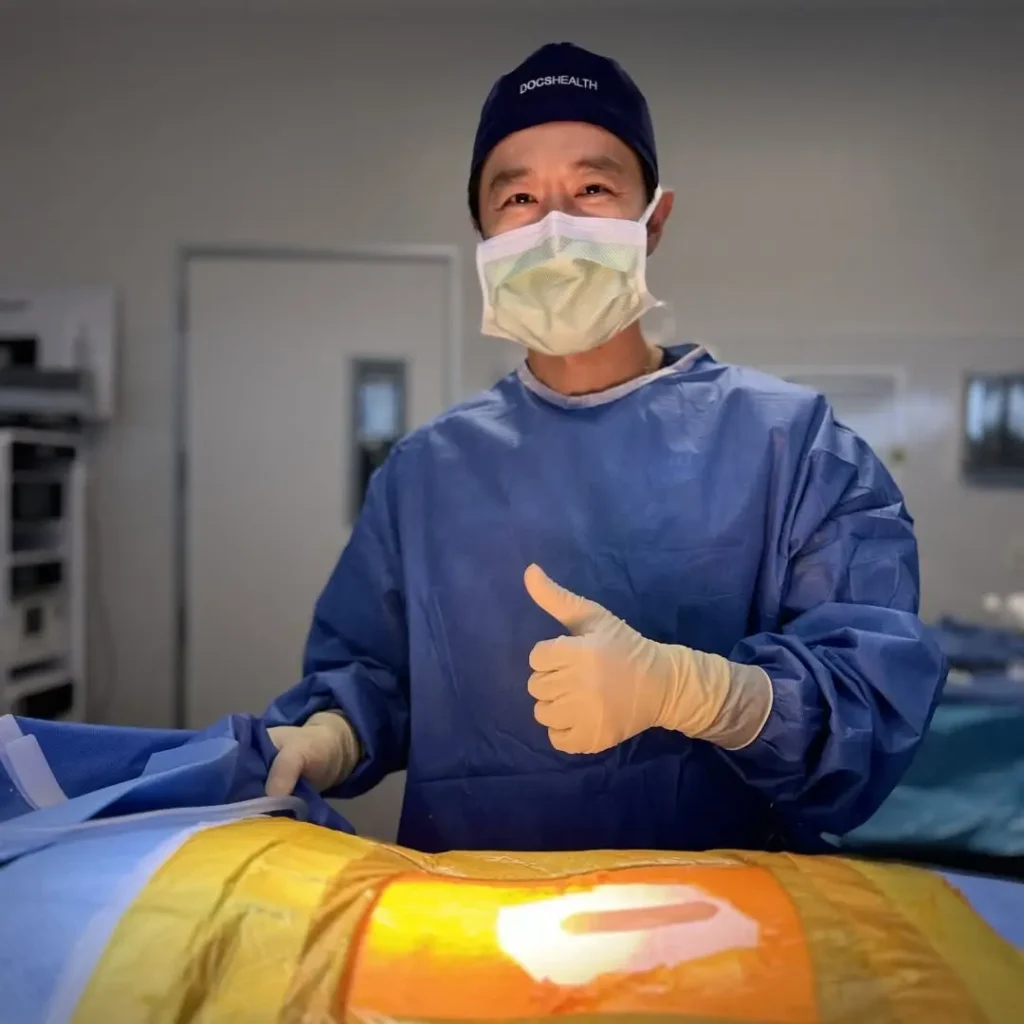
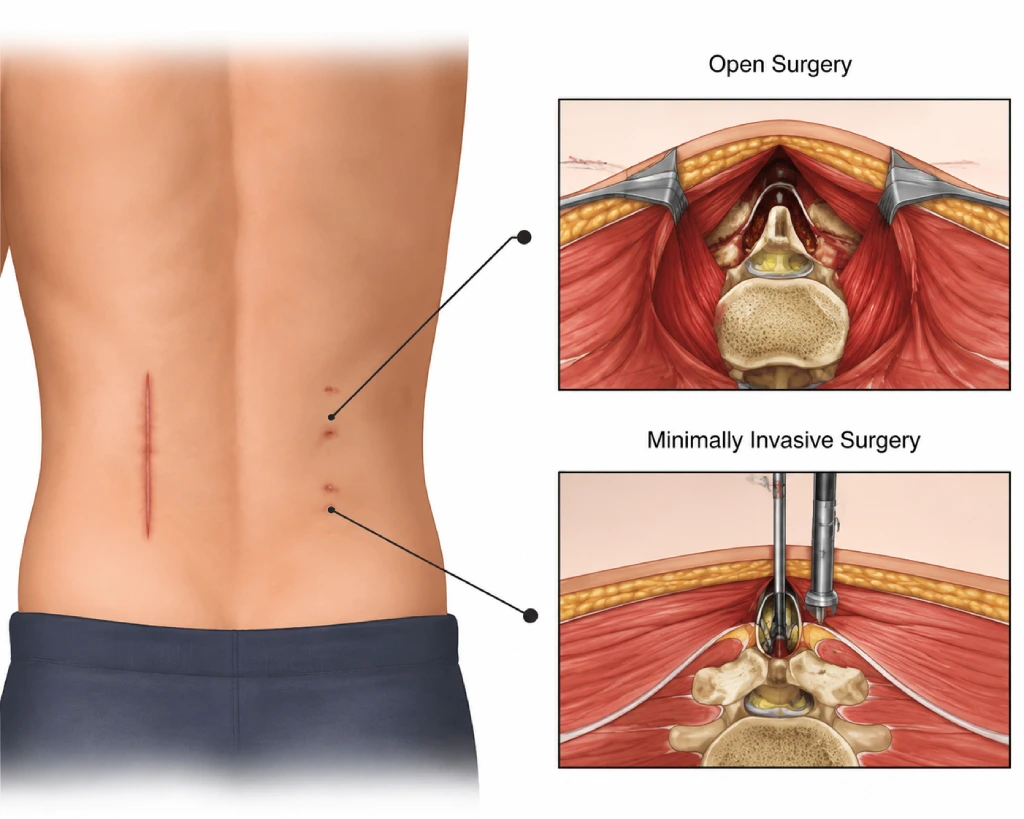
- Artificial Disc Replacement
Understanding Artificial Disc Replacement Surgery
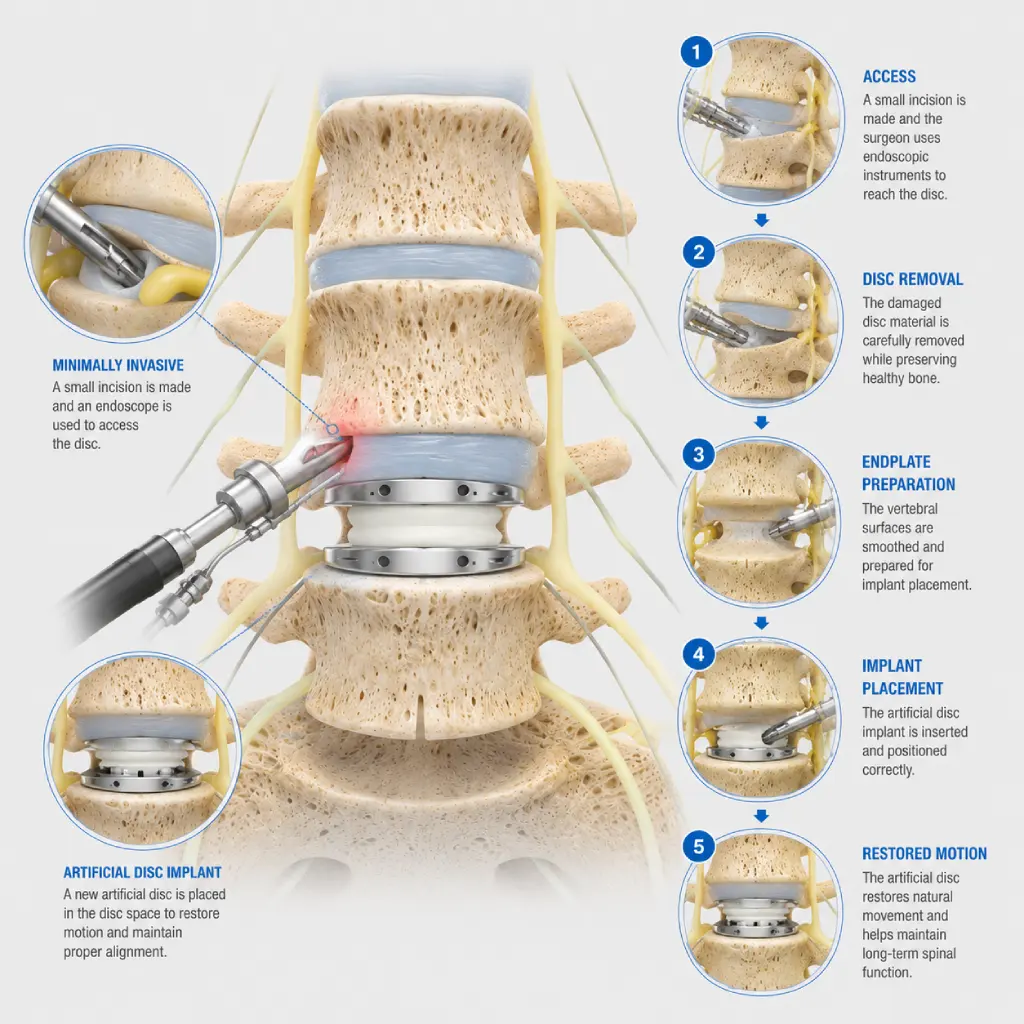
A lot of patients hear the word “replacement” and immediately picture a hip replacement or knee replacement. The idea isn’t completely different. During artificial disc replacement surgery, the damaged spinal disc is removed and replaced with an artificial implant designed to maintain movement between the vertebrae. The goal is treating the painful disc without permanently locking that level of the spine together. That last part gets a lot of attention. Especially from patients who are already comparing disc replacement to fusion surgery.
How Artificial Disc Replacement Procedures Work
The actual operation is only part of the process. Before surgery is ever discussed seriously, imaging studies, symptoms, and physical examination findings all need to line up. A damaged-looking disc on an MRI doesn’t automatically mean it’s causing the problem.
During surgery, the affected disc is removed, and an artificial implant is positioned between the vertebrae. The replacement device is intended to support normal spinal movement while helping maintain stability at the treated level.
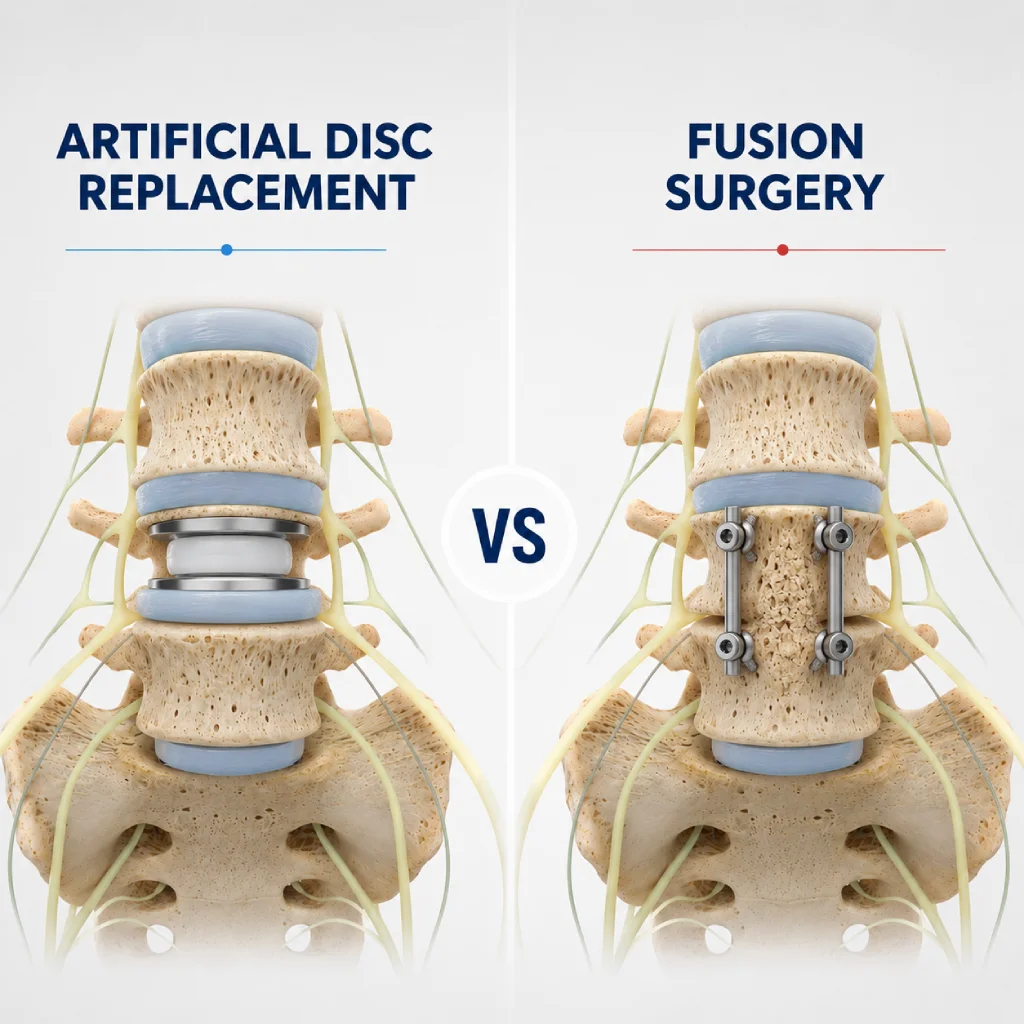
Artificial Disc Replacement vs Fusion Surgery
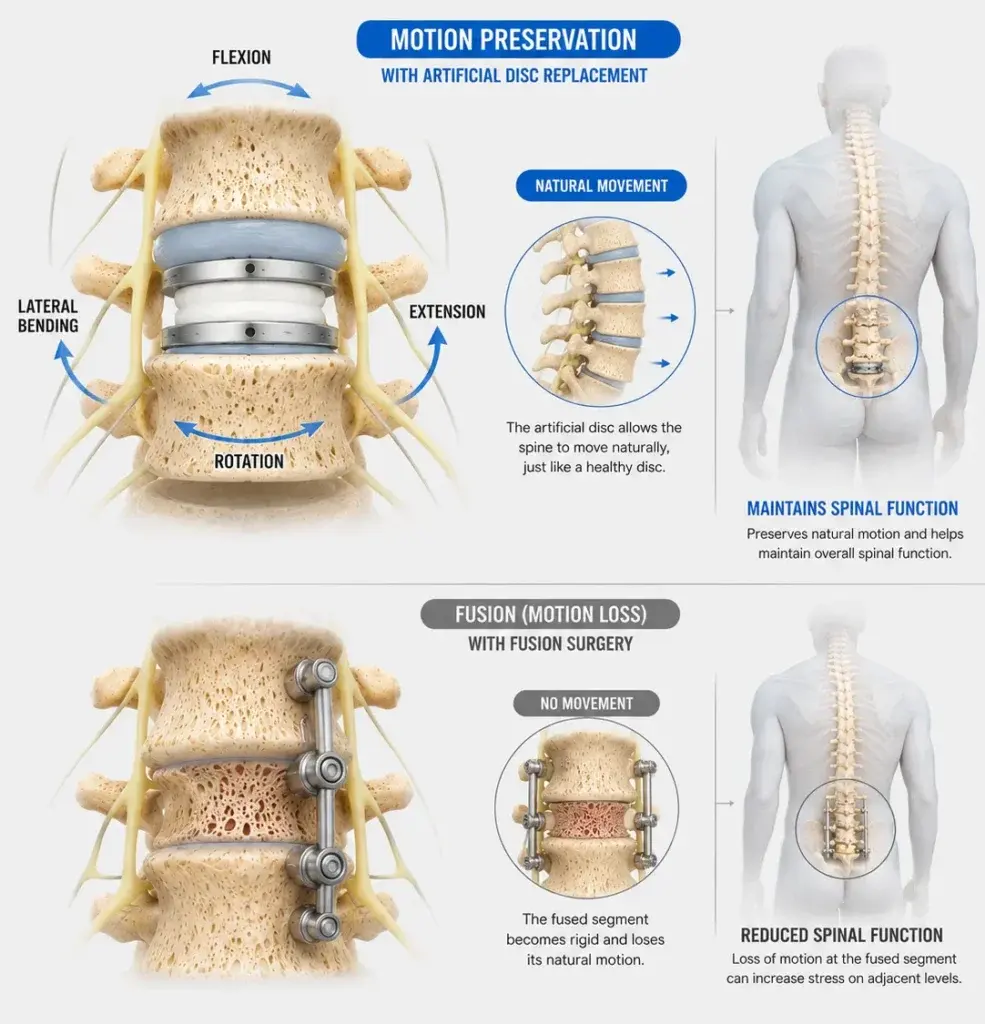
This is usually one of the first questions patients ask. Fusion surgery removes movement at the affected level by joining two vertebrae together permanently. Disc replacement takes a different approach. Instead of eliminating motion, the procedure aims to preserve it.
That doesn’t mean everybody should choose one over the other. Some patients are excellent candidates for disc replacement. Others have spinal conditions where fusion simply makes more sense. The right answer depends on the spine sitting in front of the surgeon, not what’s trending online.
Motion Preservation and Spinal Function
One reason artificial cervical disc replacement surgery and lumbar disc replacement procedures have gained attention over the years is the idea of preserving movement after surgery. People tend to focus on the implant itself. That’s understandable.
What they’re really interested in is whether they’ll be able to move more normally once recovery is complete. For the right patient, maintaining motion at the treated level may help support overall spinal function while still addressing the underlying disc problem.
- Conditions
Conditions Commonly Treated with Artificial Disc Replacement Surgery
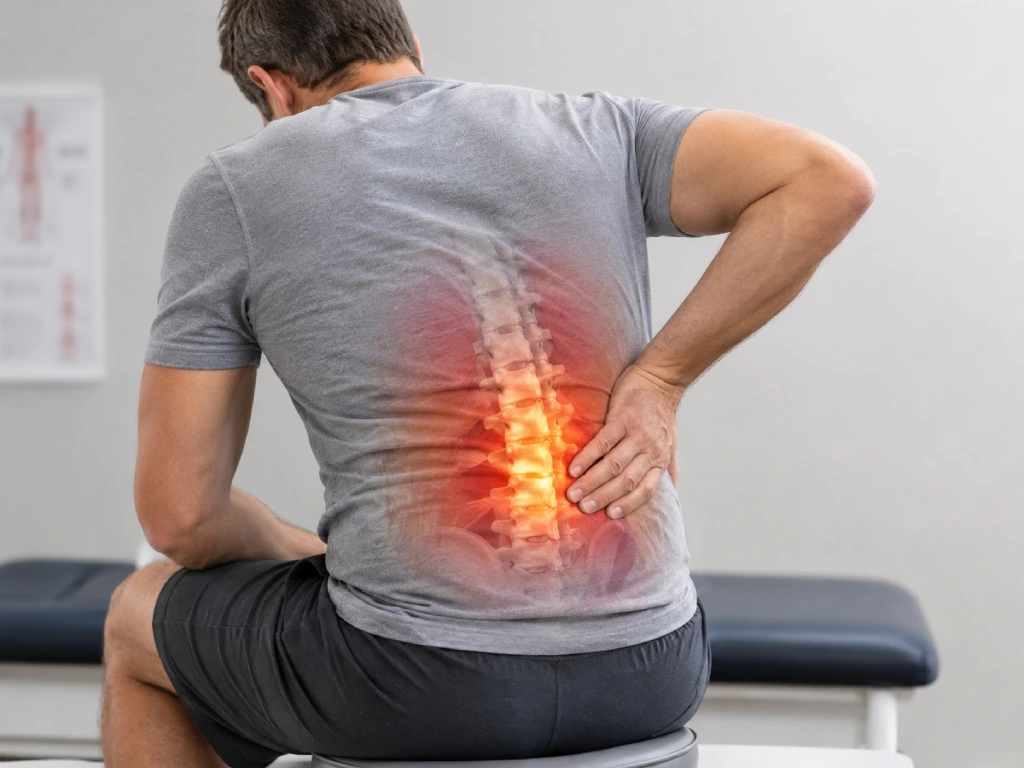
Not every damaged disc needs surgery. In fact, most never reach that point. But when symptoms continue affecting work, sleep, exercise, or day-to-day function despite conservative treatment, surgery may become part of the conversation.
Cervical Disc Herniation
A disc problem in the neck can do more than create neck pain. Patients often report symptoms traveling into the shoulder, arm, or hand. Tingling, numbness, weakness, and burning pain. Sometimes all of them at once. In selected cases, cervical artificial disc replacement surgery may help relieve nerve pressure while maintaining motion within the neck.
Nerve Compression in the Neck
People researching artificial disc replacement surgery in neck conditions are often dealing with symptoms that extend well beyond the neck itself. Tasks that used to feel routine become irritating. Sleeping gets harder. Some notice weakness. Others notice persistent numbness that never seems to completely settle down. When conservative care stops helping, surgery may become an option worth evaluating.
Degenerative Disc Disease
Some discs wear down quietly over time. Others become impossible to ignore. What starts as occasional stiffness can gradually turn into persistent pain that keeps showing up no matter what somebody tries. For certain patients with advanced degeneration, artificial lumbar disc replacement surgery or cervical disc replacement may be considered when non-surgical treatment no longer provides meaningful relief.
Lumbar Disc Disorders
The lower back handles a tremendous amount of stress over time. When a damaged lumbar disc becomes a consistent source of pain and imaging findings support the diagnosis, artificial lumbar disc replacement surgery may be considered for carefully selected patients looking to maintain movement rather than undergo fusion.
- Benefits
Benefits of Artificial Disc Replacement Surgery
Most patients aren’t interested in surgical technology for the sake of technology. They want to know what life may look like afterward.
Preserving Movement at the Treated Level
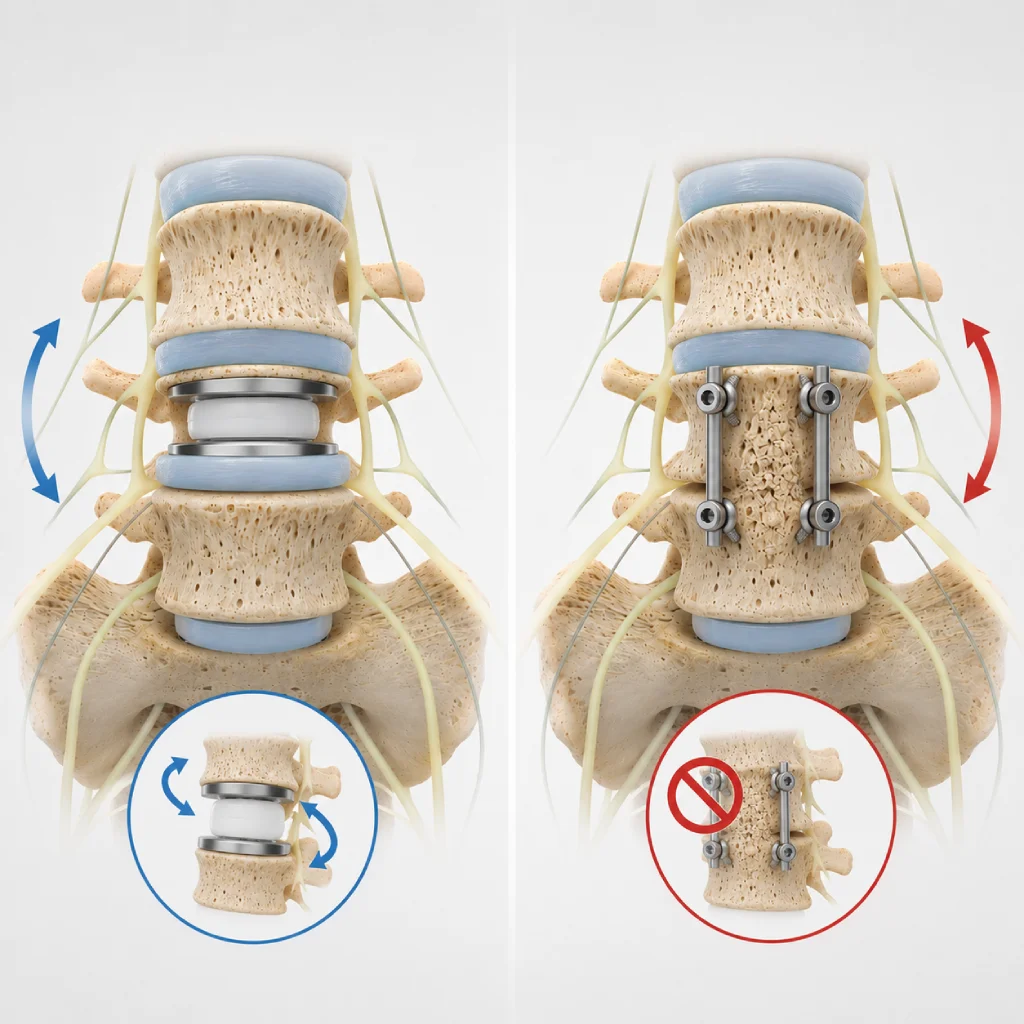
This is usually the feature that grabs attention first. Unlike fusion procedures, artificial disc replacement is designed around maintaining motion at the surgical level.
- Maintains movement at the treated segment
- Avoids permanently locking the level
- Supports normal spinal mechanics
- Designed to function similarly to a natural disc
Supporting Spinal Mobility
Movement matters more than most people realize until it starts disappearing. For properly selected patients, preserving motion may help maintain flexibility and function after recovery.
- Allows continued spinal movement
- Supports everyday physical activity
- Preserves motion at the treated level
- May improve long-term mobility
Returning to Activity
Pain has a way of shrinking people’s lives. Work becomes harder. Exercise gets abandoned. Simple activities start requiring more planning than they should. Many patients pursue surgery because they want to get back to doing normal things again.
- Improved daily function
- Relief of certain nerve-related symptoms
- Increased activity tolerance
- Improved mobility during recovery
Avoiding Fusion in Selected Cases
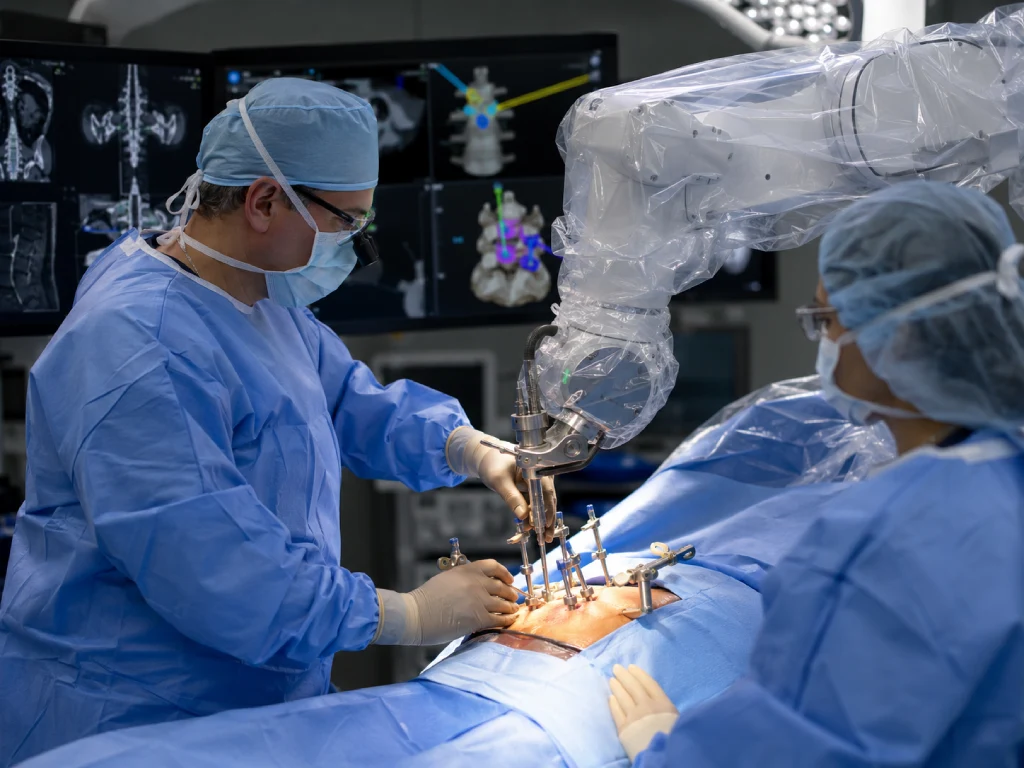
Not everybody wants fusion surgery if another appropriate option exists. Artificial disc replacement gives certain patients a motion-preserving alternative when their condition and anatomy make them reasonable candidates.
- Motion-preserving treatment option
- Maintains flexibility after healing
- Addresses the damaged disc directly
- Alternative to fusion in selected patients
- Who Needs
Who Is a Candidate for Robotic Spine Surgery?
A surprising number of abnormal MRIs never become surgical. That’s important because imaging alone doesn’t determine treatment.
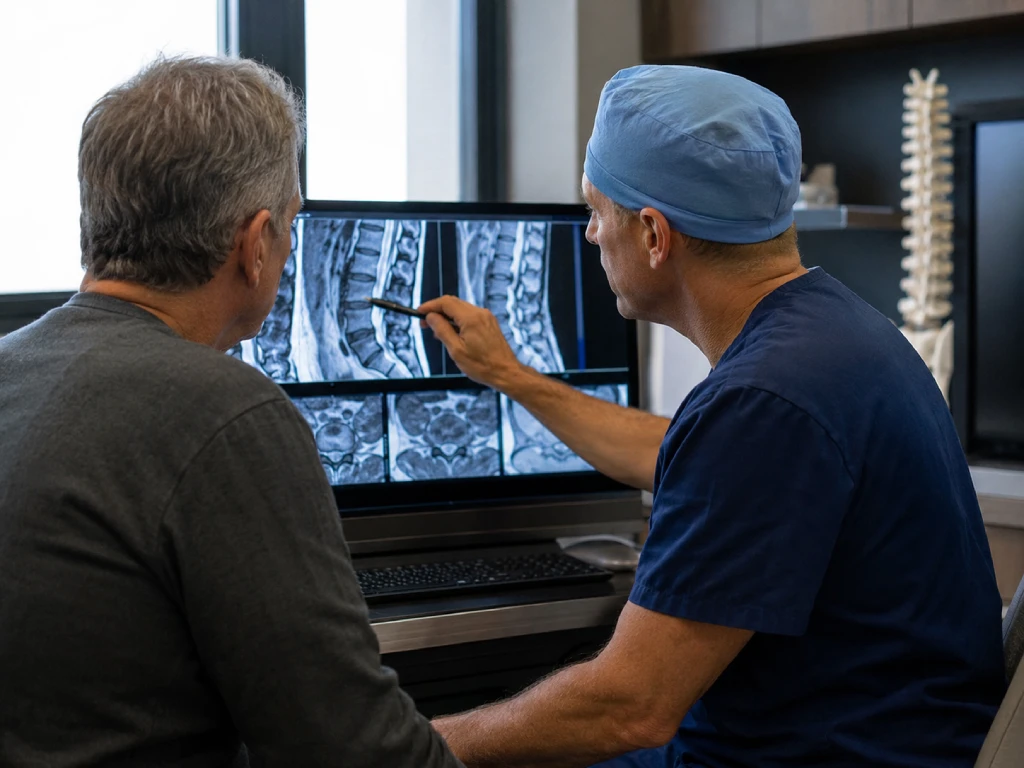
Patients being considered for artificial disc replacement are typically evaluated based on symptoms, examination findings, imaging results, and how much the condition is affecting daily life.
When Surgery May Be Considered
Surgery usually enters the discussion after conservative treatment stops producing meaningful improvement. Persistent neck pain, arm symptoms, lower back pain, weakness, numbness, and ongoing nerve irritation are some of the reasons patients begin exploring surgical options.
Comprehensive Evaluation Process
Before recommending surgery, the underlying source of symptoms needs to be identified as accurately as possible. That often involves imaging review, neurological evaluation, physical examination, and discussion about previous treatment attempts.
Conservative Treatment Usually Comes First
Most patients spend considerable time trying non-surgical treatment before surgery is considered.
Physical therapy, medication, injections, activity modification, and rehabilitation may help enough that surgery becomes unnecessary. Sometimes they don’t. That’s when other options start getting discussed.
- Procedure
Artificial Disc Replacement Surgery Procedure
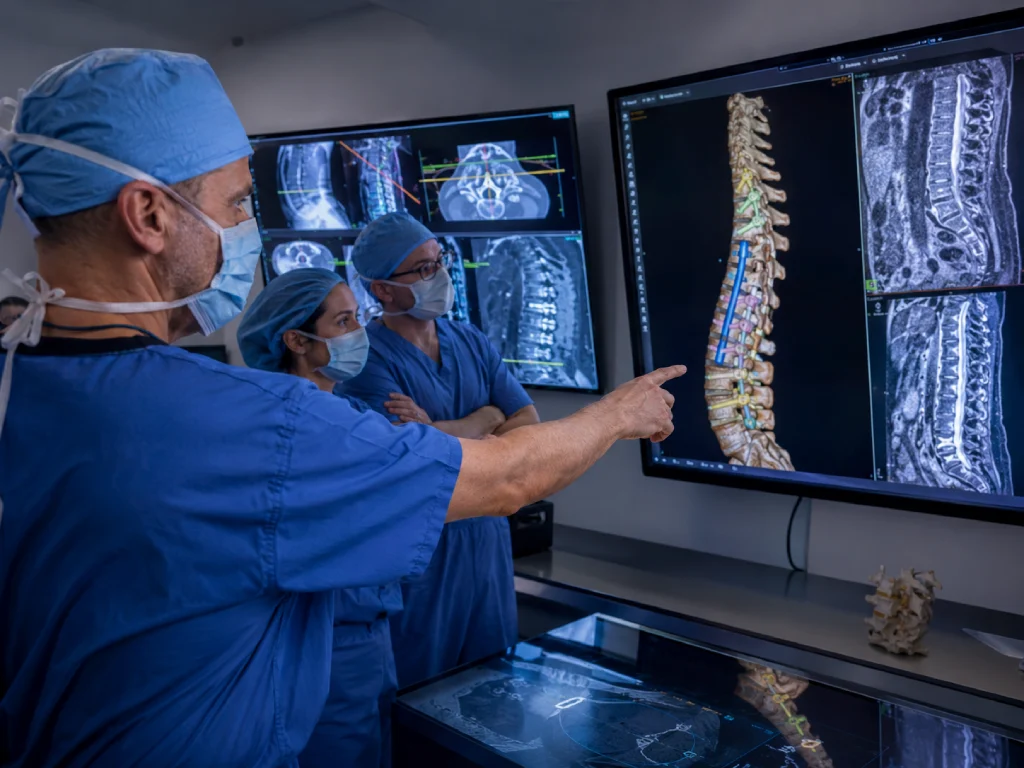
The actual surgery is only one part of the process. Planning happens first. A lot of it. Imaging, alignment review, implant positioning, and risk assessment are all studied beforehand so the procedure is mapped out around the patient’s anatomy instead of relying entirely on decisions made during surgery.
Preoperative Planning
The planning phase helps determine whether artificial disc replacement is appropriate and how the procedure should be performed.
MRI and imaging review
Detailed imaging helps identify the affected disc and surrounding anatomy.
Implant selection planning
The replacement device is selected based on the patient's condition.
Motion preservation assessment
The surgical plan focuses on maintaining appropriate movement.
Patient-specific preparation
Every procedure is tailored to the individual spine.
During the Procedure
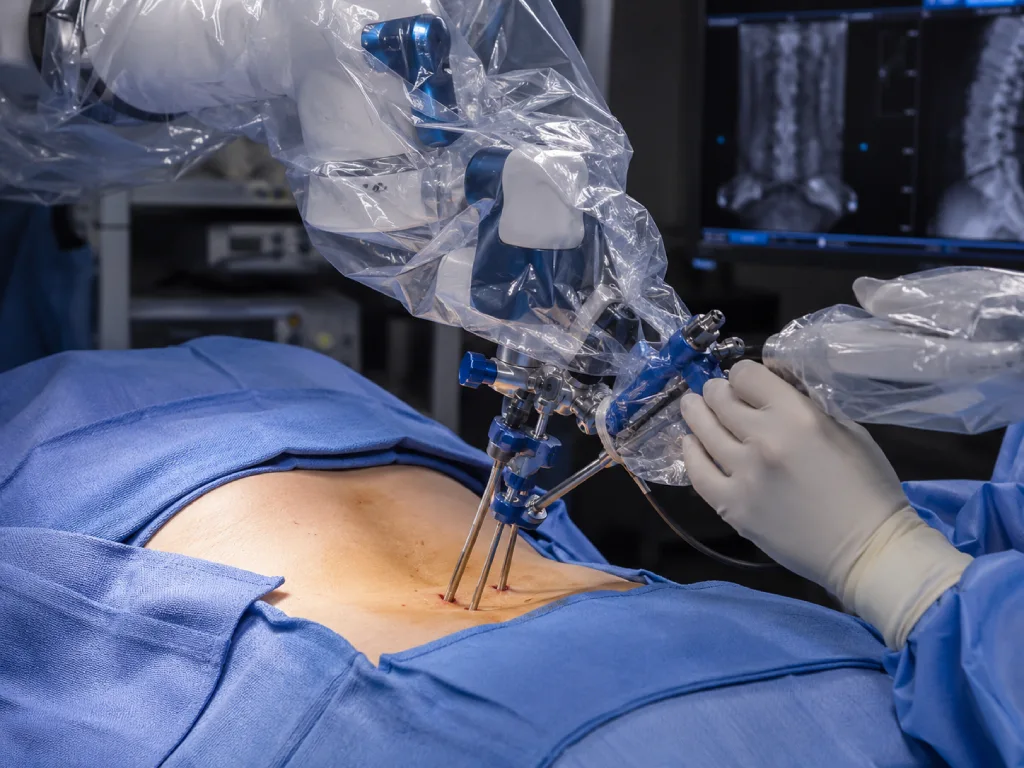
The damaged disc is removed and replaced with an artificial implant positioned at the affected level. The goal is addressing the source of symptoms while maintaining stability and movement.
Disc removal
The damaged disc is carefully removed.
Artificial implant placement
The replacement device is positioned within the disc space.
Surgeon-controlled procedure
Every step remains under the surgeon's direct control.
Motion and positioning assessment
Implant placement is evaluated before surgery is completed.
Recovery Immediately After Surgery
Patients are monitored after surgery while mobility and recovery begin gradually. Instructions vary depending on the procedure performed and the patient’s overall condition.
Postoperative monitoring
Patients are observed closely during early recovery.
Pain management support
Medication and recovery guidance help manage discomfort.
Early mobility
Walking and light movement often begin early.
Recovery instructions
Activity guidelines are adjusted individually.
- Recovery
Recovery After Artificial Disc Replacement Surgery
The internet tends to make recovery look cleaner than it usually is. Some patients improve quickly. Others need more time than expected. That’s true for almost every type of spine surgery. Still, many patients researching recovery from artificial disc replacement surgery want a realistic idea of what comes next.
01
Recovery Timeline
The first few weeks are generally focused on healing, walking, and gradually increasing activity levels. Overall artificial disc replacement surgery recovery time varies depending on the condition treated, the surgical level, and individual healing factors. Patients looking into cervical artificial disc replacement surgery recovery often find that recovery experiences vary considerably from one person to another.

02
Physical Therapy and Rehabilitation
Recovery doesn't stop once the incision heals. Physical therapy may help improve mobility, flexibility, strength, posture, and movement patterns as healing progresses. Rehabilitation plans are usually adjusted over time rather than following a rigid schedule.
03
Returning to Normal Activities
Most people return to activity gradually. Work, exercise, lifting, and recreational activities are reintroduced in stages. Patients reading about cervical spine artificial disc replacement surgery recovery experiences often discover that comparing recovery timelines too closely can create unrealistic expectations.

- Why Choose us
Why Patients Choose Dr. Wong for Artificial Disc Replacement Surgery
Patients looking for a spine surgeon usually care about more than technology. Experience matters. Judgment matters too. Dr. Albert Wong is a dual fellowship-trained neurosurgeon specializing in minimally invasive and complex spine procedures in Los Angeles.
Experience Treating Complex Disc Conditions
Disc problems rarely look identical from one patient to the next. Dr. Wong evaluates conditions involving degeneration, nerve compression, disc herniation, instability, and other spinal disorders requiring individualized treatment planning.
- Dual fellowship-trained spine specialist
- Experience treating cervical and lumbar disc disorders
- Detailed surgical planning focused on precision
Advanced Surgical Technology
Modern imaging and surgical technology help support planning and procedural accuracy. Technology is important. Using it appropriately is what matters.
- Advanced imaging systems assist surgical planning
- Precision-focused instrumentation supports treatment
- Modern techniques designed around spinal preservation
Patient-Focused Care
Some patients need surgery. Some don't. Every recommendation begins with understanding the patient's symptoms, imaging findings, limitations, and goals rather than forcing the same treatment plan onto everybody.
- Recommendations based on individual needs
- Clear discussion of treatment options
- Focus on recovery and long-term function
- Area We Serve
Serving Patients Across Los Angeles and Surrounding Areas
Patients travel to Wong Spine from throughout Los Angeles and surrounding communities for advanced spinal care, artificial disc replacement surgery, and motion-preserving treatment options. Dr. Wong evaluates both cervical and lumbar spine conditions and develops treatment plans designed around the individual patient rather than a one-size-fits-all approach.
- Patient Testimonial
What our patients says
EXCELLENTTrustindex verifies that the original source of the review is Google. When I went to see Dr. Wong, my spinal cord was 85% compressed at the T12 level and I had multiple issues in my lumbar spine, my back from T11 to S1 was failing me. I needed the assistance of a walker to walk and balance. I had a previous surgery with another surgeon and it was deemed as failed, my situation was not good. Dr. Wong literally rebuilt my spine from T11 to S1, if it weren’t for Dr. Wong and his incredible team, I would probably be in a wheelchair right now. Dr. Wong is a gifted surgeon who sincerely cares about his patients and the work he does. I am forever grateful and consider myself very fortunate and blessed to be his patient. Thank you Dr. Wong and team for giving me hope again.Posted on GoogleTrustindex verifies that the original source of the review is Google. Dr. Albert Wong is one of the BEST neurospine doctors in California! He really cares about patient care, he takes his time to listen and explain everything clearly. He builds trust with his patients. He has help so many patients get their life back, just one of the best doctors. Dr. Wong will make the time for his patients. Definitely recommend him!Posted on GoogleTrustindex verifies that the original source of the review is Google. Dr Wong is an amazing doctor! Dr Wong’s expertise and bedside manners are top notched. He is a tremendous surgeon as well. I would highly recommend Dr Wong as your ortho.Posted on GoogleTrustindex verifies that the original source of the review is Google. Dr. Albert Wong quite literally saved my life. I suffered from a quarter sized brain bleed and was rushed into emergency surgery. He not only allowed me to keep my hair and only shaved right where the surgery was performed, but he did such an amazing job. The area where I had surgery was numb for the first couple of months and I'm happy to report I have all feeling back in the designated area. Truly could not recommend him enough. He's also one of the kindest people I've ever had the pleasure of knowing. Would recommend him TENFOLD to anyone needing surgery.Posted on GoogleTrustindex verifies that the original source of the review is Google. I had back surgery, it was a successful procedure. Great bedside manner, great follow-up.Posted on GoogleTrustindex verifies that the original source of the review is Google. I’ve had surgery With Dr. Wong twice Once on the cervical and other was my spine. I had nothing but a great experience with him and his staff considering it was major surgery I’ve never felt better and I’m back to doing all the things I love but was unable to do before. Thank you Dr Wong 🙏🏻Posted on GoogleTrustindex verifies that the original source of the review is Google. Dr Wong is an exceptional, talented surgeon who cares deeply for his patients. Highly recommend!Posted on GoogleTrustindex verifies that the original source of the review is Google. Dr. Wong is an exceptional physician… thorough, knowledgeable, and compassionate. He listens and explains everything clearly. His attention to detail is unmatched. I trust him completely as he has greatly improved my life.Posted on GoogleTrustindex verifies that the original source of the review is Google. Dr Wong is an amazing Surgeon who was very thorough and explained in detail what my condition was and what to expect from surgeryPosted on GoogleTrustindex verifies that the original source of the review is Google. Dr. Wong has been helping me with sciatica issues for a long time. He’s very thoughtful with his care and I appreciate his thoroughness. My pain is much more manageable and he’s a big reason. Thank you Dr. Wong!
- Faqs
FAQs About Artificial Disc Replacement Surgery
Patients considering spine surgery usually have a lot of questions before making any decisions. Below are some of the most common questions people ask about robotic-assisted spine surgery, recovery, safety, and treatment options in Los Angeles.
Artificial disc replacement surgery is a procedure that removes a damaged spinal disc and replaces it with an artificial implant designed to maintain movement at the treated level. It may be performed in the cervical or lumbar spine depending on the condition being treated and whether the patient is an appropriate candidate.
Recovery from artificial disc replacement surgery varies from patient to patient. Some people return to light activities relatively quickly, while others require a longer recovery period depending on healing, overall health, and the procedure performed. Full recovery may continue for several weeks or months.
Like any spine procedure, cervical artificial disc replacement surgery carries risks. For properly selected patients, however, it has become an established treatment option for certain cervical disc conditions. Patient selection and surgical planning remain important parts of the process.
Artificial cervical disc replacement surgery is performed in the neck, while lumbar artificial disc replacement surgery is performed in the lower back. Although both procedures involve replacing a damaged disc with an artificial implant, patient selection, surgical approach, and recovery expectations can differ.
Artificial disc replacement surgery cost depends on several factors, including insurance coverage, surgical facility fees, implant selection, and the complexity of treatment. Patients asking about artificial cervical disc replacement surgery cost or lumbar artificial disc replacement surgery cost should discuss those details during consultation.
Patients interested in artificial disc replacement neck surgery, cervical disc replacement, or lumbar disc replacement can schedule a consultation with Wong Spine. Dr. Albert Wong evaluates each case individually and determines whether artificial disc replacement or another treatment approach is the most appropriate option.