

Most people hear “spine surgery” and assume the worst. Big operation, long recovery, and stuck in bed for weeks. Well, that actually used to be the reality.
Now, a lot of procedures fall under minimally invasive spine surgery, which changes how the whole thing feels, especially early on. Smaller entry points. Less pulling on the muscle. You’re not cut open the same way as before.
But keep in mind, surgery is still tough.
The World Health Organization estimates that hundreds of millions of people deal with lower back pain that comes from spinal issues worldwide. Only a very small fraction of those ever end up needing surgery. And when they do, this is the procedure that often comes up.
What Is Minimally Invasive Spine Surgery?
Think of it as a different way of getting to the same problem.
Traditional spinal surgery involves cutting through your muscles and tissues to reach the affected bone area. Obviously, the more damage your body takes, the longer it takes to recover from the surgery.
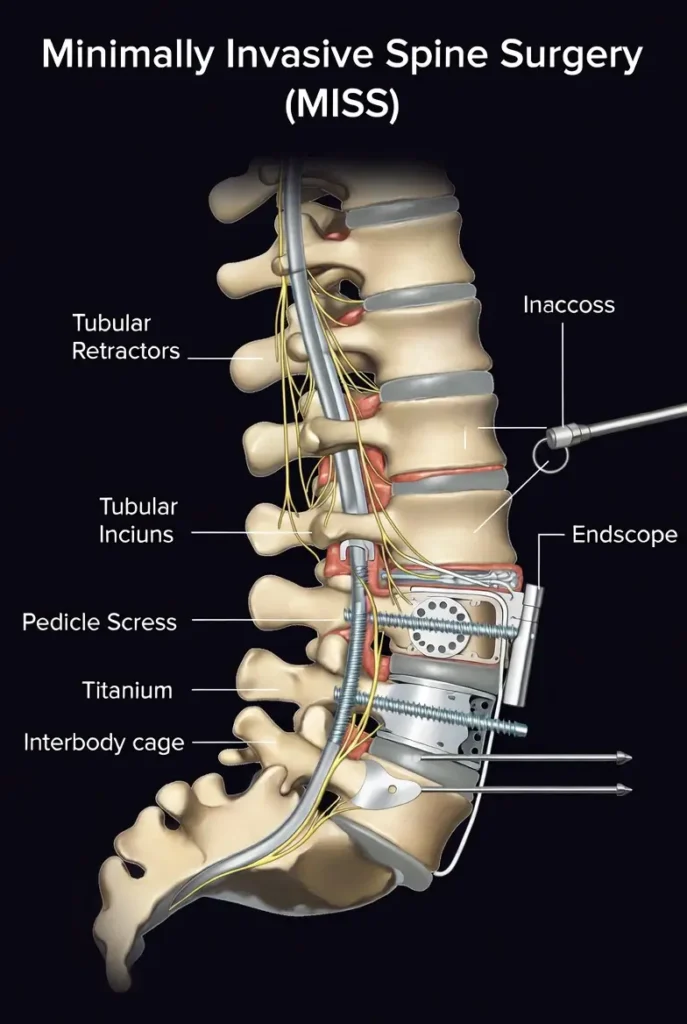
Instead of opening up a large area, expert neurosurgeons now go in through smaller paths. They use cameras or guided tools to reach the exact spot that’s causing trouble. So, when people say minimally invasive back surgery, they usually mean less disruption and damage getting in and out.
No “no disruption”, just less.
When Does It Actually Get Used?
You don’t go to the operating table in step one. Most back issues are solved without surgery. The National Institute of Arthritis and Musculoskeletal and Skin Diseases points out that non-surgical care is the first step used in these cases.
Surgery, including minimally invasive back pain treatment, comes into the picture when rest, medication, and other non-surgical methods fail to get things right. Usually, the following types of cases are more likely to end up in surgery.
- A disc pressing on a nerve that won’t calm down
- Narrouing around the nerves
- Certain stability problems in the spine
Even in these cases, proceeding to surgery depends. It’s not always the only way.
Types of Minimally Invasive Spine Surgery
There are several types of minimally invasive spine surgery. It depends on what’s causing the issue. Some are pretty focused, others are a bit more involved. Here are the most common types you may come across:
Microdisectomy
This one comes up a lot with spinal disc problems. In a microdiscectomy, a small part of the disc that’s pressing on a nerve gets removed. That’s the simplest way to put it.
If the nerve pressure was the main issue, it can provide a pretty noticeable relief.
Minimally Invasive Laminectomy
Used when there isn’t enough space around the nerves. A small piece of bone is taken out to open things up. Same idea as the traditional approach, just done with less disruption getting there.
Minimally Invasive Spinal Fusion
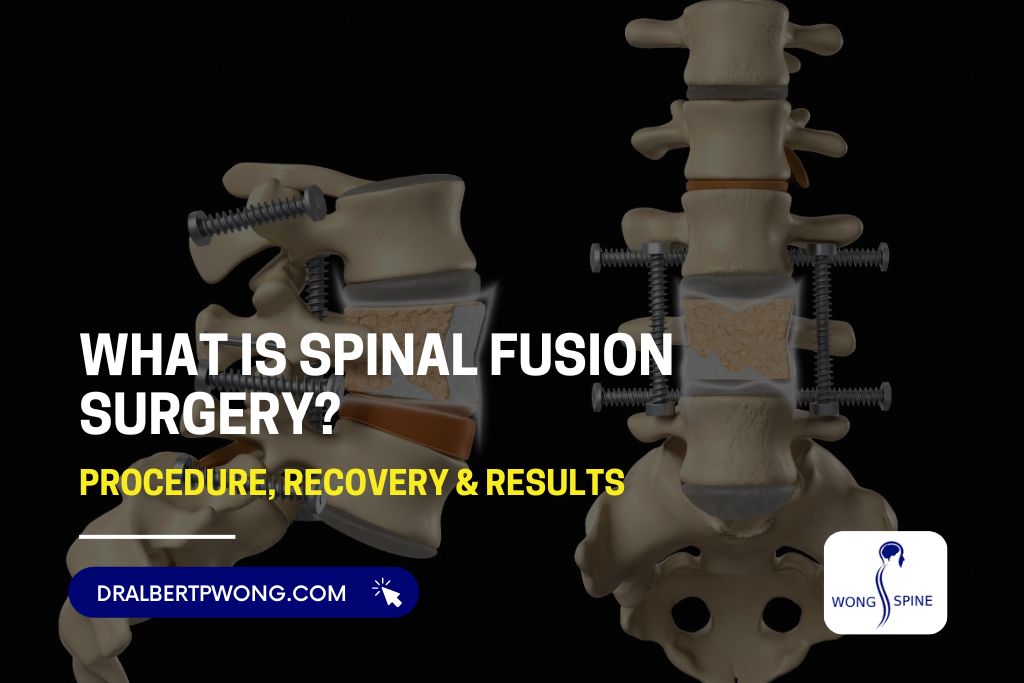
This one is heavier than the others. The goal here is to stop movements between two bones in the spine. It is possible to complete spinal fusion surgery now through smaller openings. However, recovery still takes quite a bit of time.
Vertebroplasty or Kyphoplasty
This is more about fractures than discs.
Neurosurgeons inject medical grade bone cement into the bone to stabilize the fracture. This is a quick procedure in most of the cases. This deals with a different type of problem with a different type of fix.
Endoscopic Spine Surgery
Things get more precise in endoscopic spine surgery. A tiny camera goes in, and everything is done through that. This is a very targeted and controlled process. It is not used for every spine surgery, but pretty useful in the right cases.
Quick Side by Side Look
Here is a quick side-by-side basic analysis of different types of minimally invasive spine surgery.
| Procedure | What’s Going On | What Gets Done |
| Microdisectomy | Disc pressing nerve | Small portion removed |
| Laminectomy | Not enough space | Bone trimmed to open space |
| Fusion | Too much movement | Bones joined together |
| Vertebroplasty | Weak/fractured bone | Stabilized from inside |
| Endoscopic | Various | Camera guided repair |
That is the basic spread of types of minimally invasive spine surgery you’ll commonly hear about.
What Feels Different Compared to Open Surgery
The biggest difference patients feel with a minimally invasive spine surgery is in the recovery process. This is where people notice it:
- The cuts are smaller
- Muscles aren’t moved around as much
- Getting up and walking tends to happen sooner
This is why minimally invasive back surgery has become more common.
It’s not magic, so yeah, full recovery still takes time.
What is Recovery Actually Like
People often misunderstand quick recovery. No, it is not instant. Your body doesn’t work like that.
You might start moving around sooner, sure. But your body still needs time to settle. Some days feel better, others feel stiff again. Then better again. That up and down part often catches people off guard more than anything.
Is This Always The Best Option?
Smaller cuts don’t mean that this is automatically the best option.
Sometimes, the condition becomes too complex for this approach. In those cases, traditional surgery still makes more sense.
So, this is not about one procedure being better than the other. It’s about what your body needs and what fits the problem.
Final thought
Minimally invasive spine surgery is really just a shift in how surgeons get to the problem.
Less disruption on the way in. More focus on the exact spot causing pain.
For the right case, that can make recovery feel a bit smoother early on.
But at the end of the day, the goal stays the same. Take pressure off nerves, stabilize what needs stabilizing, and get you moving without that constant pain hanging around.
FAQs
What is minimally invasive spine surgery?
It’s spine surgery done through small openings instead of large cuts. Tools and sometimes a camera are used to reach the problem area without opening up the whole section.
Is minimally invasive back surgery safer?
In many situations, it leads to less muscle disruption and a smoother early recovery. But whether it’s “safer” really depends on the condition and how complex the case is.
What problems can it treat?
Mostly things like herniated discs, nerve compression, narrowing in the spine, and some fractures. Not every spine issue fits this approach, though.
How long does recovery take?
You may be up and moving sooner compared to traditional surgery. But full recovery still takes time. Could be weeks, it could be a few months, depending on what was done.
Is there still pain after minimally invasive spine surgery?
Yeah, there is. Usually less early pain compared to open surgery, but your body still needs time to heal, so some discomfort is expected at the start.