
Nobody goes into disc surgery thinking about timelines first. It usually comes after weeks or months of pain that didn’t settle.
By the time surgery is on the table, the question shifts.
Not “Will this fix it?”
More like, “How long until I’m back to normal?”
That’s where things get a bit less clear, because herniated disc surgery recovery isn’t one straight path. It depends on the person, the type of surgery, and how the body responds afterward.
Still, there are patterns you’ll see in most cases.
What Happens Right After Surgery
The first thing people notice is this.
The original nerve pain is often reduced pretty quickly. Not always gone, but different. Then comes a different kind of discomfort. More local, more surgical.
You’re usually up and moving sooner than expected. In many cases, walking starts the same day or the next. That surprises people with back pain issues.
Herniated Disc Recovery Time (Realistic View)
Let’s answer the big one.
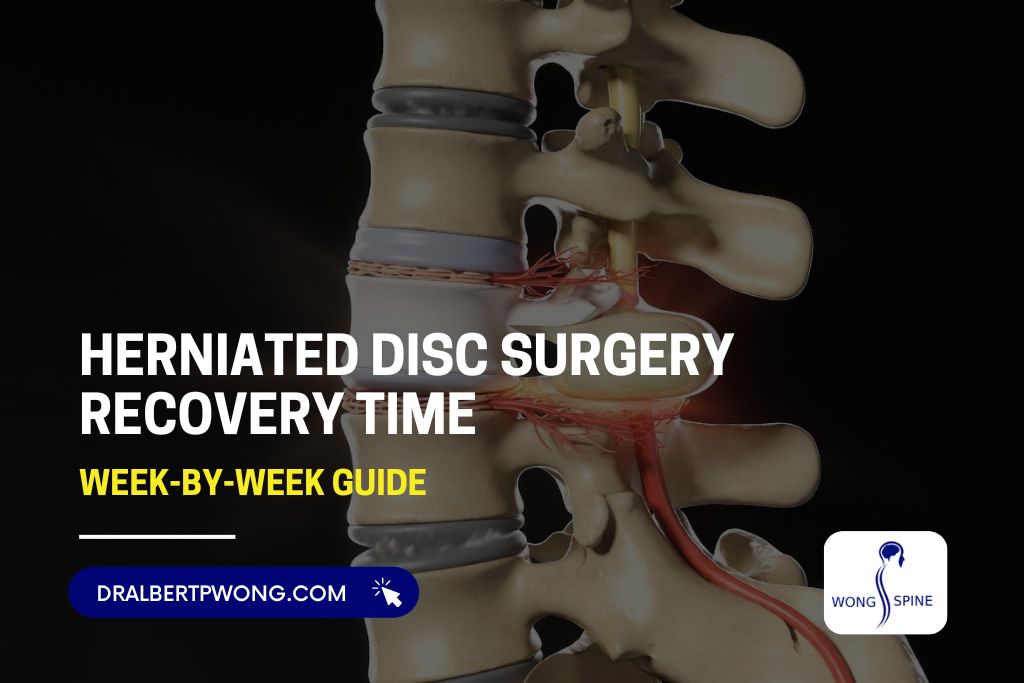
Herniated disc recovery time varies, but most people fall into a general window.
The National Library of Medicine says that the recovery time depends on the severity of the case. On average, it takes 6-12 weeks for 60% to 80% patients to recover from a herniated disc surgery.
So when people ask how long herniated disc recovery takes, here’s the grounded answer.
Most people start feeling better within weeks. Full recovery can stretch into a few months.
Recovery Timeline (What Most People Go Through)
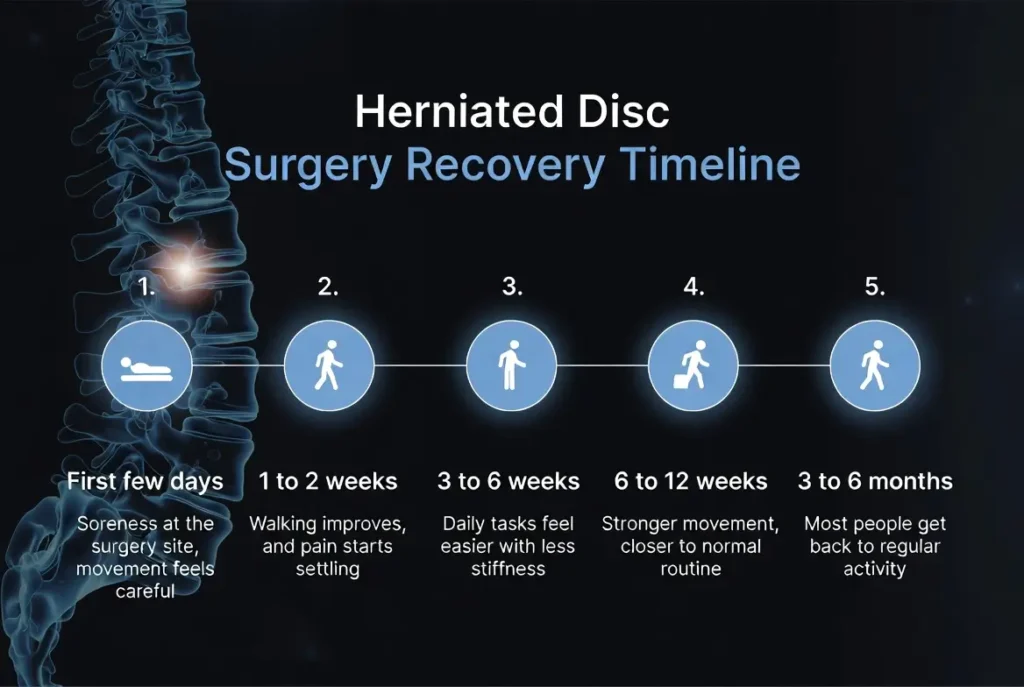
Here is the recovery timeline sorted in a table so you get a clear image of it.
| Time After Surgery | What It Usually Feels Like |
| First few days | Soreness at the surgery site, movement feels careful |
| 1 to 2 weeks | Walking improves, and pain starts settling |
| 3 to 6 weeks | Daily tasks feel easier with less stiffness |
| 6 to 12 weeks | Stronger movement, closer to normal routine |
| 3 to 6 months | Most people get back to regular activity |
This gives a rough picture of recovery time for herniated disc surgery. Not exact, but close enough to set expectations.
Lumbar vs Cervical Recovery (Does Location Matter?)
Yes, it does.
Lower back and neck discs don’t behave exactly the same after surgery.
- Recovery time for herniated lumbar disc surgery: Usually involves more focus on sitting, bending, and lifting habits.
- Cervical herniated disc recovery time: Often involves neck movement, posture, and sometimes shoulder or arm symptoms.
Both improve over time, but the restrictions feel different day to day.
L4-L5 Herniated Disc Surgery Recovery Time
This level gets mentioned a lot. The L4-L5 disc sits in the lower back and takes a fair amount of load in daily movement. So, L4-L5 herniated disc surgery recovery time often follows the general lumbar timeline, but people may notice:
- Sitting for long periods takes time to feel normal again
- Bending forward feels tight early on
- Leg symptoms take a bit to fully settle
Nothing unusual, just part of how that area works.
What Affects Recovery Speed
Not everyone heals at the same pace. A few things tend to shift the timeline.
- Overall health and age
- How long the nerve was compressed before surgery
- Type of procedure done
- How consistent is rehab afterward
This is why spinal disc herniation surgery recovery can feel quick for some and slower for others.
What Recovery Actually Feels Like
This part isn’t talked about enough. Recovery isn’t a straight upward line.
Some days feel better. Then suddenly a bit of stiffness comes back. Then it settles again.
That’s totally normal in herniated disc cases.
When people talk about herniated disc operation recovery, they often expect a steady climb. It’s usually more uneven than that.
What Helps Recovery Go Smoother
You don’t need anything complicated here. Just consistency.
- Walking regularly without overdoing it
- Following rehab instructions, even when progress feels slow
- Avoiding heavy lifting too early
- Paying attention to posture without obsessing over it
That’s the practical side of herniated lumbar disc recovery.
When Recovery Feels Slower Than Expected
Sometimes things don’t move as fast as you hoped. That doesn’t always mean something is wrong.
Nerves take time to calm down, especially if they were irritated for a while before surgery.
But if pain is getting worse instead of better, or new symptoms show up, that’s when it needs a closer look.
Final Thought
So, what’s the real answer to herniated disc recovery time after surgery?
Most people improve steadily over weeks and months. Not overnight, but not endlessly either.
The surgery handles the pressure part. The rest is your body settling, adapting, and getting back to normal movement.
Give it time, and don’t expect it to feel perfect right away.
FAQs
How long does it take to recover from herniated disc surgery?
Most people aren’t “fully back” in a couple of weeks, even if they feel better early on.
You’ll usually see some relief pretty quickly, especially if nerve pain was the main issue. But getting back to normal movement, work, and daily stuff can take a few months. It’s more of a steady build than a quick turnaround.
What is the recovery time for herniated lumbar disc surgery?
For lower back discs, people often start moving around better in a few weeks.
But sitting, bending, and lifting can take longer to feel normal again. A lot of people land somewhere in that 6 to 12 week range for noticeable progress, then keep improving after that. So it doesn’t stop at one fixed point.
Is cervical herniated disc recovery time different?
Yeah, it feels different more than anything.
With neck surgery, it’s less about sitting and more about how your neck and shoulders move. Things like turning your head or holding a posture can feel tight early on. The timeline is still similar overall, just a different kind of adjustment.
How long is the L4-L5 herniated disc surgery recovery?
This one comes up a lot because that level takes a lot of load.
Recovery usually follows the standard lower back pattern, but people often notice that sitting for long periods or bending forward takes a bit more time to feel right again. Nothing unusual, just how that area works.