Spine surgery can help relieve pain and fix problems. Two types of surgeons often do this: orthopedic surgeons and neurosurgeons. Orthopedic surgeons focus on bones and joints. Neurosurgeons focus on the spinal cord and nerves. Both can treat many spine conditions. The right choice depends on your diagnosis and symptoms.
What Is Spine Surgery, and Why Might You Need It?
Spine surgery fixes problems in your back or neck pain. It targets bones, disks, nerves, or soft tissues. The goal is to ease pain or improve function.
Surgeons use open or minimally invasive methods. Open surgery involves a large cut. It moves muscles. Minimally invasive uses small cuts. Tools like scopes help. This reduces tissue damage. Recovery speeds up.
Your doctor chooses based on your issue.
Common Conditions Treated
Surgery helps when other treatments fail.
Key reasons include:
- Herniated disk: Disk bulges. It presses nerves. Causes pain, numbness, and weakness.
- Spinal stenosis: Canal narrows. Squeezes nerves. Leads to leg pain and walking issues.
- Scoliosis: Spine curves abnormally. Surgery straightens it.
- Degenerative disk disease: Disks break down. Causes pain and instability.
- Tumors: Growths compress the spine or cord. Lead to weakness.
- Fractures: Broken bones from injury or weak bones. Surgery stabilizes.
- Chronic pain: Lasting back or neck pain from these problems.
Surgery relieves symptoms like pain or loss of function.
Non-Surgical Options First
Doctors start with non-surgery treatments. These work for many.
Options include:
- Physical therapy: Builds strength. Boosts flexibility. Cuts pain.
- Medications: Use ibuprofen for pain. Add muscle relaxants. Try steroids.
- Injections: Steroid shots ease swelling and pain.
Get tests like MRI or CT first. They pinpoint issues. If symptoms persist for 6-12 weeks, consider surgery. Discuss risks and benefits with your doctor.
Statistics on Spine Surgery
About 900,000 U.S. adults have spine surgery each year. Around 500,000 target low back problems.
Success rates are 70% to 90% for procedures like fusion or decompression. Most patients gain pain relief and better function. Results vary by health, condition, and surgeon skill. Second surgeries drop to about 30% success. Talk expectations with your provider.
Who Is an Orthopedic Surgeon, and What Do They Specialize In?
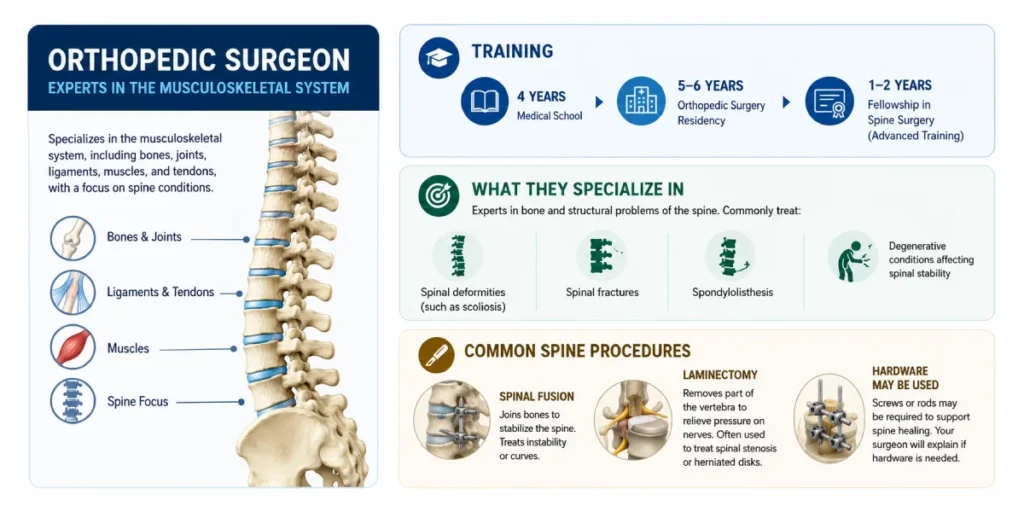
An orthopedic surgeon is a doctor who specializes in the musculoskeletal system. This includes bones, joints, ligaments, muscles, and tendons. Many orthopedic surgeons focus specifically on treating spine conditions.
Training
Orthopedic surgeons complete four years of medical school. They then finish a five to six-year orthopedic surgery residency. Some doctors choose an extra one to two years of fellowship training in spine surgery to gain advanced skills.
What They Specialize In
Orthopedic surgeons are experts in bone and structural problems of the spine. They commonly treat:
- Spinal deformities (such as scoliosis)
- Spinal fractures
- Spondylolisthesis
- Degenerative conditions affecting spinal stability
Common Spine Procedures
Orthopedic surgeons perform many spine surgeries. Key ones include:
- Spinal fusion: Joins bones to stabilize the spine. It treats instability or curves.
- Laminectomy: Removes part of the vertebra to relieve pressure on nerves. Often used to treat spinal stenosis or herniated disks.
Surgery may include hardware such as screws or rods to support spine healing. The surgeon will explain if hardware is needed for your condition.
Who Is a Neurosurgeon, and What Do They Specialize In?
A neurosurgeon is a physician specially trained to treat diseases and conditions of the brain, spinal cord, and nerves.
Neurosurgeons operate on the entire nervous system. In addition to brain surgery, they perform many procedures on the spine.
Training
Neurosurgeons undergo one of the longest training programs in medicine.
- 4 years of medical school
- 1 year general surgery internship
- 6 to 7 years of neurosurgery residency
- Optional 1-2 year fellowship in spine surgery
This extensive training gives them deep expertise in the nervous system.
Spine Expertise
Neurosurgeons are highly skilled at treating spine problems that involve the spinal cord or nerves.
They specialize in:
- Spinal cord compression
- Spinal tumors
- Nerve root compression
- Complex spine disorders
Their main focus is protecting the spinal cord and nerves during surgery.
What spine surgeries do neurosurgeons perform?
Neurosurgeons do many spine procedures. Common examples include:
- Microdiscectomy: Removes part of a herniated disk to free nerves.
- Tumor resection: Removes growths from the spine or cord.
- Laminectomy: Widens the spinal canal for decompression.
- Spinal fusion: Joins bones for stability.
Minimally invasive methods often involve smaller incisions, which can lead to faster recovery.
Talk to your doctor if you have spine issues. They can explain your options.
Learn how to make the most of your first neurosurgical appointment by reading our detailed guide.
What Are the Key Differences in Training Between Orthopedic Surgeons and Neurosurgeons?
Orthopedic surgeons and neurosurgeons both perform spine surgery, but training paths differ. Focus and skills depend on each specialty.
Residency Training
The biggest difference comes during residency:
- Orthopedic Surgeons: Complete a 5-year residency. They focus mainly on the musculoskeletal system—bones, joints, muscles, and ligaments.
- Neurosurgeons: Complete a 6- to 7-year residency. They focus on the nervous system, including the brain, spinal cord, and nerves.
Fellowship Training
After residency, both may choose to do a spine fellowship (1–2 extra years):
- Orthopedic spine fellowships emphasize spinal instrumentation, bone fusion, deformity correction, and hardware placement.
- Neurosurgery spine fellowships place a stronger focus on nerve protection, spinal cord surgery, and tumor removal.
Important Notes
Modern training programs now have more overlap than in the past. Both specialties receive strong spine surgery education. Board certification is available for both after completing their training. If you want to understand the difference between a neurologist and a neurosurgeon, read our guide to neurologist vs. neurosurgeon.
What Types of Spine Conditions Are Best Treated by Orthopedic Surgeons?
Orthopedic surgeons focus on spine problems related to bones and structure. Treatment includes correcting alignment issues, stabilizing the spine, and repairing fractures, making them a strong choice for these conditions.
Common Conditions
These include:
- Scoliosis: Curved spine that may need correction.
- Kyphosis: Forward hunch in the upper back.
- Spondylolisthesis: Slipped vertebra causing pain.
- Traumatic fractures: Broken spine bones from injury.
They also treat degenerative disc disease and spinal stenosis when structure is key.
Why Orthopedic Surgeons Excel
Orthopedic surgeons have expertise in bone alignment and musculoskeletal care. Fusion techniques join vertebrae, and hardware such as screws or rods stabilizes the spine. Training emphasizes treatment of deformities and injuries.
Examples
- A teen with scoliosis may need rods to straighten a worsening curve.
- A spine fracture from a fall can be repaired with plates to prevent further injury.
When to Collaborate
Some cases involve both bone and nerve issues. Orthopedic surgeons and neurosurgeons work together to treat the spine and nervous system. Discuss team-based care options with your doctor.
What Types of Spine Conditions Are Best Treated by Neurosurgeons?
Neurosurgeons treat spine problems involving nerves and the spinal cord. The focus is on protecting neural tissue, making them well-suited for complex nerve conditions.
Common Conditions
These include:
- Intradural tumors: Growths inside the cord’s covering.
- Chiari malformation: Brain tissue extends into the spinal canal.
- Syringomyelia: Fluid-filled cyst in the cord.
- Spinal cord injuries: Damage from trauma affecting function.
They also treat vascular malformations like abnormal blood vessels.
Why Neurosurgeons Excel
Neurosurgeons train in nerve protection and work with precision near the spinal cord. This reduces risks such as paralysis. Skills in tumor removal and spinal cord decompression make them effective for complex nerve cases.
Examples
- A tumor pressing on the spinal cord can be safely removed.
- A spinal cord injury from a car crash can be repaired to support recovery.
When to Collaborate
Neurosurgeons often work with orthopedic surgeons on bone-related issues. This occurs in deformities or fractures that involve nerve risks. Team-based care improves outcomes.
When should you choose an orthopedic surgeon for your spine surgery?
An orthopedic surgeon may be the right choice if your spine problem mainly affects your bones, joints or disks. These conditions often do not involve major nerve damage.
You may be referred to an orthopedic surgeon for:
- Degenerative spine disease, such as arthritis or disk wear
- Sports-related spine injuries
- Spine problems that affect movement or stability
- Pain without significant numbness or weakness
Other factors to consider include:
- The surgeon’s experience with your specific procedure
- The hospital or spine center where they operate
- Patient reviews and outcomes
You may need a neurosurgeon instead if you develop warning signs such as worsening numbness, muscle weakness, or bowel or bladder problems.
When should you choose a neurosurgeon for your spine surgery?
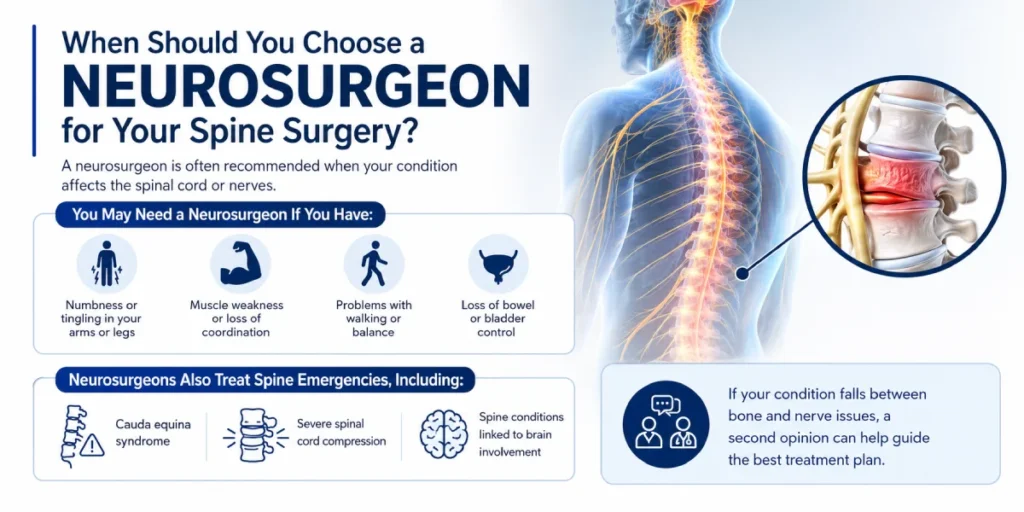
A neurosurgeon is often recommended when your condition affects the spinal cord or nerves. These cases may carry a higher risk of neurological injury.
You may need a neurosurgeon if you have:
- Numbness or tingling in your arms or legs
- Muscle weakness or loss of coordination
- Problems with walking or balance
- Loss of bowel or bladder control
Neurosurgeons also treat spine emergencies, including:
- Cauda equina syndrome
- Severe spinal cord compression
- Spine conditions linked to brain involvement
If your condition falls between bone and nerve issues, a second opinion can help guide the best treatment plan.
What are the similarities between orthopedic surgeons and neurosurgeons in spine surgery?
Orthopedic surgeons and neurosurgeons share many skills and goals in spine care.
Both specialties:
- Perform common spine procedures, including:
- Discectomy
- Spinal fusion
- Decompression surgery
- Discectomy
- Use minimally invasive techniques when appropriate
- Work together in many spine centers as part of a team
- Focus on:
- Pain relief
- Improved movement
- Better quality of life
- Pain relief
Your diagnosis, symptoms, and overall health help determine which specialist is right for you.
How Can You Prepare Effectively for Spine Surgery Regardless of the Specialist?
Good preparation improves your results and lowers risks. Start 4–8 weeks before surgery.
Pre-Operative Steps
- Quit smoking completely. Smoking slows healing and raises infection risk.
- Optimize your weight. Even small weight loss helps recovery.
- Control chronic conditions. Keep blood sugar, blood pressure, and other issues stable.
Stop blood thinners, fish oil, vitamin E, and herbal supplements 7 days before surgery. Your surgeon will give exact timing.
Tests
You will need:
- MRI or CT scans
- Blood work
- Sometimes nerve studies (EMG) or heart/lung tests
Mental Preparation
Many patients benefit from:
- Counseling
- Support groups
- Relaxation techniques
Logistical Planning
- Arrange help at home for 2–4 weeks
- Plan transportation
- Schedule follow-up visits
- Prepare meals and a comfortable recovery area
What Is the Typical Recovery Process After Spine Surgery?
Recovery time varies by procedure and your health. Most people follow these general stages.
Immediate Post-Op (First Few Days)
You stay in hospital 1–3 days (or go home same day for some minimally invasive cases).
Pain is managed with medications. You start walking soon after surgery.
Weeks 1–6
- Walk daily — this is your main exercise
- No bending, lifting (>5–10 lbs), or twisting (lumbar surgery)
- May wear a brace or cervical collar
- Limit sitting to 30–40 minutes at a time
- Drive only when off narcotics (usually 2–4 weeks)
Long-Term (3–12 Months)
- Physical therapy usually starts at 4–6 weeks
- Most return to desk work in 4–8 weeks
- Full fusion can take 6–12 months
- Pain and nerve symptoms continue to improve for up to a year
What Are the Potential Risks and Complications of Spine Surgery?
All surgery carries risks. Serious complications are uncommon when performed by experienced surgeons.
Common Risks
- Infection
- Bleeding
- Nerve damage
- Blood clots
- No improvement or return of pain
Specialty Differences
- Orthopedic surgeons — Slightly higher risk of hardware issues or non-union (failed fusion)
- Neurosurgeons — Slightly higher focus on neurological deficits (weakness, numbness)
Prevention
Choose a high-volume, fellowship-trained surgeon.
Follow post-op instructions carefully.
Call your surgeon immediately or go to the ER if you have:
- Fever >101°F (38.3°C)
- Increasing redness, swelling, or drainage from incision
- Severe new weakness or numbness
- Loss of bowel or bladder control
How Do You Find the Right Surgeon for Your Specific Spine Needs?
The surgeon’s experience with your exact condition matters more than the specialty.
How to Research
- Check board certification
- Look for fellowship training in spine
- Review years of experience and number of similar cases
- Read patient reviews on hospital sites
Key Steps
- Get a referral from your primary doctor or pain management specialist
- Choose a surgeon at a high-volume spine center
- Pay attention to communication style during your consultation
- Consider location, insurance coverage, and wait time
Always get a second opinion if surgery is recommended. It is common and often very helpful.
Treatment at Wong Spine
At Wong Spine, Dr. Albert Wong, MD, a neurosurgeon based in Beverly Hills, Los Angeles, provides expert care for spine conditions. He specializes in treating disorders of the spinal cord, nerves, and vertebrae, using advanced surgical and minimally invasive techniques.
Patients receive personalized treatment plans tailored to their condition, including surgery, non-surgical management, and rehabilitation. The team focuses on pain relief, improved mobility, and overall quality of life.