- Home
- Spondylosis
Spondylosis
- About Dr. Albert P.
Spondylosis Specialist Los Angeles, CA
Dr. Albert P. Wong, is a board-certified spine surgeon, who specializes in patients with spondylosis in Beverly Hills and Greater Los Angeles area. He delivers trusted care for patients with cervical spondylosis, lumbar spondylosis, spinal degeneration, facet joint arthritis, disc dehydration, osteophyte formation, nerve compression, spinal stiffness, along with chronic neck or back conditions. Dr. Wong uses state-of-the-art advanced technology to accurately treat patients and provide evidence-based spine treatment. He is one of the few spine surgeons to expertly offer endoscopic spine surgery, resulting in shorter recovery time and a smaller incision (measuring a quarter of an inch).
- What It Is
What Is Sciatica?
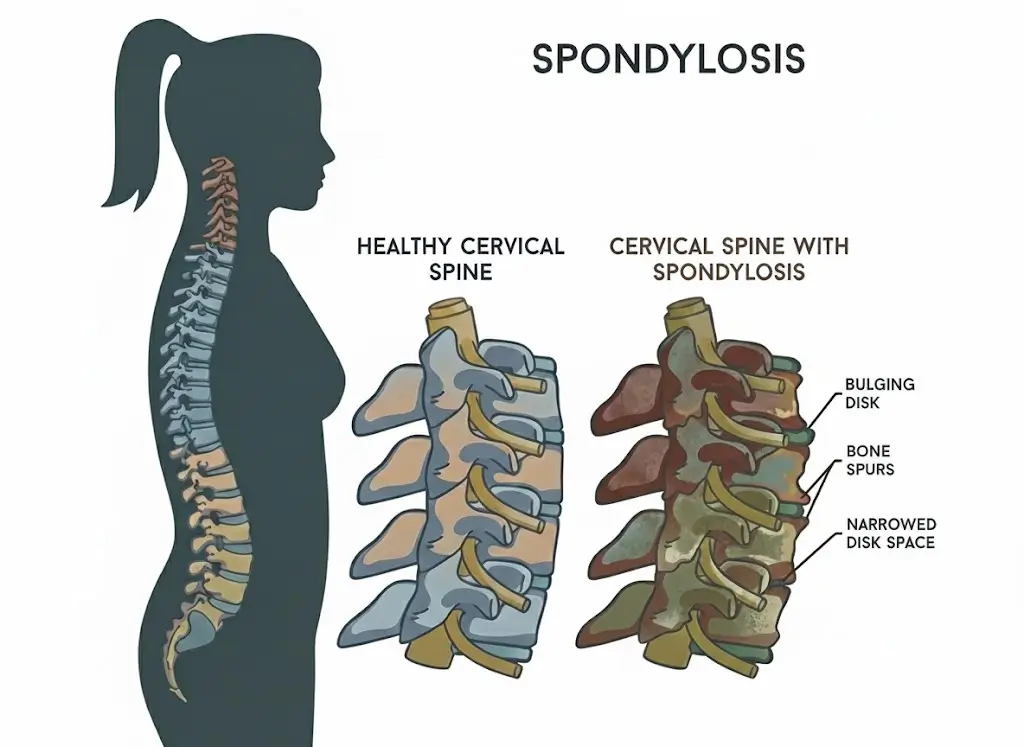
Spondylosis is spinal degeneration involving intervertebral disc dehydration, disc height loss, facet joint arthritis, cartilage breakdown, ligament thickening, and osteophyte (bone spur) formation. Common regions: cervical spine, thoracic spine, lumbar spine, with progressive wear affecting spinal alignment and joint mobility.
Degenerative change may lead to spinal canal narrowing, foraminal stenosis, nerve root compression, and spinal cord pressure, contributing to reduced flexibility, joint stiffness, and structural instability in the spinal column.
Spondylosis Treatment Los Angeles, CA
Relieve cervical and lumbar spondylosis, facet joint arthritis, disc dehydration, and nerve compression with Dr. Albert P. Wong, trusted Los Angeles spine specialist, providing advanced imaging, minimally invasive procedures, targeted injections, and personalized rehabilitation for spinal function and mobility restoration.
What Are the Symptoms of Spondylosis?
Spondylosis causes structural degeneration in the cervical spine or lumbar spine, affecting intervertebral discs, facet joints, ligaments, and surrounding nerve roots. Degenerative changes produce specific neurological and musculoskeletal signs.
Key symptoms include:
Chronic neck or low back pain aggravated by activity or posture.
Stiffness and reduced spinal mobility.
Radiating pain into the shoulders, arms, buttocks, or legs.
Numbness or tingling along affected nerve pathways.
Muscle weakness in upper or lower extremities due to nerve compression.
Early recognition through clinical evaluation and imaging allows targeted spine treatment, including physical therapy, injections, and minimally invasive procedures, to reduce pain, restore nerve function, and maintain spinal alignment.
What Causes Spondylosis?
Spondylosis develops from progressive degeneration of the spinal column, intervertebral discs, and facet joints, often affecting the cervical and lumbar spine. Structural changes increase stress on spinal ligaments, nerve roots, and surrounding musculature.
Common causes include:
Age-related disc dehydration reducing shock absorption and disc height
Facet joint arthritis causing stiffness and restricted spinal mobility
Osteophyte (bone spur) formation compressing nerve roots
Spinal stenosis narrowing the spinal canal
Repetitive strain or heavy lifting stressing cervical and lumbar discs
Genetic predisposition increasing susceptibility to disc degeneration
Identifying the source of degeneration through MRI, CT scans, and X-rays allows targeted spine interventions to relieve nerve compression, restore spinal function, and maintain mobility.
Diagnosis and Treatment Options
Diagnosis of spondylosis involves evaluating cervical and lumbar spine structures using MRI, CT scans, X-rays, and neurological exams to identify disc degeneration, facet joint arthritis, osteophytes, and nerve compression.
Treatment options include:
Physical therapy to strengthen spinal muscles, improve posture, and restore mobility
Epidural or facet joint injections to reduce nerve inflammation
Minimally invasive procedures, such as foraminotomy or microdiscectomy, to relieve nerve root compression
Surgical interventions, including spinal fusion or artificial disc replacement, for severe degeneration or persistent neurological symptoms
Timely diagnosis and targeted treatment from a spine specialist help restore spinal alignment, reduce pain, and maintain nerve function.
When to See a Spine Specialist
Patients should consult a spine specialist for cervical or lumbar spondylosis when experiencing persistent or worsening neck, back, or limb pain associated with disc degeneration, facet joint arthritis, or osteophyte formation. Radiating pain into the shoulders, arms, buttocks, or legs, along with numbness, tingling, or muscle weakness, indicates nerve root compression that requires evaluation.
- Get Appointment
Consult Dr. Albert Wong for Spondylosis Treatment
Consult Dr. Albert P. Wong, Los Angeles spine specialist, for expert spondylosis treatment targeting cervical and lumbar degeneration, nerve compression, and spinal mobility restoration.
- Faqs
Spondylosis FAQs
Answers to common questions about cervical and lumbar spondylosis, spinal degeneration, facet joint arthritis, disc dehydration, and treatment options.
Yes, degenerative changes can worsen, leading to increased facet joint stress, nerve compression, and potential spinal instability.
Yes, spinal stiffness, pain, and reduced mobility can limit lifting, bending, walking, or prolonged sitting.
Surgery, such as spinal fusion or artificial disc replacement, is considered for severe degeneration, persistent nerve compression, or structural instability.
Yes, long-term disc degeneration and facet joint arthritis can produce persistent neck or back pain, sometimes radiating to limbs.
Prolonged nerve root compression may lead to lasting muscle weakness, sensory loss, or impaired lower limb function without timely intervention.