- Home
- Sciatica
Sciatica
- About Dr. Albert P.
Sciatica Specialist Los Angeles, CA
Dr. Albert P. Wong is a sciatica specialist and neurosurgeon in Beverly Hills, providing care for patients throughout Beverly Hills and the Greater Los Angeles area. He creates personalized, targeted treatment plans for lumbar nerve compression, herniated discs, spinal stenosis, and piriformis-related nerve irritation.
Dr. Wong evaluates nerve function, reviews imaging findings, and designs treatment plans centered on pain relief, mobility restoration, and long-term nerve stability. Patients receive evidence-based care, including physical therapy guidance, anti-inflammatory strategies, epidural injections, and surgical solutions for severe nerve root compression.
- What It Is
What Is Sciatica?
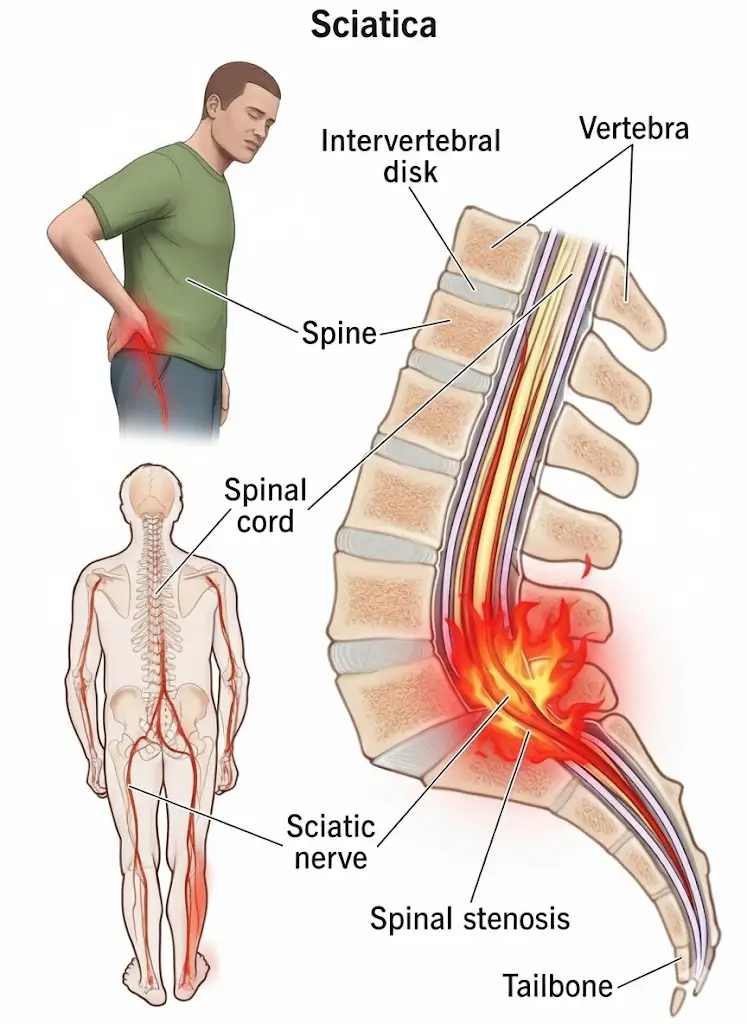
Sciatica describes sciatic nerve compression involving lumbar nerve roots L4, L5, or S1. Disc herniation, foraminal narrowing, spinal stenosis, or piriformis muscle tension often trigger nerve irritation, producing sharp leg pain, radiating discomfort, numbness, tingling, or weakness along the sciatic pathway.
Sciatica symptoms usually appear unilaterally and intensify with sitting, bending, or load-bearing movements. Early evaluation helps identify structural causes and guide precise treatment to reduce nerve pressure and restore functional mobility.
Sciatica Treatment Los Angeles, CA
Los Angeles sciatica treatment centers deliver lumbar nerve–focused evaluation, imaging analysis, and minimally invasive intervention. Dr. Albert Wong provides personalized sciatica care featuring decompression techniques, spine stabilization strategies, and targeted rehabilitation, supporting efficient pain reduction and functional restoration.
What Are the Symptoms of Sciatica?
Sciatica occurs due to lumbar nerve root compression, typically at L4, L5, or S1, affecting the sciatic nerve pathway from the lower spine through the hip, buttock, and leg. Nerve irritation produces distinct neurological and musculoskeletal signs.
Key symptoms include:
Radiating leg pain along the sciatic nerve pathway.
Numbness in the foot, calf, or thigh.
Tingling or pins-and-needles sensations in the lower extremity.
Muscle weakness in leg or foot muscles.
Reduced spinal mobility or difficulty standing or walking.
Prompt evaluation identifies the underlying disc herniation, spinal stenosis, or piriformis compression, allowing targeted spine treatment, nerve decompression, and restoration of lower limb function.
What Causes Sciatica?
Sciatica develops from sciatic nerve compression or irritation along the lumbar spine and sacroiliac region. Structural changes or muscular pressure affect nerve root signaling, producing radiating leg pain, numbness, or weakness.
Common causes include:
Lumbar disc herniation compressing L4, L5, or S1 nerve roots.
Spinal stenosis narrowing the lumbar spinal canal.
Piriformis muscle tightness or spasm affecting the sciatic nerve.
Spondylolisthesis causing vertebral misalignment.
Osteophyte formation or bone spurs impinging nerve roots.
Early identification of the structural source using MRI, CT scans, and neurological evaluation allows targeted spine intervention, reducing nerve compression and restoring lower limb function.
How Is Sciatica Treated and Cured?
Sciatica treatment targets lumbar nerve root compression and underlying causes such as herniated discs, spinal stenosis, or piriformis tension.
Treatment options:
Physical therapy for lumbar spine stabilization and nerve decompression.
Epidural steroid injections reducing nerve inflammation.
Minimally invasive procedures, including microdiscectomy or foraminotomy.
Surgical interventions for persistent nerve root compression.
While structural causes can be addressed, complete cure depends on disc health, spinal alignment, and nerve recovery. Early intervention restores nerve function and improves lower limb mobility.
When to See a Spine Specialist
Seek a spine specialist when sciatic nerve compression, lumbar disc injury, or spinal stenosis produces persistent radicular pain, restricted mobility, or recurrent flare-ups.
Key indicators include:
Pain lasting over two weeks
Progressive leg weakness
Numbness, tingling, or sensory loss along the sciatic pathway
Pain intensified by lumbar flexion, prolonged sitting, or weight-bearing
History of disc herniation or degenerative spine disease
Early evaluation supports accurate diagnosis, nerve protection, and timely treatment to prevent chronic functional decline.
- Get Appointment
Consult Dr. Albert Wong for Sciatica Treatment
Consult Dr. Albert P. Wong, Los Angeles spine specialist, for expert sciatica treatment targeting lumbar nerve compression, herniated discs, and spinal stenosis.
- Faqs
Sciatica FAQs
Answers to common questions about sciatica, lumbar nerve compression, herniated discs, spinal stenosis, and targeted treatment options.
No, spinal stenosis, piriformis syndrome, spondylolisthesis, and osteophytes can also compress the sciatic nerve.
Recurrence is possible if underlying disc degeneration, lumbar misalignment, or nerve irritation persists.
Typically unilateral, but bilateral leg symptoms can occur with central spinal canal stenosis or multiple nerve root compression.
Certain movements increasing lumbar flexion or nerve stretch can exacerbate sciatic nerve compression, while targeted spine stabilization exercises provide relief.
Prolonged nerve root compression may lead to lasting muscle weakness, sensory loss, or impaired lower limb function without timely intervention.