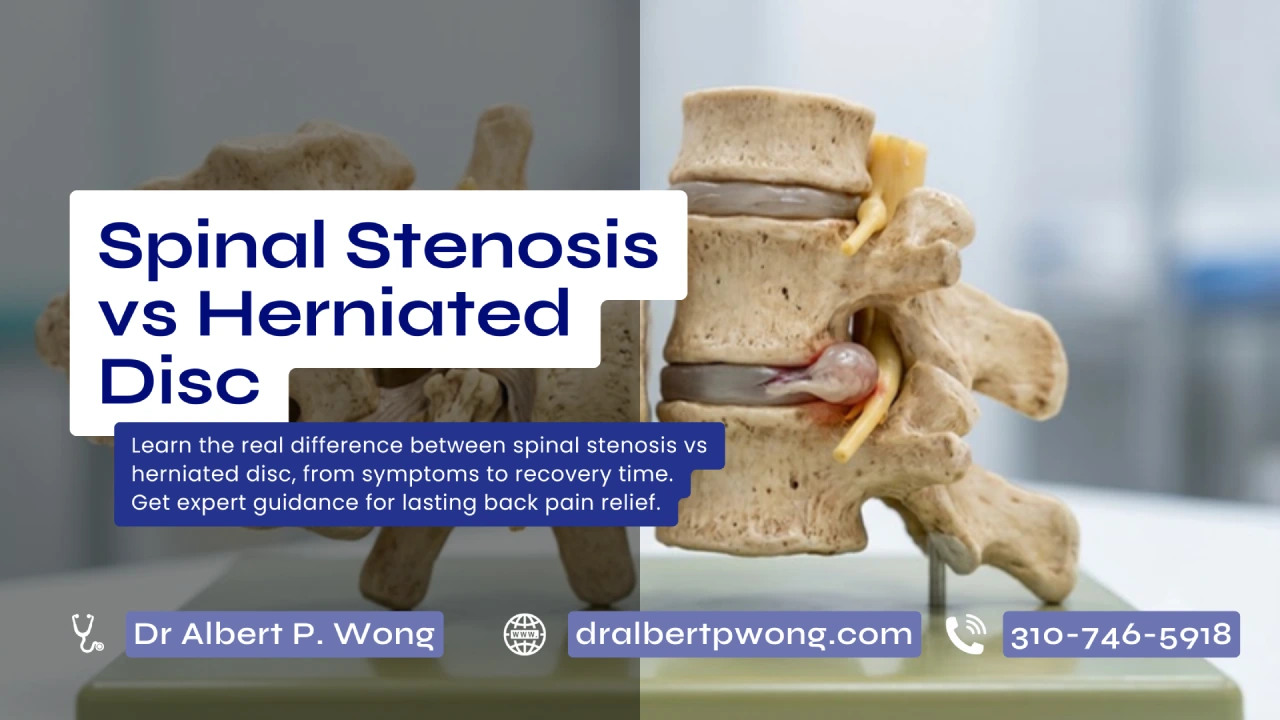
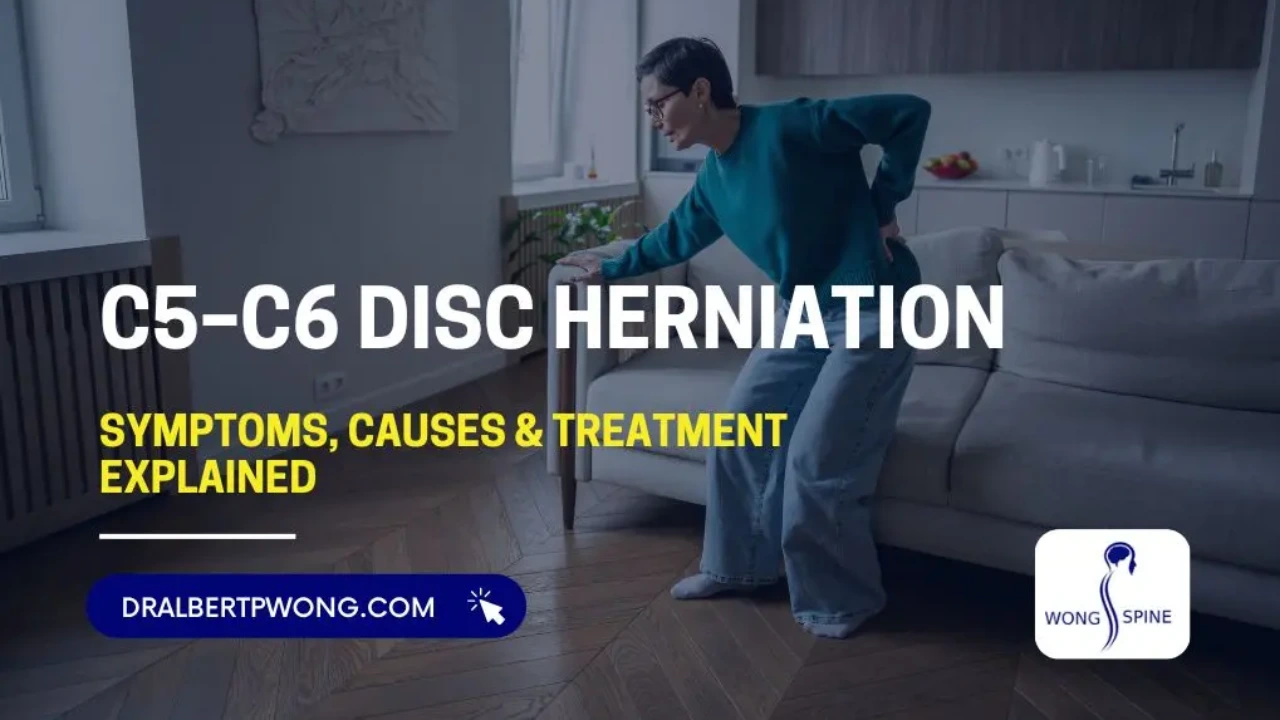
A C5–C6 disc herniation happens in the lower part of the neck, between the fifth and sixth cervical vertebrae. When the disc in this area bulges or tears, the soft center can press on nearby nerves. This pressure can cause neck pain and may also affect the shoulders, arms, and hands.
People with a C5–C6 disc herniation may notice symptoms like neck stiffness, shooting pain, tingling, numbness, or weakness in the arm. These symptoms can affect daily activities like lifting, turning your head, or using your arm normally.
A C5–C6 disc herniation happens in the lower part of the neck. When the disc bulges or tears, it can press on nearby nerves. This can cause pain, numbness, or weakness in your neck, shoulders, arms, or hands. How bad the symptoms are depends on how much the nerve is being pressed and how long it has been affected.
Common symptoms include:
- Neck pain: Can be sharp, stabbing, or a constant ache. Pain may get worse when you move your head or bend your neck.
- Shoulder pain: Pain can spread from the neck into one or both shoulders, making it hard to lift your arms.
- Numbness or tingling: A “pins and needles” feeling or numbness in the arm, hand, or fingers.
- Weakness: Muscles in the arm or hand may feel weak, making it hard to lift things or hold objects.
- Limited neck movement: Turning or bending your neck may be painful or uncomfortable.
- Headaches: Pain may start in the neck and move to the back or top of your head.
- Muscle spasms: Neck or shoulder muscles may tighten or jerk because of nerve pressure.
Other signs to watch for:
- Pain that gets worse at night or after sitting for a long time.
- Sensitivity to touch or pressure in the neck or shoulders.
When to see a doctor:
If your symptoms keep getting worse, make daily activities hard, or don’t improve, see a doctor. Early treatment can help reduce pain, prevent nerve damage, and speed up recovery.
Causes of a C5–C6 Disc Herniation
A C5–C6 disc herniation happens when the soft part of the disc between the fifth and sixth cervical vertebrae pushes out through its outer layer.
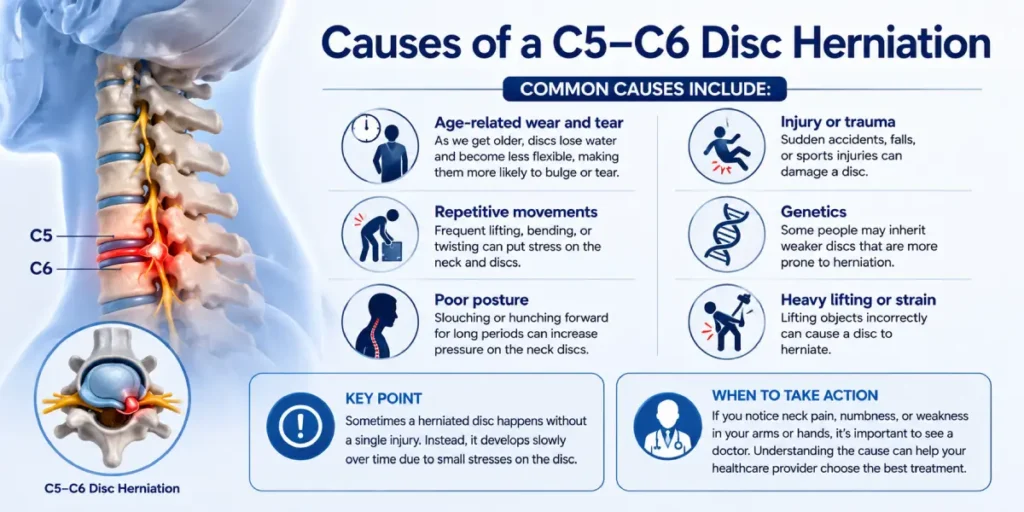
This can irritate nearby nerves and cause pain or numbness. Several factors can lead to this condition:
Common causes include:
- Age-related wear and tear: As we get older, discs lose water and become less flexible, making them more likely to bulge or tear.
- Injury or trauma: Sudden accidents, falls, or sports injuries can damage a disc.
- Repetitive movements: Frequent lifting, bending, or twisting can put stress on the neck and discs.
- Poor posture: Slouching or hunching forward for long periods can increase pressure on the neck discs.
- Genetics: Some people may inherit weaker discs that are more prone to herniation.
- Heavy lifting or strain: Lifting objects incorrectly can cause a disc to herniate.
Key point:
Sometimes a herniated disc happens without a single injury. Instead, it develops slowly over time due to small stresses on the disc.
When to take action:
If you notice neck pain, numbness, or weakness in your arms or hands, it’s important to see a doctor. Understanding the cause can help your healthcare provider choose the best treatment.
Treatment Options for a C5–C6 Disc Herniation
Most C5–C6 disc herniations improve with nonsurgical treatments. The goal is to reduce pain, ease pressure on the nerves, and help you move more comfortably.
Common nonsurgical treatments:
- Rest and activity modification: Avoid movements that make pain worse, but stay active with gentle walking or stretching.
- Physical therapy: Exercises can strengthen neck and shoulder muscles, improve posture, and increase flexibility.
- Medications: Over-the-counter pain relievers or anti-inflammatory drugs may help reduce pain and swelling.
- Heat or ice therapy: Applying heat or cold can ease muscle tension and inflammation.
- Cervical collar: A soft neck brace may be recommended for short-term support.
When surgery may be considered:
Surgery is usually only needed if:
- Pain or weakness doesn’t improve with nonsurgical care.
- Symptoms are severe and affect daily activities.
- There is significant nerve compression that could cause permanent damage.
Types of surgery:
- Discectomy: Removing the part of the disc pressing on the nerve.
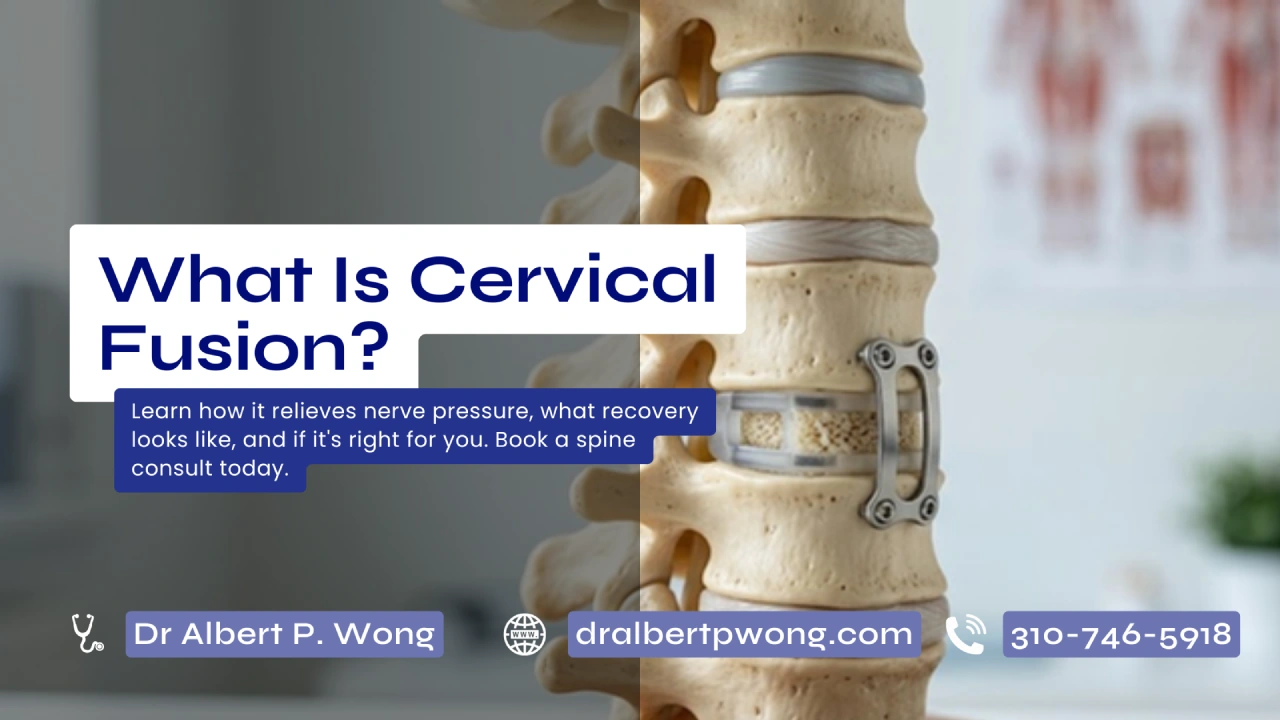
- Spinal fusion: Joining two vertebrae together to stabilize the spine.
- Artificial disc replacement: Replacing the damaged disc with an artificial one to preserve motion.
Key point:
Most people with a C5–C6 herniation recover without spine surgery. Early treatment, good posture, and following your doctor’s plan can help speed recovery and prevent further injury.
When to See a Doctor
Most C5–C6 disc herniations improve with rest and simple treatments. But some symptoms mean you should see a doctor quickly.
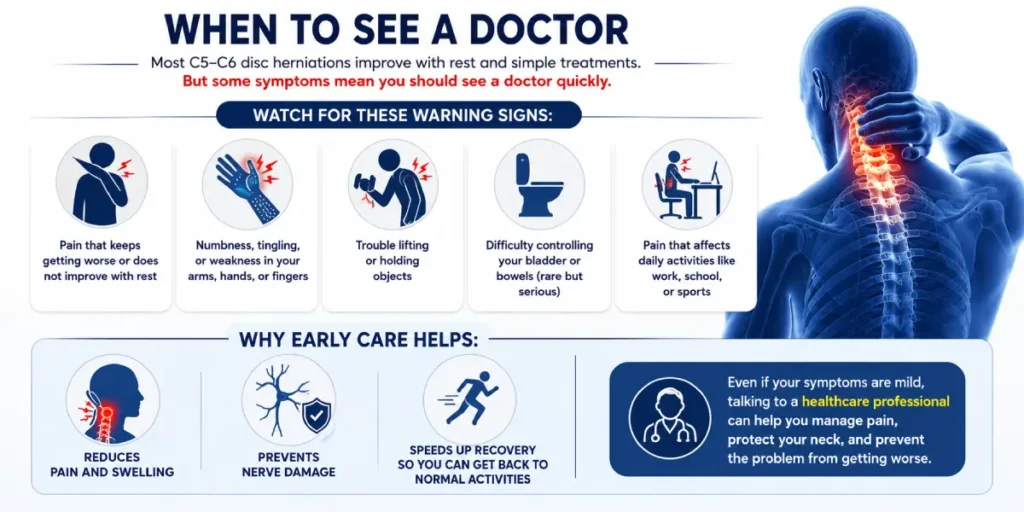
Watch for these warning signs:
- Pain that keeps getting worse or does not improve with rest
- Numbness, tingling, or weakness in your arms, hands, or fingers
- Trouble lifting or holding objects
- Difficulty controlling your bladder or bowels (rare but serious)
- Pain that affects daily activities like work, school, or sports
Why early care helps:
- Reduces pain and swelling
- Prevents nerve damage
- Speeds up recovery so you can get back to normal activities
Even if your symptoms are mild, talking to a healthcare professional can help you manage pain, protect your neck, and prevent the problem from getting worse.
Conclusion
A C5–C6 disc herniation can cause neck pain, shoulder pain, numbness, tingling, or weakness in your arms and hands. Most people get better with nonsurgical treatments like rest, physical therapy, and pain relief.
Key points to remember:
- Early treatment can reduce pain and prevent further nerve damage.
- Good posture and gentle exercises can help protect your neck.
- Surgery is usually only needed if symptoms are severe or do not improve with other treatments.
If you have symptoms that are persistent or affect your daily life, see a doctor. With the right care, most people can recover, manage pain, and return to normal activities safely.