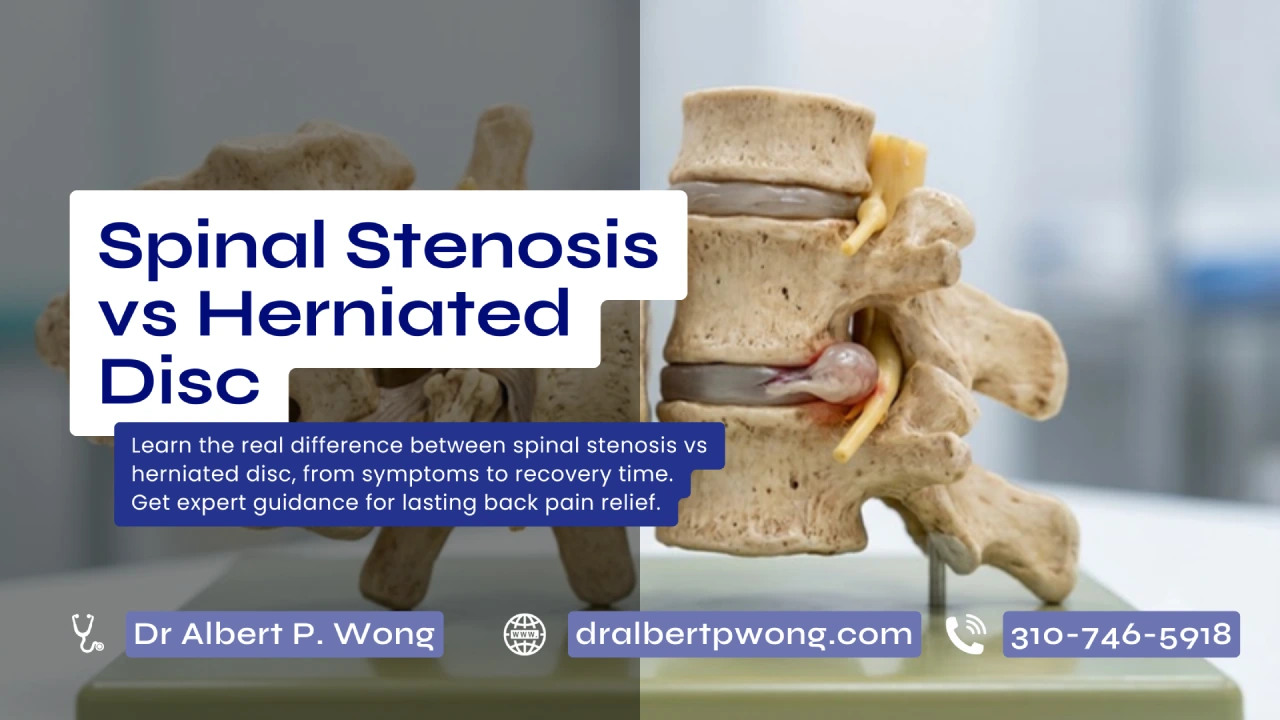

A herniated disc happens when the soft center of a spinal disc pushes out through its outer layer. This can press on nearby nerves and cause pain, numbness, or weakness in the back, neck, arms, or legs.
Many people ask, “How long does a herniated disc take to heal?” The timeline can be different for everyone. It depends on how serious the injury is, where it is in the spine, your age, your health, and how well you follow your treatment plan. Some people start to feel better in a few weeks, while others may need several months to recover.
What Is a Herniated Disc and How Does It Happen?
A herniated disc is a problem with one of the soft cushions (discs) between the bones in your spine. Each disc has a soft center and a tougher outer layer. When the outer layer cracks or weakens, the soft center can push out. This is called a herniation.
When this happens, the disc can press on nearby nerves. This may cause pain, numbness, or weakness. Some people feel pain in their back or neck, while others may feel it in their arms or legs.
A herniated disc can happen for several reasons, such as:
- Natural wear and tear with age
- Lifting heavy objects the wrong way
- Sudden injury or accident
- Repeated stress on the spine over time
Knowing what a herniated disc is makes it easier to see why healing takes time and why proper care is important.
Herniated Disc Healing Time: What to Expect
Healing time for a herniated disc can be different for each person. Many people start to feel better within 6 to 12 weeks with proper care. In some cases, symptoms may improve sooner, while others may need several months to fully recover.
Most herniated discs heal without spine surgery. The body can slowly absorb the disc material, swelling can go down, and nerves may calm over time. During this period, your doctor may recommend rest, medication, physical therapy, or lifestyle changes to help reduce pain and support healing.
If pain is severe, lasts longer than expected, or causes weakness, numbness, or trouble moving, medical treatment is very important. Early care can help prevent long-term problems and help you return to normal daily activities safely.
What Factors Affect Healing Time?
Not everyone heals from a herniated disc at the same speed. Several factors can affect how long recovery takes:
Severity of the Herniation
A small herniation may heal faster than a larger one. More pressure on the nerve can mean a longer recovery.
Age and Overall Health
Younger and healthier people often heal more quickly. Conditions such as diabetes, poor fitness, or weak muscles may slow healing.
Lifestyle Habits
Smoking, poor posture, and heavy lifting can delay recovery. Staying active in a safe way and following medical advice helps the disc heal better.
Location of the Herniation
Some areas of the spine are under more stress than others. This can affect how quickly symptoms improve.
Treatment and Care
Following your doctor’s instructions, taking medications as prescribed, and attending physical therapy can speed recovery and reduce pain.
Common Symptoms During Recovery
As a herniated disc heals, it’s normal to experience a range of symptoms. These can change from week to week as swelling goes down and the nerve begins to recover.
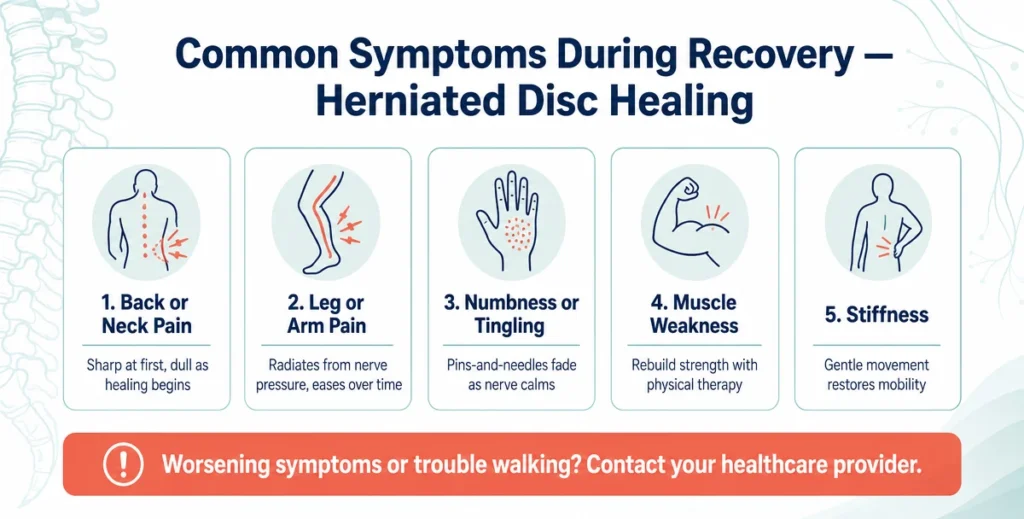
Back or Neck Pain
Pain near the injured disc is common. It may feel sharp at first, then become dull or achy as healing begins.
Leg or Arm Pain
If the disc presses on a nerve, you may feel pain that travels down your leg or arm. This often improves as the nerve settles.
Numbness or Tingling
Pins-and-needles feelings can happen when a nerve is irritated. These sensations usually fade over time.
Muscle Weakness
The affected nerve may cause certain muscles to feel weaker. Physical therapy can help rebuild strength safely.
Stiffness
Being less active during recovery can cause stiffness in your back or neck. Gentle movement and approved exercises can help.
These symptoms are common, but if they suddenly get worse or cause trouble walking, moving, or using your arms, you should contact your healthcare provider. Early care helps prevent further problems.
When to See Your Neurosurgeon
Most herniated discs improve with time and care, but you should contact your doctor if you notice any of the following:
- Severe or worsening pain that does not improve with medication or rest
- Numbness, tingling, or weakness in your arms or legs
- Loss of bladder or bowel control, which can indicate a serious condition called cauda equina syndrome
- Pain that spreads rapidly or suddenly becomes intense
Prompt medical attention can prevent complications and help you recover safely. Always report new or unusual symptoms to your Neurosurgeon.
Conclusion
Healing from a herniated disc takes time, and recovery can vary for each person. Most people start to feel better within a few weeks, while others may need several months. Following your doctor’s advice, staying active safely, practicing good posture, and caring for your body can help speed recovery and reduce pain.
Pay attention to your symptoms and contact your healthcare provider if you notice severe pain, numbness, weakness, or other unusual changes. With proper care, most people regain normal function and return to daily activities safely.