Spinal conditions cause back pain and disability, affecting millions worldwide. Many problems improve with medications, physical therapy, or lifestyle changes. Some conditions require surgery to relieve pain and restore quality of life. Surgery is considered when non-surgical treatments fail or when pain, nerve damage, or functional limitations are severe.
The five most common spinal conditions that may need surgery are described below. Understanding these conditions, their symptoms, and how surgery helps allows patients to make informed decisions and support better recovery.
Some spinal conditions often require surgery due to wear, injury, or structural changes. The most common include:
Herniated Discs
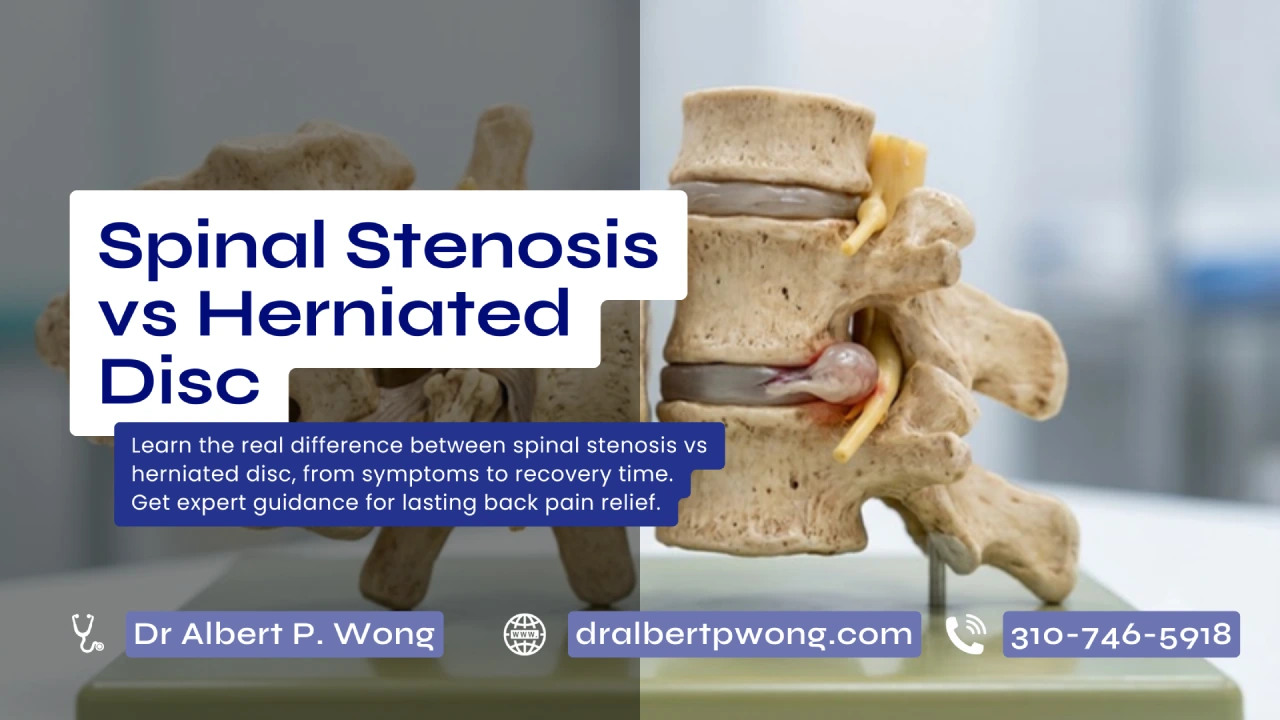
A herniated disc occurs when the soft inner material of a spinal disc pushes through its outer layer. This can press on nearby nerves, causing pain, numbness, or weakness in the back, arms, or legs.
Symptoms
- Sharp or radiating pain in the back, neck, arms, or legs
- Numbness or tingling in the affected area
- Muscle weakness or difficulty moving certain body parts
- Pain that worsens with bending, lifting, or twisting
When Surgery Is Considered
Most herniated discs improve with medications, physical therapy, or injections. Surgery may be recommended if:
- Pain persists despite non-surgical treatment
- Nerve compression causes significant weakness or loss of function
- Symptoms interfere with daily activities
Common Surgical Options
- Discectomy: Removes the herniated portion of the disc to relieve nerve pressure.
- Microdiscectomy: A minimally invasive approach that reduces tissue damage and recovery time.
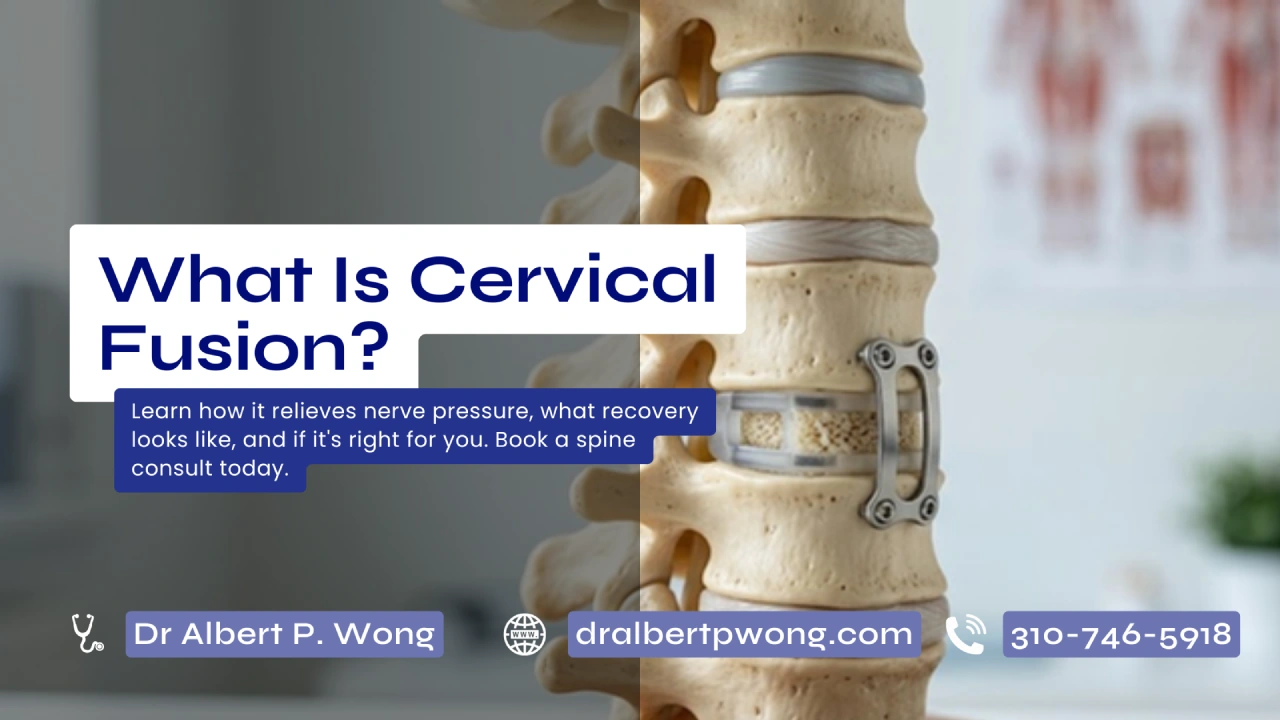
- Spinal Fusion (if needed): Stabilizes the spine when disc removal affects stability.
Recovery and Outlook
Patients usually regain movement and experience significant pain relief after surgery. Physical therapy helps strengthen muscles, restore flexibility, and support long-term spinal health.
Spinal Stenosis
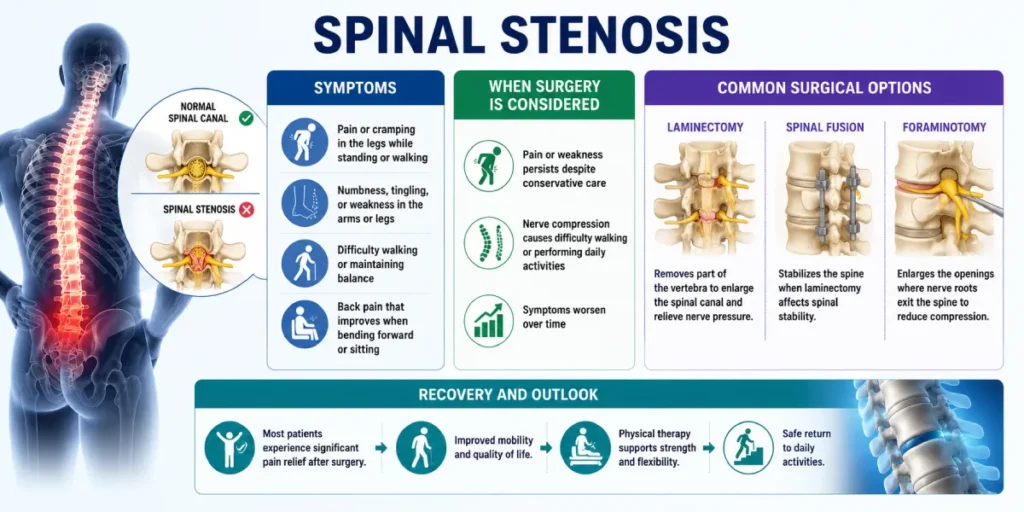
Spinal stenosis occurs when the spinal canal narrows, putting pressure on the spinal cord and nerves. This can lead to pain, numbness, or weakness in the back, legs, or arms.
Symptoms
- Pain or cramping in the legs while standing or walking
- Numbness, tingling, or weakness in the arms or legs
- Difficulty walking or maintaining balance
- Back pain that improves when bending forward or sitting
When Surgery Is Considered
Non-surgical treatments, such as physical therapy, medications, or steroid injections, often provide relief. Surgery may be needed if:
- Pain or weakness persists despite conservative care
- Nerve compression causes difficulty walking or performing daily activities
- Symptoms worsen over time
Common Surgical Options
- Laminectomy: Removes part of the vertebra to enlarge the spinal canal and relieve nerve pressure.
- Spinal Fusion: Stabilizes the spine when laminectomy affects spinal stability.
- Foraminotomy: Enlarges the openings where nerve roots exit the spine to reduce compression.
Recovery and Outlook
Most patients experience significant pain relief and improved mobility after surgery. Physical therapy supports strength, flexibility, and safe return to daily activities.
Scoliosis and Other Spinal Conditions
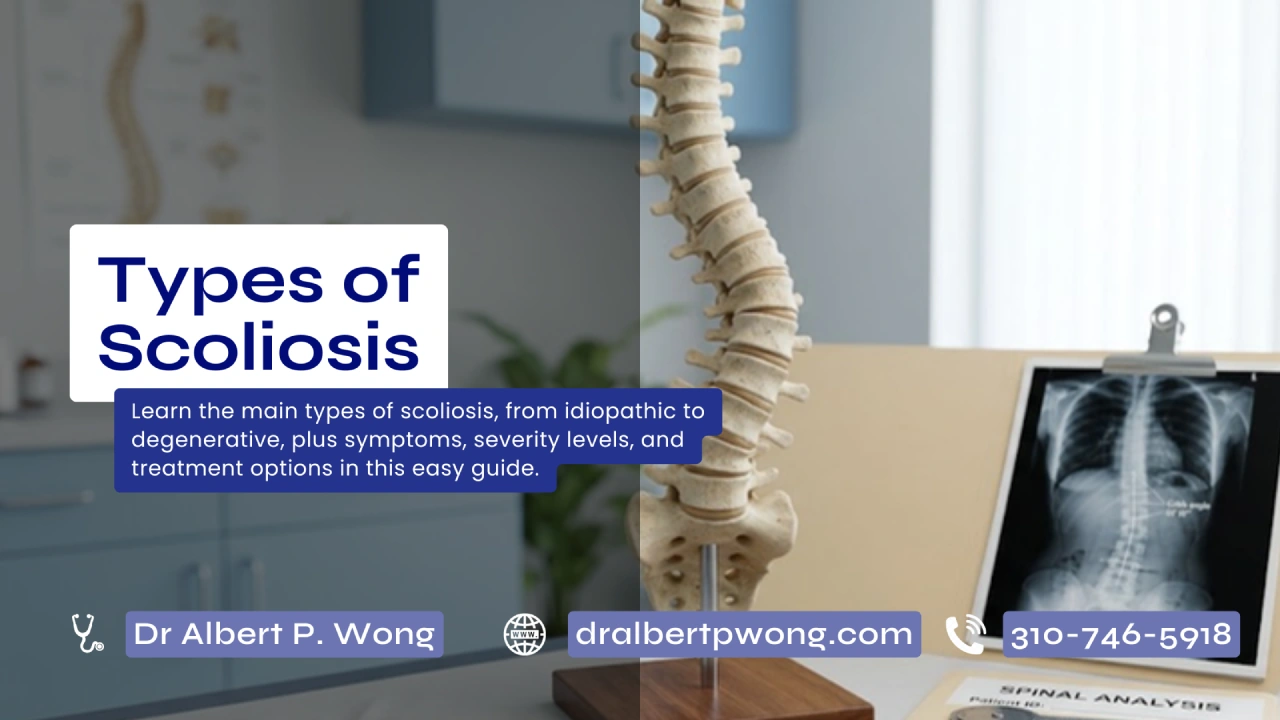
Scoliosis is an abnormal sideways curvature of the spine. Other spinal deformities include kyphosis (forward rounding) and lordosis (excessive inward curve). Severe deformities can affect posture, movement, and in some cases, breathing.
Symptoms
- Visible curve or uneven shoulders or hips
- Back pain or stiffness
- Limited flexibility or difficulty performing physical activities
- Fatigue from muscle strain due to uneven posture
When Surgery Is Considered
Mild scoliosis often requires observation, bracing, or physical therapy. Surgery may be recommended if:
- The spinal curve progresses rapidly or exceeds a certain degree
- Pain or functional limitations interfere with daily life
- Conservative treatments fail to prevent worsening deformity
Common Surgical Options
- Spinal Fusion: Straightens and stabilizes the curved segments using rods, screws, and bone grafts.
- Growing Rods or Expandable Devices (for children): Allow continued spine growth while correcting severe curves.
Recovery and Outlook
Surgery can halt curve progression, reduce pain, and improve posture. Physical therapy helps strengthen surrounding muscles, restore flexibility, and support long-term spine health. Most patients achieve significant improvement in appearance and daily function.
Spinal Fractures
Spinal fractures occur when one or more vertebrae break or collapse, often due to trauma, falls, or conditions like osteoporosis. Fractures can destabilize the spine and compress nerves, causing pain or neurological symptoms.
Symptoms
- Sudden, severe back pain
- Pain that worsens with movement
- Numbness, tingling, or weakness in arms or legs
- Loss of height or spinal deformity in some cases
When Surgery Is Considered
Many spinal fractures heal with bracing, medications, or physical therapy. Surgery may be needed if:
- The fracture causes spinal instability
- Nerve compression leads to weakness, numbness, or loss of function
- Pain persists despite non-surgical treatment
- Multiple vertebrae are involved or the fracture is severe
Common Surgical Options
- Vertebroplasty or Kyphoplasty: Minimally invasive procedures that stabilize fractured vertebrae and restore height.
- Spinal Fusion: Stabilizes the spine when fractures compromise structural integrity.
- Instrumentation (rods, screws, plates): Provides additional support for severe or complex fractures.
Recovery and Outlook
Surgery usually relieves pain, restores stability, and protects nerves from further injury. Physical therapy helps regain strength, improve mobility, and prevent future fractures. Most patients return to daily activities gradually with proper rehabilitation.
Spondylolisthesis
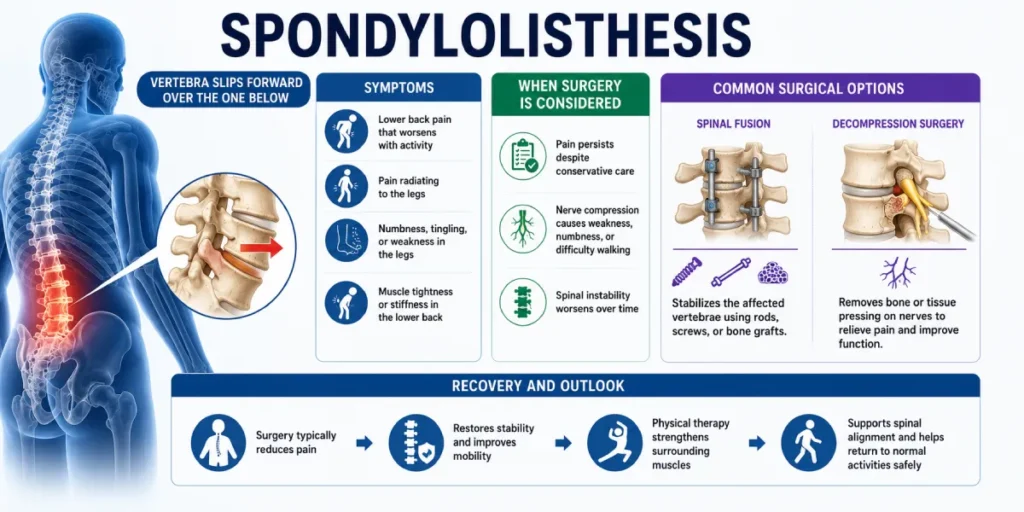
Spondylolisthesis occurs when one vertebra slips forward over the one below it. This can cause spinal instability, nerve compression, and back pain.
Symptoms
- Lower back pain that worsens with activity
- Pain radiating to the legs
- Numbness, tingling, or weakness in the legs
- Muscle tightness or stiffness in the lower back
When Surgery Is Considered
Non-surgical treatments, such as physical therapy, medications, or braces, often help mild cases. Surgery may be recommended if:
- Pain persists despite conservative care
- Nerve compression causes weakness, numbness, or difficulty walking
- Spinal instability worsens over time
Common Surgical Options
- Spinal Fusion: Stabilizes the affected vertebrae using rods, screws, or bone grafts.
- Decompression Surgery: Removes bone or tissue pressing on nerves to relieve pain and improve function.
Recovery and Outlook
Surgery typically reduces pain, restores stability, and improves mobility. Physical therapy strengthens surrounding muscles, supports spinal alignment, and helps patients return to normal activities safely.
When to Consult a Spine Specialist
Seeing a spine specialist early can prevent complications and improve treatment outcomes. Patients should seek evaluation if they experience persistent or worsening symptoms.
Warning Signs
- Severe or worsening back or neck pain
- Numbness, tingling, or weakness in the arms or legs
- Difficulty walking, maintaining balance, or performing daily activities
- Loss of bladder or bowel control
- Pain that does not improve with medications, physical therapy, or other conservative treatments
Key Takeaway:
Early evaluation by a spine specialist helps identify conditions that may require surgery and allows for timely intervention, improving pain relief, mobility, and overall quality of life.
Treatment at Wong Spine
At Wong Spine, patients receive personalized care for spinal conditions, including herniated discs, spinal stenosis, scoliosis, spinal fractures, and spondylolisthesis from Dr. Albert P. Wong, a leading spine surgeon in Los Angeles. Each plan begins with a thorough evaluation to identify the source of pain, followed by tailored treatments that may include non-surgical care, minimally invasive procedures, or advanced surgery. Follow-up support ensures safe recovery and long-term spine health.
The clinic offers a range of options, including endoscopic and robotic-assisted surgery, artificial disc replacement, and spinal fusion. A concierge program provides direct access to Dr. Wong, priority scheduling, and coordinated care, all designed to reduce recovery time and improve outcomes.
Understanding common spinal conditions and recognizing when surgery may be necessary allows patients to seek timely care, improve recovery, and protect long-term spinal health.