
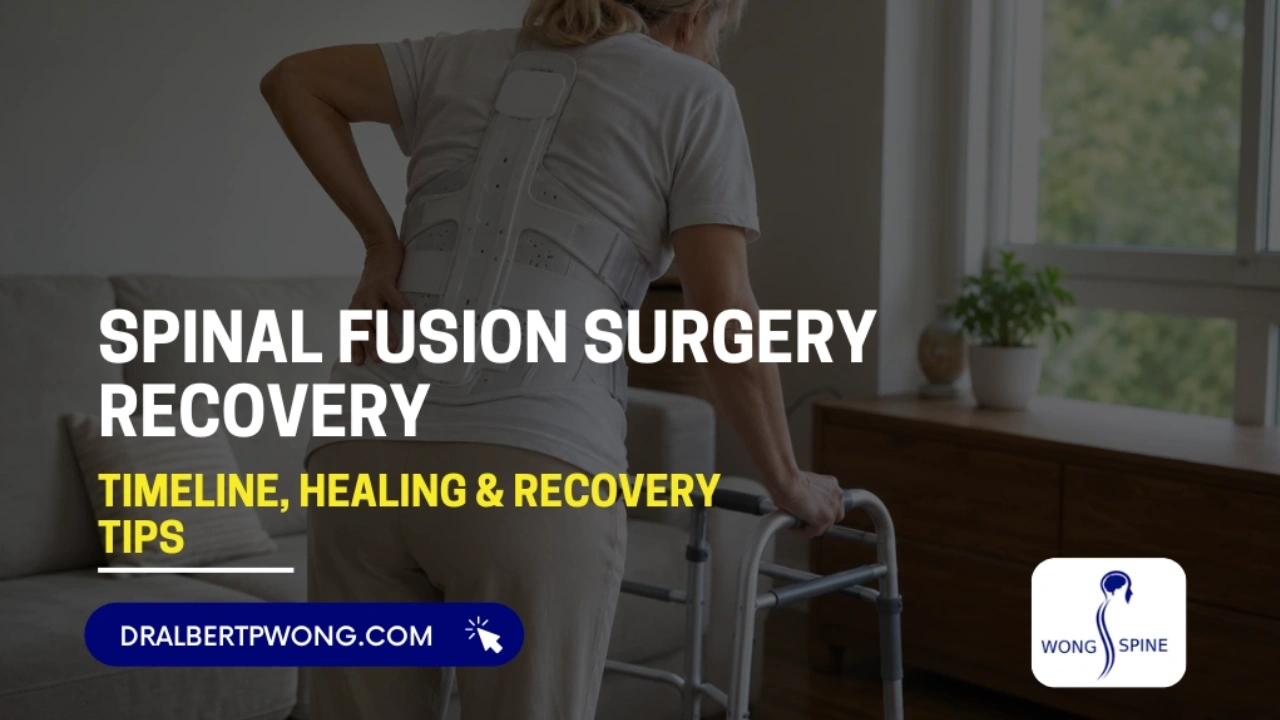
If you hear that you may need back surgery, then it can be frightening for you. Not just because of the processes, but you also do not fully know what life after surgery looks like.
- Will the pain improve?
- How long will recovery take?
- When will you feel normal again?
And honestly, these questions can worry you a lot before spinal fusion surgery.
The truth is, spinal fusion surgery recovery varies from person to person.
And here, your age, health, process, and even how you follow the surgery instructions can all affect your recovery.
However, you will slowly feel better with proper care, patience, and a recovery plan!
Spinal Fusion Surgery Recovery: What Happens After Surgery?
Spinal fusion surgery joins two or more vertebrae together to:
- 1. reduce pain,
- 2. stabilize the spine, and
- 3. improve spinal stability and mobility
The surgery is for people who are suffering from conditions such as:
- degenerative disc disease,
- spinal instability,
- scoliosis, or
- nerve compression.
Right after surgery, your body immediately begins healing. But here’s the thing, recovery is not just about the incision healing on the outside. The fused bones also need time to grow together properly.
And that process can take several months. During the first few days, patients may experience:
- Pain and stiffness in the body
- Movement may become difficult
- Fatigue
- Deep to light Muscle soreness
- It becomes difficult to bend or twist
- Can be temporary swelling around the surgical area
According to the American Academy of Orthopaedic Surgeons, spinal fusion may help improve spinal stability and reduce pain from spinal conditions when non-surgical treatments are no longer useful.
Spinal Fusion Surgery Recovery Time: How Long Does Healing Take?
One of the most common questions many of you ask is:
“How long is spinal fusion surgery recovery?”

The answer relies on some factors, like:
- Your age,
- Overall health,
- Smoking status,
- Bone health,
- Activity level,
- The area of the spine treated and
- One or multiple vertebrae were fused
Generally, spinal fusion surgery recovery time happens in stages. Here’s a simple breakdown for your better understanding:
| Recovery Stage | What You May Experience | Estimated Time |
| Immediate Recovery | Hospital stay, pain management, assisted walking | 1-4 days |
| Early Healing | Reduced activity, incision healing, and light walking | 2-6 weeks |
| Bone Fusion Process | Gradual strengthening and rehabilitation | 3-6 months |
| Long-Term Recovery | Improved mobility and stability | 6-12 months |
Source: Cleveland Clinic and Johns Hopkins Medicine guidance on spinal fusion recovery.
Recovery From Spinal Fusion Surgery & What Daily Life Looks Like
During the first few weeks, normal activities can feel difficult for you.
Simple things like:
- Getting out of bed
- Sitting too long
- Driving
- Carrying grocery items
- Climbing stairs
- Sleeping comfortably
can temporarily become challenging. But wait, that does not mean something is wrong. Just be strong, as it is usually a normal part of recovery from spinal fusion surgery.
Doctors often recommend:
- Walking short distances daily
- Avoiding heavy lifting
- Limiting bending and twisting
- Wearing a back brace if the doctor mentions
- Following physical therapy carefully
- Sleeping in supportive positions
Here’s why it matters: Overdoing activities too early may place stress on the healing fusion site.
Spinal Fusion Surgery Recovery Timeline
A spinal fusion surgery recovery timeline can help you understand your situation, and you can track your progress.
Of course, every patient heals differently. But here is a general overview.
Week 1–2
During the first two weeks:
- Pain and stiffness are usually strongest
- Walking is encouraged in small amounts
- Fatigue is very common
- Sitting for long periods may feel uncomfortable
- You may need help with daily tasks
This stage is mainly about protecting the spine while the body starts healing.
Week 3–6
Patients may slowly increase light daily activity.
At this stage:
- Walking distance often improves
- Pain may begin to decrease gradually
- Incisions continue healing
- Some patients begin physical therapy
Month 2–6
This stage focuses more on strengthening and mobility.
Many patients:
- Return to light work duties
- Improve posture and flexibility
- Continue physical therapy
- Build core stability
- Regain confidence in movement
The bone fusion process continues during this period.
Month 6–12
Long-term healing continues. For many, mobility, strength, and pain levels improve at this stage.
Spinal Decompression and Fusion Surgery Recovery Time
Some patients undergo spinal decompression and fusion surgery at the same time.
In these procedures, the surgeon relieves pressure on spinal nerves while also stabilizing the spine through fusion.
You may experience:
- Increased soreness initially
- Longer mobility restrictions
- More physical therapy is needed
- Gradual nerve symptom improvement
Nerve healing can take time. You may feel tingling, numbness, or weakness. And those will improve slowly rather than immediately.
According to Johns Hopkins Medicine, nerve recovery after spinal surgery can continue for several months, depending on the severity of pre-existing compression
L5 S1 Spinal Fusion Surgery Recovery
Specifically, L5 S1 spinal fusion surgery recovery can feel difficult because this spinal segment carries most of your body weight.
The L5-S1 area helps support:
- Walking
- Standing
- Bending
- Twisting
- Lifting
Because of this, lumbar spinal fusion l5 s1 surgery recovery time may sometimes feel longer than smaller spinal procedures. Patients recovering from lumbar fusion may feel:
- Difficulty sitting for long periods
- Tightness in the lower back
- Temporary leg weakness
- Fatigue during walking
- Muscle spasms
Since improvement happens gradually, physical therapy will help you a lot.
Spinal Fusion Surgery Risks and Recovery
Like any major procedure, you should discuss spinal fusion surgery risks and recovery with a qualified spine specialist.
Possible risks can be:
- Infection
- Blood clots
- Nerve irritation
- Bleeding
- Failed bone fusion
- Hardware complications
- Persistent pain
- Limited flexibility
But it is important to understand something. Many patients recover successfully without major complications. All you have to do is follow the recovery instructions carefully, like:
- Avoiding smoking
- Taking medications properly
- Attending follow-up appointments
- Completing physical therapy
- Avoiding unsafe movements during healing
What Is the Recovery Time for Spinal Fusion Surgery According to Patients?
Many of you search online for a spinal fusion surgery recovery forum because you may want real-life recovery experiences. And honestly, that makes sense.
Hearing from other patients can help you feel less alone during recovery. However, it is important to remember that online experiences vary widely.
Some people recover faster. Others need more rehabilitation. That is why comparing your recovery to someone else’s journey can sometimes create unnecessary anxiety. Instead, focus on:
- Your surgeon’s guidance
- Your physical progress
- Your pain management plan
- Your rehabilitation goals
Final Thought
For many patients, the early healing phase lasts some weeks. However, full spinal fusion surgery recovery may continue for 6 to 12 months.
Sounds like a long process, right? Don’t worry! Recovery is usually about steady improvement, and it cannot give you an instant result.
Remember that the goal here is not simply getting through surgery. In fact, the goal is to get better stability, reduce pain, and help you return to daily life more comfortably.
Dr. Albert Wong provides patient-focused spinal care and treatment guidance for individuals dealing with spinal conditions and chronic back pain.
If you are thinking of treatment options, consulting an experienced spine specialist can help you better understand what recovery may look like for your specific condition.
FAQ
What harms recovery time for spinal fusion surgery?
Habits like smoking, your age, diabetes, bone health, physical activity, and some other things can affect healing.
Is walking good for spinal fusion surgery recovery?
Yes, light walking is helpful for recovery.
Is the lumbar spinal fusion (L5-S1) surgery recovery time longer?
It can be. The lower spine supports much of your body’s weight, so recovery takes a bit more time.

